Water-activated sandbags
| Stored weight | 270 g per bag |
| Activated weight | 18–22 kg per bag |
| Activated size | 600 × 400 × 120 mm |
| Reuse | Reusable |

Flood Barriers Australia
Six barrier types are sold in Australia, and they are not interchangeable. This page compares them on rated depth, deploy time, and price, then works through the three questions that decide which one belongs at your opening.
Compare options
Rated depth and deploy time matter more than headline price. A barrier that seals to 900 mm is useless at an opening that takes 1.2 m of water, and a barrier that needs 30 minutes to assemble is useless where the warning arrives 10 minutes ahead of the water. Start with the two columns in the middle. If you are weighing an overseas supplier, the Flood Control International alternatives comparison covers delivery lead time and local site support for Australian projects.
Barrier types
How to choose
The mechanism sets how fast you have to respond and how high the water goes. River flooding rises slowly and usually carries 6–48 hours of Bureau of Meteorology warning, which is enough time for any barrier type including a first-time anchor installation. Flash flooding and stormwater overload arrive in 30 minutes or less, often with street ponding as the only visible warning — only a pre-positioned or automatic system is realistic. Coastal storm surge brings sustained hydrostatic load and wave action beyond what portable barriers are designed for, and needs an engineered system and a site assessment.
If you are unsure which alerts apply to your catchment, the flood watch versus flood warning guide explains what each tier means and how much lead time it really gives you.
Count every opening, not just the front one. A shopfront with two entries needs two sets — protecting one and leaving the other open protects nothing.
The Bureau issues three escalating tiers, and each maps to a different deployment window. Flood Watch, 12 or more hours ahead, allows any barrier type plus first-use anchor installation and coverage of secondary openings. Flood Warning, 2–12 hours ahead, still allows a full aluminium panel installation; Oxford barriers and sandbags deploy in minutes. Emergency Warning, under 2 hours and sometimes under 30 minutes, only suits a system already in place — an assembled demountable set can be raised in under 10 minutes, but a first-time installation cannot.
Two further questions change the answer once the type is narrowed. Is the site attended? If nobody is reliably present when water arrives — a rental, an after-hours warehouse, a basement car park — a manual barrier of any kind will not be deployed, and an automatic or passive system is the only thing that works. How often does the property flood? Annual or biennial exposure justifies a reusable rigid barrier regardless of upfront cost; once-a-decade exposure often makes sandbags or Oxford barriers the lower total cost.
Products
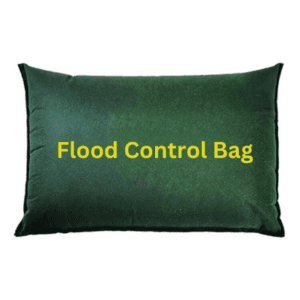
6 fast-deploy water-activated sandbags — no sand or shovels needed.
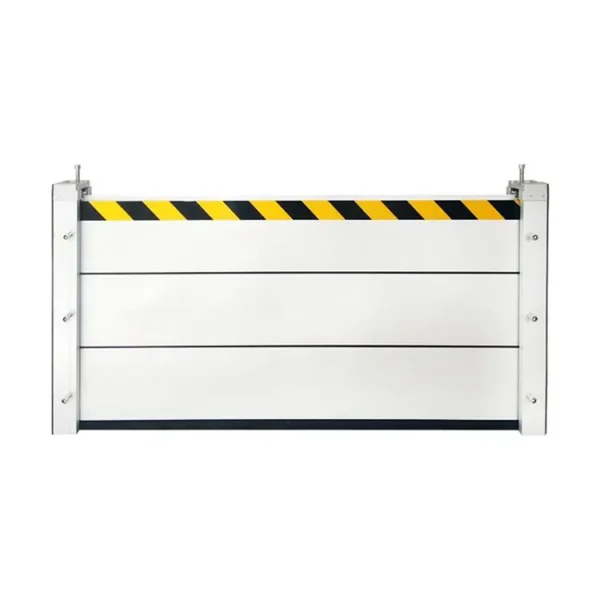
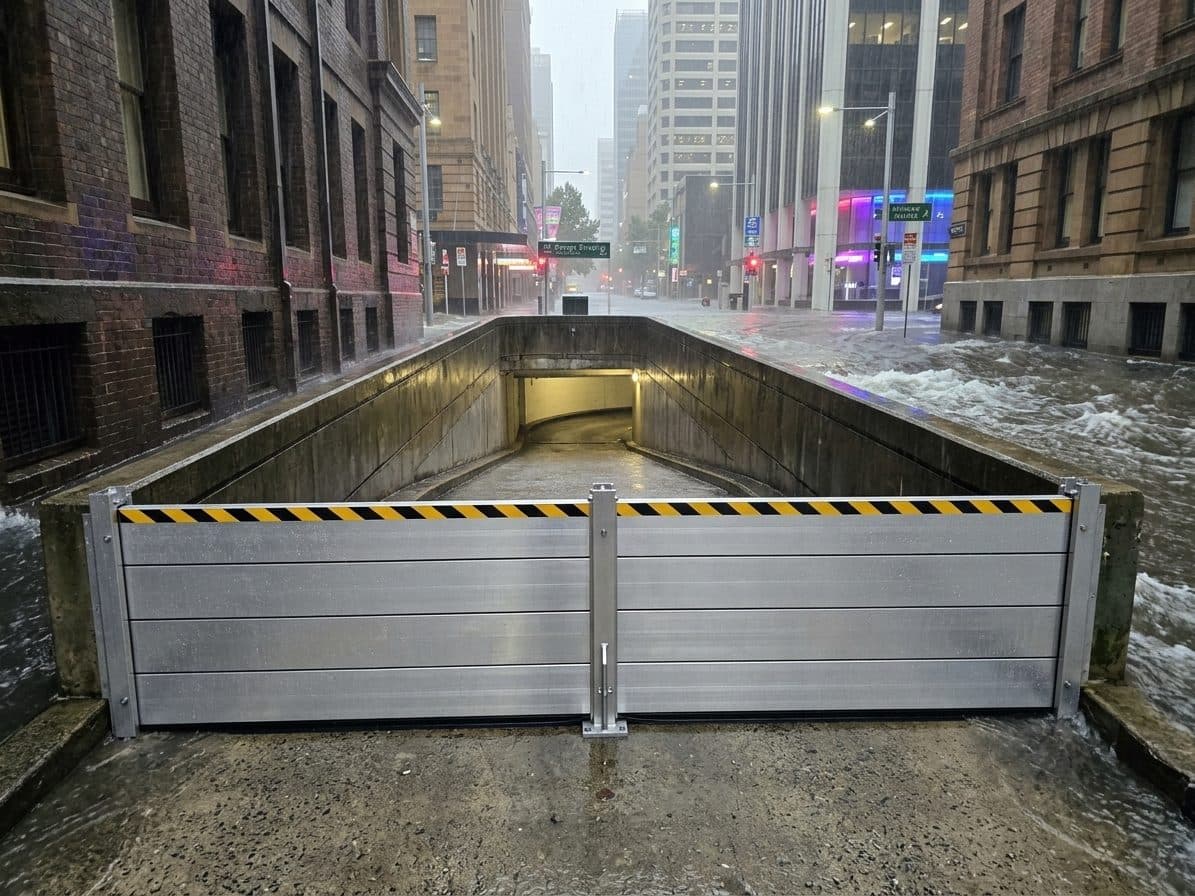
Made-to-measure aluminium barriers that clamp rubber seals against the frame and floor, fit in minutes, and lift straight back out.
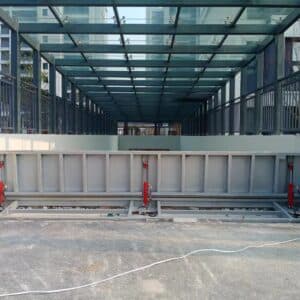
Water-level sensing triggers an electrically powered hydraulic barrier when flooding reaches its set level.
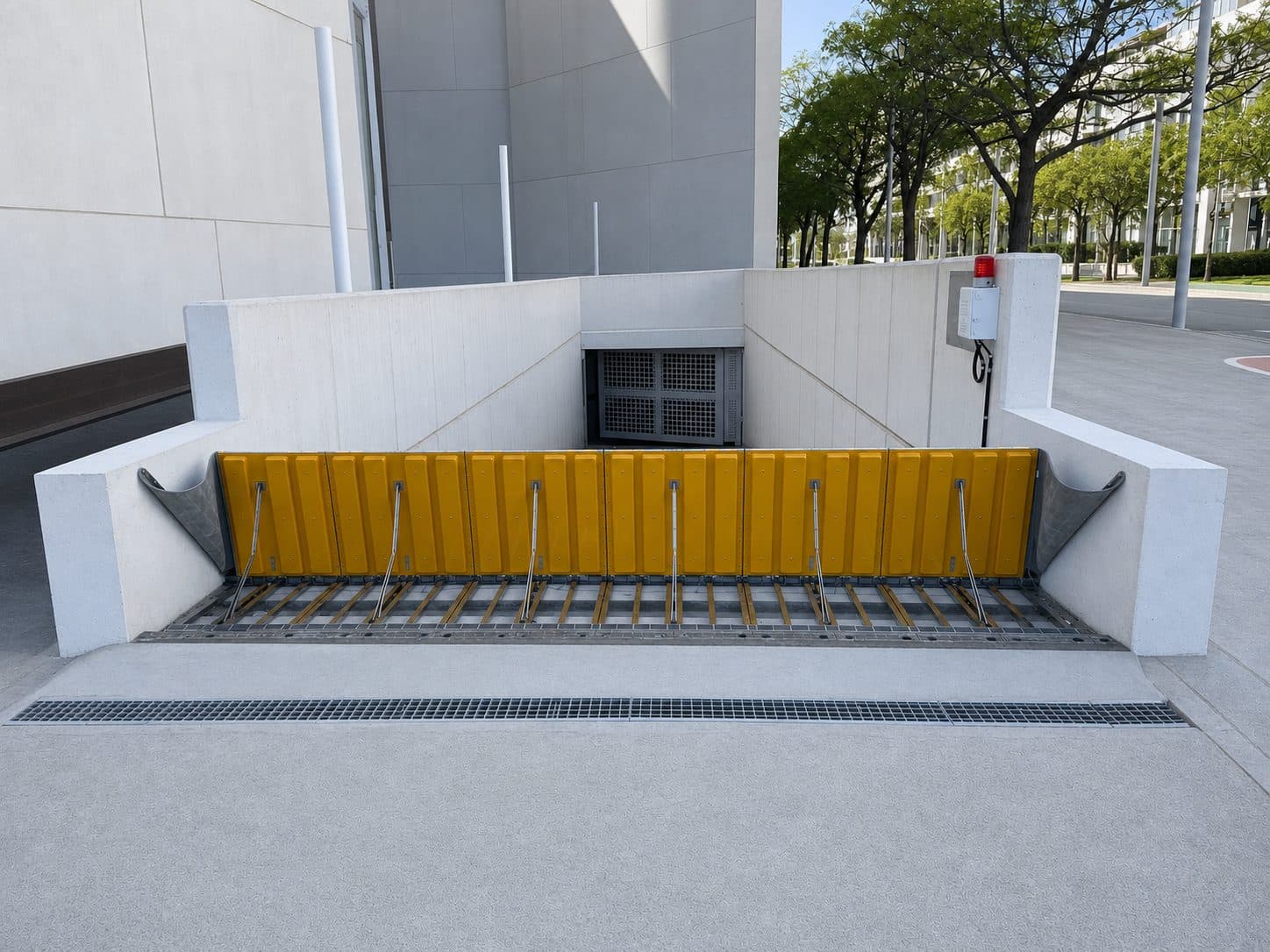
Automatic flood protection powered by the floodwater itself. No power supply, no operator and no deployment time.
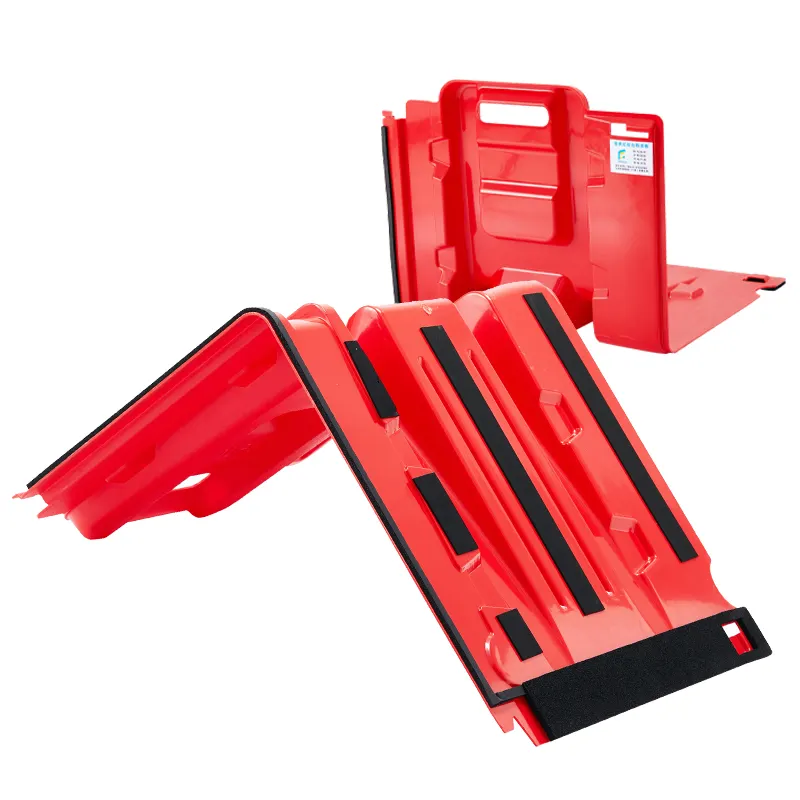
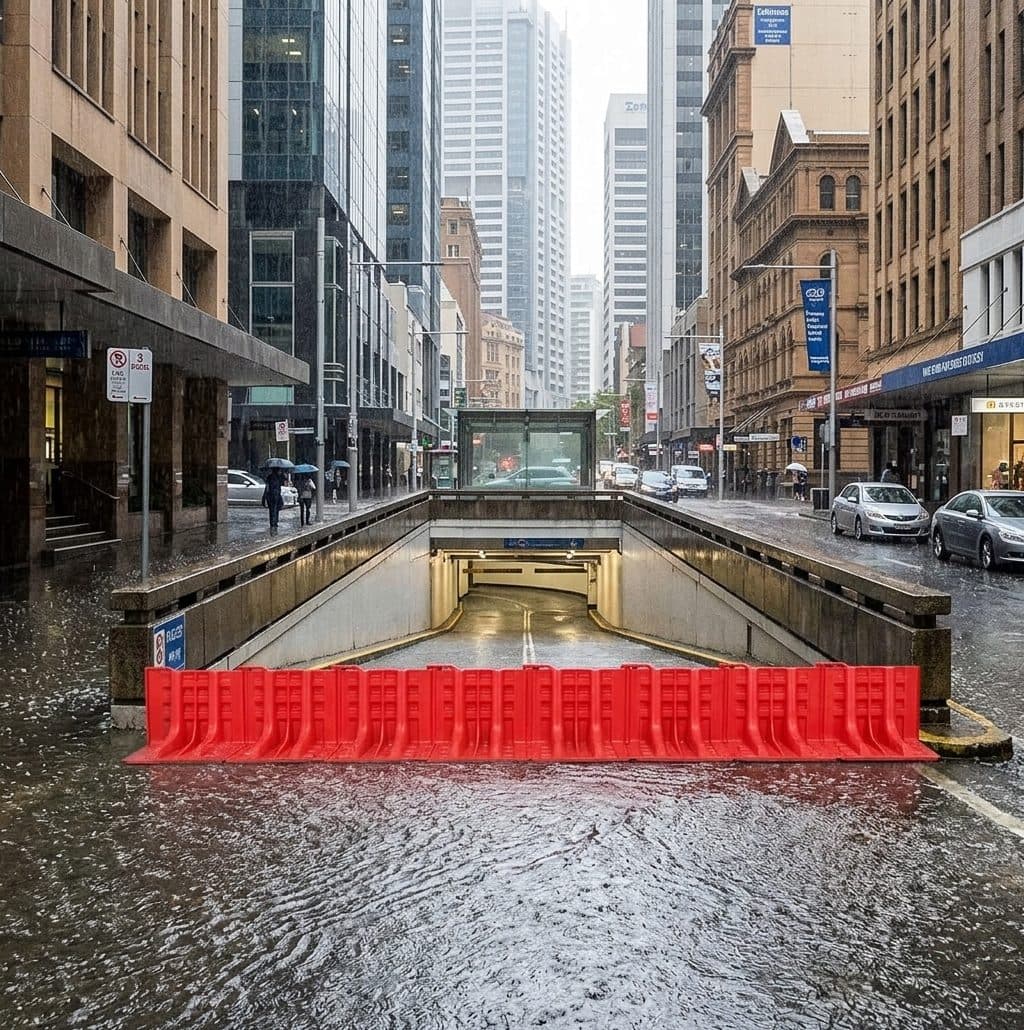
No installation — set the panels down where the water comes in, lift them away afterwards.
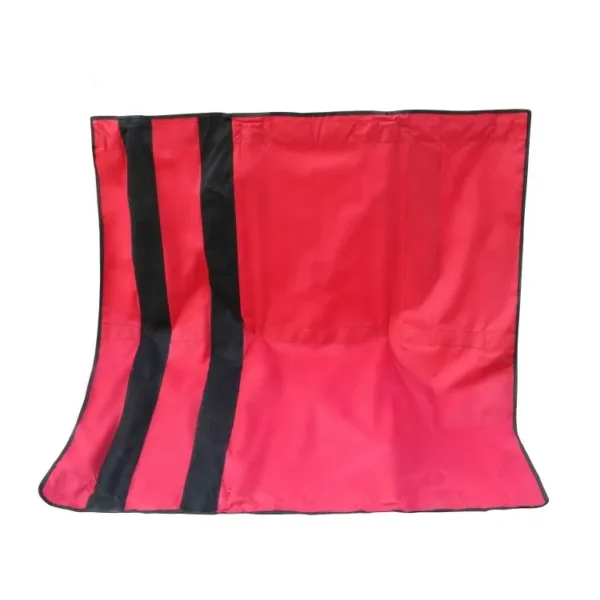
A telescopic 2-pack that adjusts from 15 cm to 130 cm wide.
Cost
Upfront price and cost of ownership rank the options differently. The right comparison is cost per deployment across the years you expect to own the property.
The figure that reframes all of these is the cost of doing nothing. The Insurance Council of Australia puts the average residential flood claim at $30,000–$50,000. Portable barriers for a standard home start from $449 for an Oxford two-pack; aluminium barriers are quoted per opening. For a ground-floor retail tenancy, a single 200 mm event typically means stock loss, electrical damage, and weeks of remediation before business interruption is counted. The full breakdown by property type is in the flood barrier cost guide.
By property type
Use cases
Protect roller doors, side entries, and driveway run-off paths before heavy rain arrives.
Compare barriers for loading docks, roller shutters, drains, and industrial access points.
Choose a barrier that fits leased premises, display windows, and frequent access needs.
Flood risk by region
Properties on low-lying ground within 2 km of a river, creek, or drainage channel carry materially elevated risk. The Bureau of Meteorology flood warning service publishes historical flood extent for most catchments, which is the practical first check before choosing barrier type and height.
East-coast lows and the Hawkesbury-Nepean, Hunter, and Richmond systems drain onto a densely populated coastal corridor.
Tropical cyclone remnants in the north and the Brisbane River catchment in the south-east, through a November-to-April wet season.
The Yarra, Maribyrnong, and Barwon systems around Melbourne, plus flood plains across the state's north and west.
Flash flooding across the Perth metro during intense winter rainfall, and severe flooding in the Pilbara during cyclone season.
Cold fronts drive heavy rainfall over the Mount Lofty Ranges, which drains into the Torrens corridor and overwhelms inner suburban stormwater.
Questions
It depends on the opening. Oxford barriers suit standard entry and sliding doors — each 2-pack telescopes from 150 mm to 1,300 mm wide and holds to 900 mm depth. Water-activated sandbags cover irregular gaps and roller door bases in 2–3 minutes. For a garage or front entry that floods most seasons, aluminium flood barriers are made to measure for the opening, seal on clamped rubber gaskets, and go in and come out in under 10 minutes with one person.
Published prices run from $59 for a pack of 6 water-activated sandbags, to $449 for an Oxford barrier 2-pack and $1,659 for an 8-panel ABS pack. Aluminium demountable barriers are made to measure and quoted per opening. Automatic and hydrodynamic passive systems are custom-engineered and quoted after a site assessment.
For a repeat opening, yes — reusable barriers deploy faster, store clean, and seal consistently, where sandbags stack unevenly. Sandbags still earn their place alongside a rigid barrier, filling roller door bases, window wells, and irregular gaps that a panel cannot bridge.
No single type does. Slow-rising river floods allow time for a full aluminium panel installation. Flash flooding and stormwater overload give 30 minutes or less, so only a pre-positioned or automatic system is realistic. Coastal storm surge involves sustained loads and wave action beyond what portable barriers are designed for, and needs an engineered system. Most flood-exposed properties end up holding two types for different event profiles.
Water-activated sandbags, Oxford barriers, and ABS portable panels all deploy by one person without tools. Aluminium demountable barriers need anchor channels installed once on first use, which most owners complete on a standard entry in well under an hour. Automatic and hydrodynamic systems require professional engineering and installation.
Aluminium demountable barriers are reusable season after season — the panels come out between events and store flat. Oxford and ABS portable barriers last multiple seasons when cleaned and stored dry after each deployment. Water-activated sandbags are reusable too — they can be dried out and used again, and how many times depends on how they are used. Automatic and passive gate systems are engineered for permanent installation with low ongoing maintenance.
Most standard home and contents policies do not cover the purchase cost of a flood barrier. Some insurers offer reduced premiums or specific endorsements where permanent mitigation is installed and documented. Check the flood clause in your Product Disclosure Statement and raise it with your insurer directly — a barrier that prevents a claim is worth more than any premium adjustment on its own.
ABS portable panels are the common answer for loading bays — they link and stack to any width and need no installation at all, so nothing is fixed to a dock face that trucks work against. Sites that flood after hours, when nobody is on the floor to deploy anything, are the strongest candidates for an automatic system.
Yes. Aluminium barriers are made to specific opening widths, heights, and seal configurations, and automatic and hydrodynamic passive systems are engineered per site from the outset. Send opening dimensions and photos and we will size the recommendation to the actual entry.
Free assessment
We will recommend the right flood barrier type for your opening, warning time, budget, and deployment plan.
Request a Flood Barrier Recommendation