Article · 7 July 2026
Flood Barriers Adelaide: Suburb Guide
Adelaide homeowners face heavy winter flooding from the Mount Lofty Ranges and Torrens River — here's which flood barriers suit each suburb type.
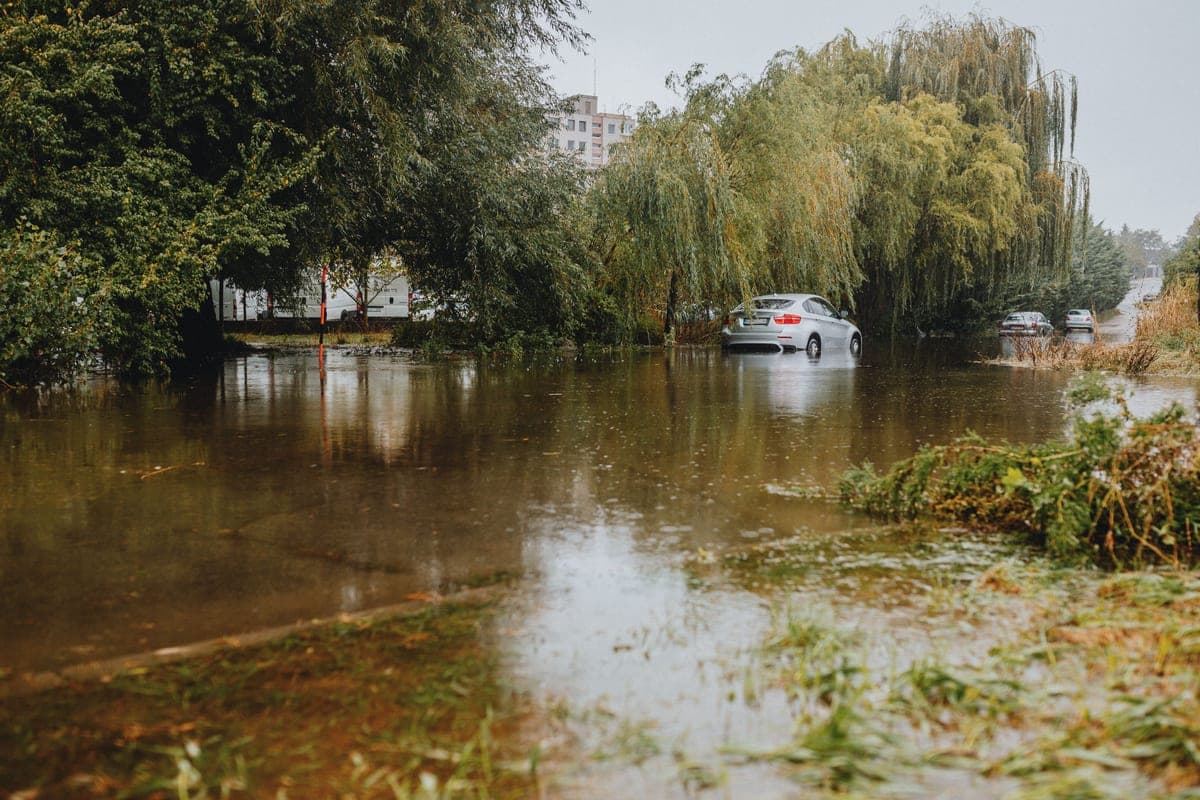
Demountable aluminium barriers, Oxford barriers, and water-activated sandbags all work in Adelaide — which one suits your property depends on your suburb, your opening width, and how much warning time the cold fronts typically give you. After successive winter fronts dumped 42 mm of rain on metropolitan Adelaide in a single day on 2–3 July 2026, and more than 100 mm on parts of the Mount Lofty Ranges, hundreds of SASES call-outs followed. Matching the right barrier to your address before the next front arrives is the difference between a dry floor and a repair bill.
Which Adelaide suburbs flood most in winter?
Adelaide's flood risk follows two distinct pathways: river overflow and stormwater overload. The Torrens River catchment runs from the Adelaide Hills through the city's northern and eastern suburbs, creating risk along the riparian corridors in Walkerville, St Peters, Campbelltown, Paradise, and Magill. Flooding here follows heavy catchment rain by six to twelve hours, giving some advance notice for barrier deployment.
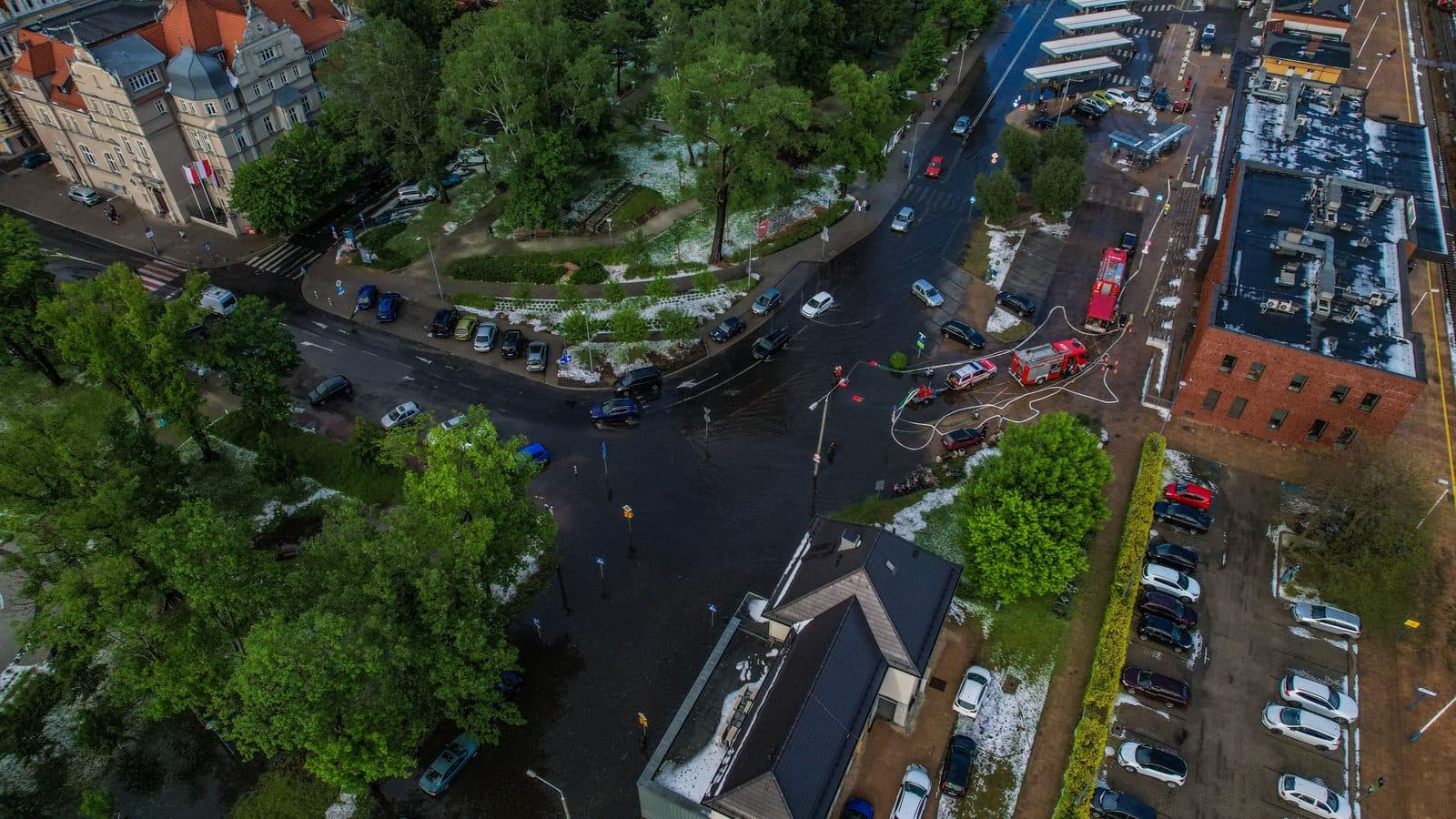
The inner western suburbs — Hindmarsh, Bowden, Brompton, and Croydon — sit on former marshland and are vulnerable to overland stormwater flow when Adelaide's underground drainage infrastructure is overwhelmed. Unlike Torrens flooding, stormwater events give almost no warning: water can appear on footpaths within minutes of intense rainfall beginning.
The Adelaide Hills interface suburbs — Hawthorn, Burnside, Beaumont, and the foothills of the Norwood Payneham and St Peters council area — receive the initial runoff from Mount Lofty Range catchments. Residents here often see water moving downhill before any official warning has been issued.
In the south, Brown Hill Creek and Keswick Creek both carry floodwater towards Mitcham and Unley in heavy events, while low-lying parts of West Beach and Henley Beach sit on reclaimed tidal land with shallow drainage capacity.
For any Adelaide property, the most reliable source of property-specific flood risk is the South Australian Department for Environment and Water flood awareness map. Use it before selecting a barrier type, as suburb-level risk is more useful than street-level assumptions.
How does Mount Lofty stormwater cause flash flooding in Adelaide?
The Mount Lofty Ranges rise to around 700 metres just 20 kilometres east of Adelaide's CBD. In winter, cold fronts sweeping across the Great Australian Bight drop concentrated rainfall on the ranges — often two to three times what falls simultaneously on the Adelaide plains.
During the July 2–3 cold front event in 2026, Lenswood recorded 117 mm, Ashton 105 mm, and Uraidla 103 mm within a single 24-hour period. Metropolitan Adelaide received 42 mm in the same window — around 70 per cent of its median July rainfall in one day. That volume of displaced water flows rapidly down the ranges into the stormwater network serving the inner suburbs, often overwhelming pipes and culverts that were sized for typical rainfall, not exceptional events. Hundreds of SASES call-outs followed, and a statewide Code Blue response for vulnerable people was activated.
The problem compounds in densely urbanised areas: hard surfaces — roads, paving, rooftops — redirect water that would once have infiltrated into vegetated ground. Inner Adelaide's older stormwater infrastructure, some of it dating from the 1950s and 1960s, was not designed for the increasing frequency of extreme one-day rainfall events that cold fronts now deliver.
What this means practically is that Mount Lofty flooding in the inner suburbs often arrives as a sheet of water flowing along streets and into below-ground car parks, garages, and ground-floor commercial premises. The timeframe from peak intensity rainfall to water at your doorstep can be as short as 20 to 30 minutes in low-lying areas — which puts pre-positioned barriers at a significant advantage over anything deployed after the water appears.
What flood barriers suit Adelaide's stone and brick homes?
Most Adelaide residential buildings constructed before 1980 feature solid stone, double-brick, or cavity-brick construction. Doorway thresholds vary: older terraces in Norwood and Unley often have low stone sills; postwar bungalows in Campbelltown and Burnside typically have concrete paths that slope slightly toward the house.
For standard door openings up to 1,300 mm wide — including most front doors, internal garage entries, and side gates — Oxford barriers are a practical first choice. The telescopic frame adjusts from 150 mm to 1,300 mm wide and uses water pressure to press the base seal against the threshold, creating a seal at the threshold. Two people can set one up in under five minutes without tools. The barrier folds flat for storage between events and connects end-to-end with additional units to cover wider openings.
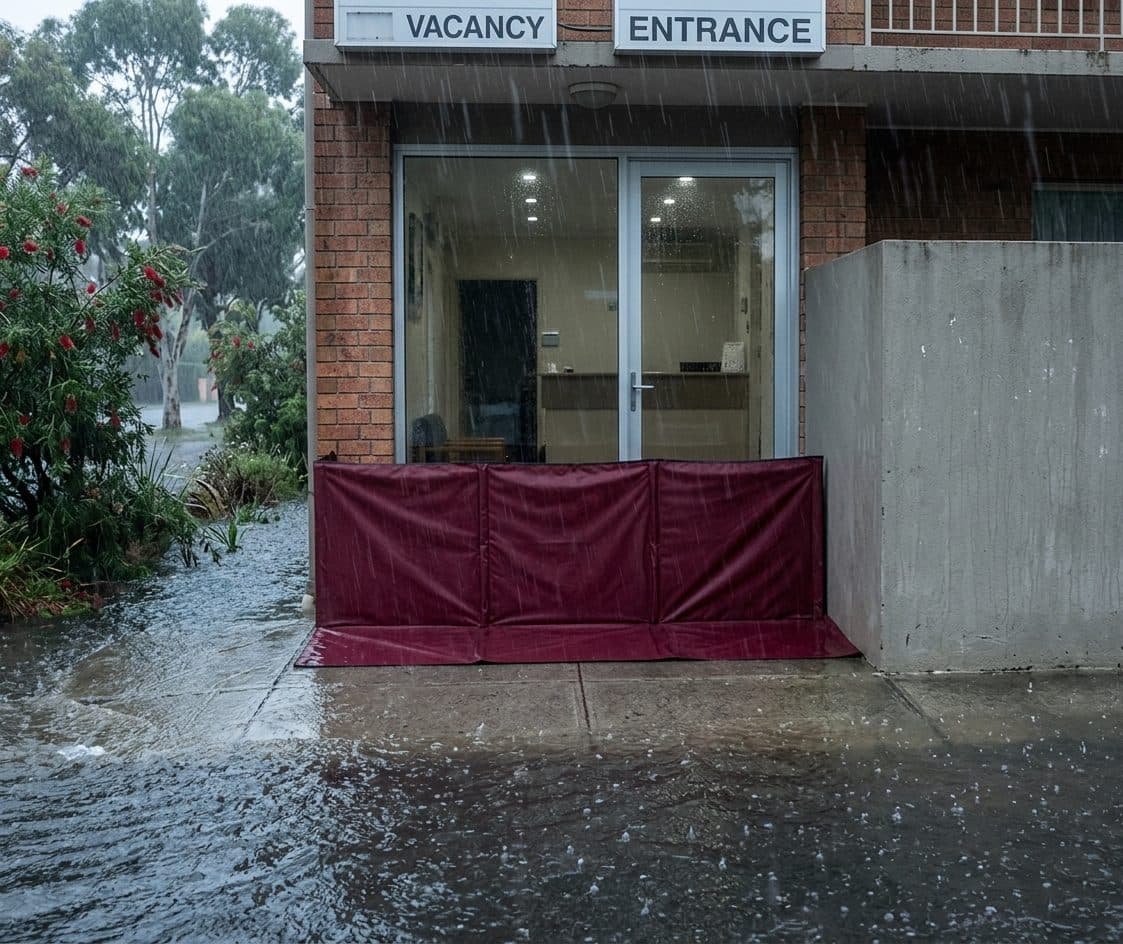
For aluminium-framed garages, wider entries, or any opening that floods more than once a season, aluminium demountable flood barriers offer a more durable solution. Every set is made to measure — the width is built to the opening and the height is set by panel count in 200 mm steps. The rubber base seal compresses against most flat threshold materials — stone, concrete, or brick — and one person can deploy the full set in under ten minutes once the anchor points are installed. Because the same set comes out again every season, the cost per deployment is lower than any annual sandbag programme for a regularly flooded entry.
For older stone homes with irregular or stepped thresholds where rigid panels cannot create a reliable seal, water-activated sandbags fill the gap. Each bag activates from 270 g to 18–22 kg on contact with fresh water in two to three minutes, conforming to uneven surfaces and stacking to whatever height you need.
How quickly does SASES issue flood warnings for Adelaide?
South Australia's flood warning system runs through the Bureau of Meteorology and the South Australian State Emergency Service. For Torrens River and Brown Hill Creek events, the Bureau of Meteorology typically issues a Flood Watch 12 to 24 hours before expected peak levels — enough notice to deploy barriers, move vehicles to higher ground, and review your household emergency plan.
For stormwater-driven events — the kind that saturate inner suburban streets within 30 minutes of an intense cell passing over the city — there is no real-time warning. The Bureau will have issued a Severe Thunderstorm Warning or a Heavy Rainfall Warning several hours in advance, but the localised flooding itself moves faster than any on-ground notification system.
The South Australian State Emergency Service recommends monitoring Bureau of Meteorology weather alerts, the Alert SA emergency alert service, and SASES social media channels during periods of frontal activity. For any flood or storm emergency requiring practical assistance — including guidance on barrier deployment, sandbagging, or rescue — call SASES on 132 500 for non-life-threatening situations. Use Triple Zero (000) only when lives are at immediate risk.
The practical implication for Adelaide homeowners is that pre-positioning barriers the night before a predicted cold front does more to protect the property than any reactive deployment after a warning is issued. Check the Bureau's rain radar and its Severe Weather Outlook at bom.gov.au during winter weekends, particularly through the June to August window.
What flood barriers suit Adelaide shopfronts and commercial properties?
Retail premises on the Parade in Norwood, Rundle Street, and the main commercial strips of Unley and Burnside face direct stormwater risk when winter downpours exceed street drainage capacity. Ground-floor commercial tenants often have near-zero threshold height at their shopfront entry, meaning even 50 mm of water on the footpath will enter without a deployed barrier.
For shopfront entries, aluminium demountable flood barriers are made to measure for the opening and designed for one-person deployment — practical for retail staff who may need to act quickly when a storm approaches.
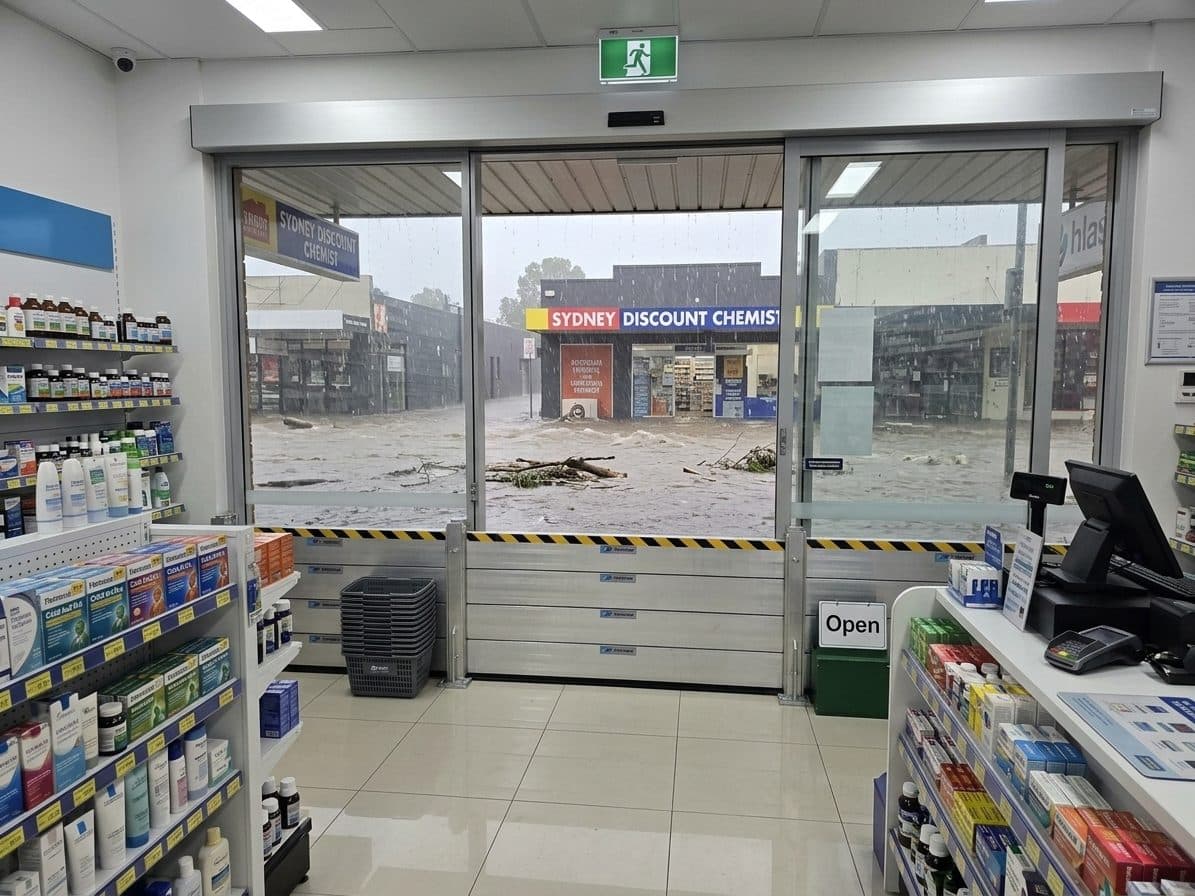
For wider commercial entries — loading docks, warehouse roller doors, or car park ramps — ABS portable flood barriers offer an 8-panel modular pack that can be configured to any opening width without tools or specialist contractors. For premises that need to remain operational during a flood event, the modular format allows partial barriers to be deployed while staff and customers move through alternative entries.
Any commercial property that has flooded in the past three years should treat barrier investment as a compliance and insurance matter as much as a preparedness one. Insurers in South Australia increasingly ask about flood mitigation measures at renewal, and properties without documented protection face higher premiums or exclusion clauses in flood-prone postcodes.
What should Adelaide homeowners do before the next cold front arrives?
Winter cold fronts typically reach Adelaide from the south-west on a one-to-three-week cycle from June to August. The Bureau of Meteorology publishes a Severe Weather Outlook for South Australia at bom.gov.au that updates daily — if a frontal system is expected to reach the ranges within 48 hours, pre-positioning barriers before rain starts is the most effective preparation available.
Three practical steps:
First, confirm your suburb's flood risk against the SA Department for Environment and Water flood awareness maps, and determine whether your primary risk is Torrens River overflow, Mount Lofty stormwater runoff, or Brown Hill Creek or Keswick Creek backflow. The answer determines your lead time and the barrier type best suited to your threshold.
Second, test your barriers before the season starts. If you have Oxford barriers or water-activated sandbags in storage, run a quick check to confirm the Oxford frame still adjusts cleanly and the sandbags have not been inadvertently pre-activated by moisture during storage. Any sandbags showing swelling should be dried out before the season.
Third, store barriers within immediate reach of the entry point they protect. Barriers stored in an outdoor shed on the far side of the property lose their advantage when water is already approaching the front door.
If you are not yet equipped, contact us to discuss which barrier best fits your property type, suburb, and opening dimensions. Water-activated sandbags ship free across Australia — a pack of 6 is the fastest way to have something ready before Adelaide's next cold front.
Flood barrier guides for other Australian cities
- Flood barriers for Sydney homes and apartments: sloped driveways, entry doors and apartment underground car parks.
- Flood barriers in Melbourne: the Maribyrnong and Yarra risk zones, underground car parks in Docklands and Southbank, and which barrier suits each property type.
- Flood barriers in Brisbane: Brisbane River and creek flooding, Queenslander lower levels, and apartment car parks.
- Flood barriers in Perth: Swan and Canning River flooding, winter stormwater, and barriers for Perth homes and strata buildings.
- Flood barriers in Newcastle: Hunter and Paterson River flooding, East Coast Lows, and a barrier selector by suburb type.
Recommended next step
Match the guide to a flood barrier option.
These are the product pages and guides most relevant to this topic. Use them to compare flood barriers Australia-wide, then request a site-specific recommendation.