
Commercial and industrial
Flood barriers for warehouses, shopfronts, and factories.
Commercial sites fail differently from houses: the openings are wider, there are more of them, and one person has to seal them all before the water arrives. Here is how each kind of site gets protected.
Use cases
What this looks like on a real site.
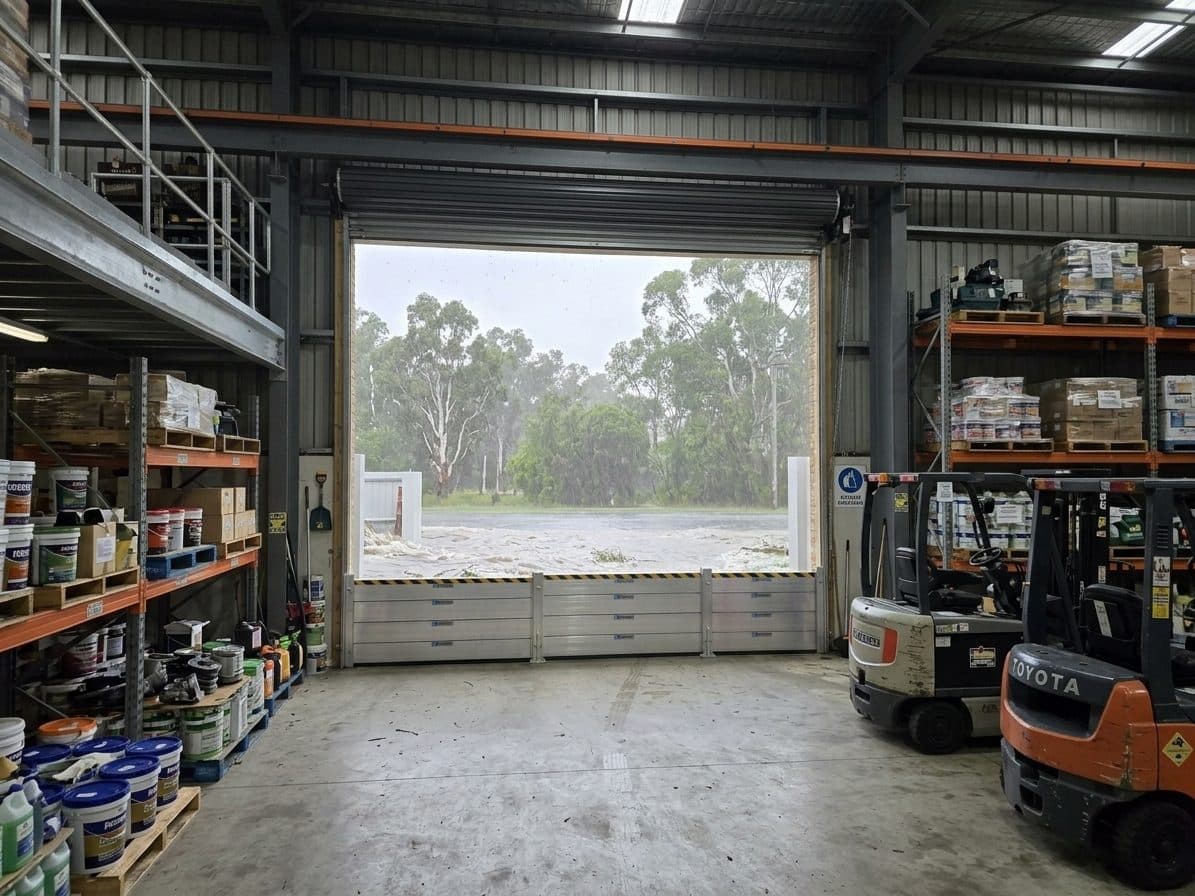
Loading docks and roller doors
The widest openings on the site, on thresholds that are rarely level. Aluminium sets are made to measure for the opening, with sandbags sealing the dock leveller gap.
Aluminium flood barriers →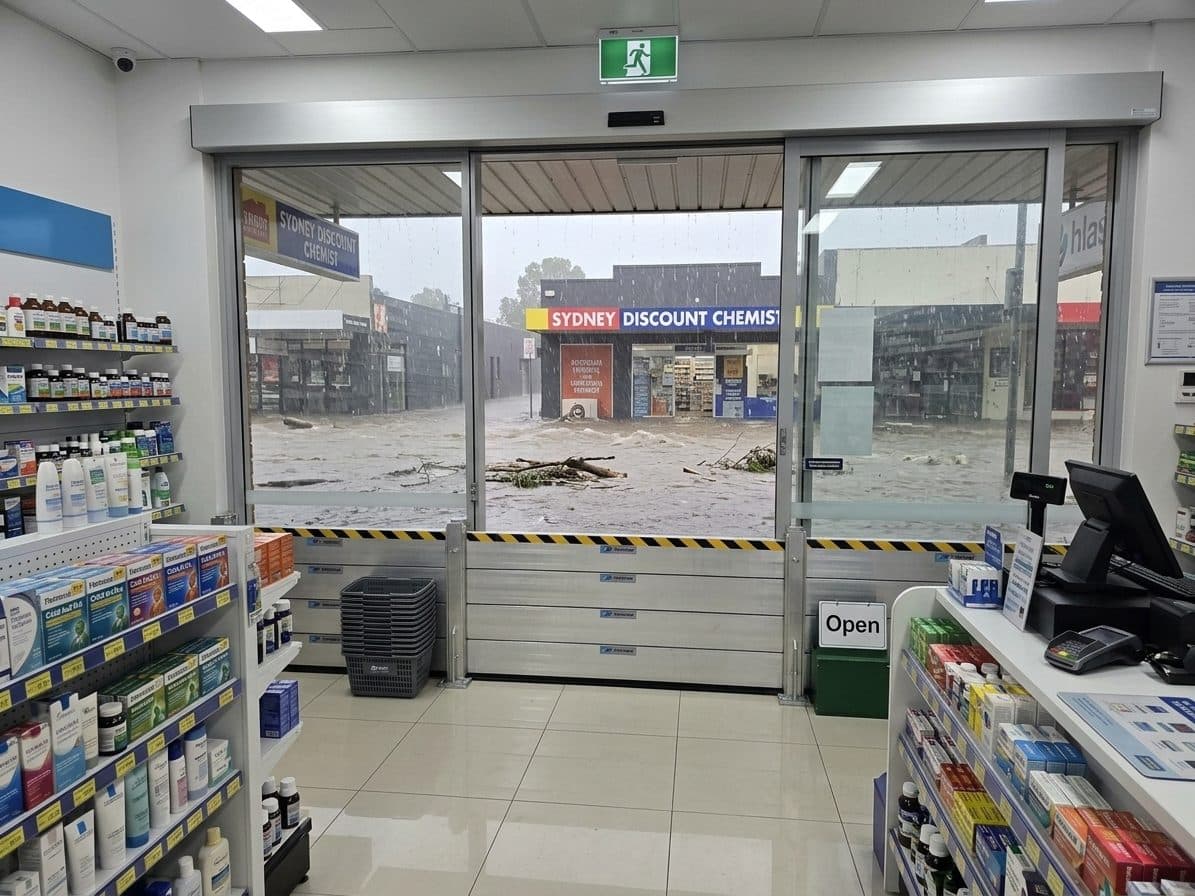
Retail shopfronts
Glazed frontages on leased premises. Aluminium sets slot between posts fixed to the wall either side of the opening, so the tenant needs the landlord's written consent to drill. Where the lease rules that out, ABS portable panels stand across the opening with nothing fixed to the building.
Aluminium flood barriers →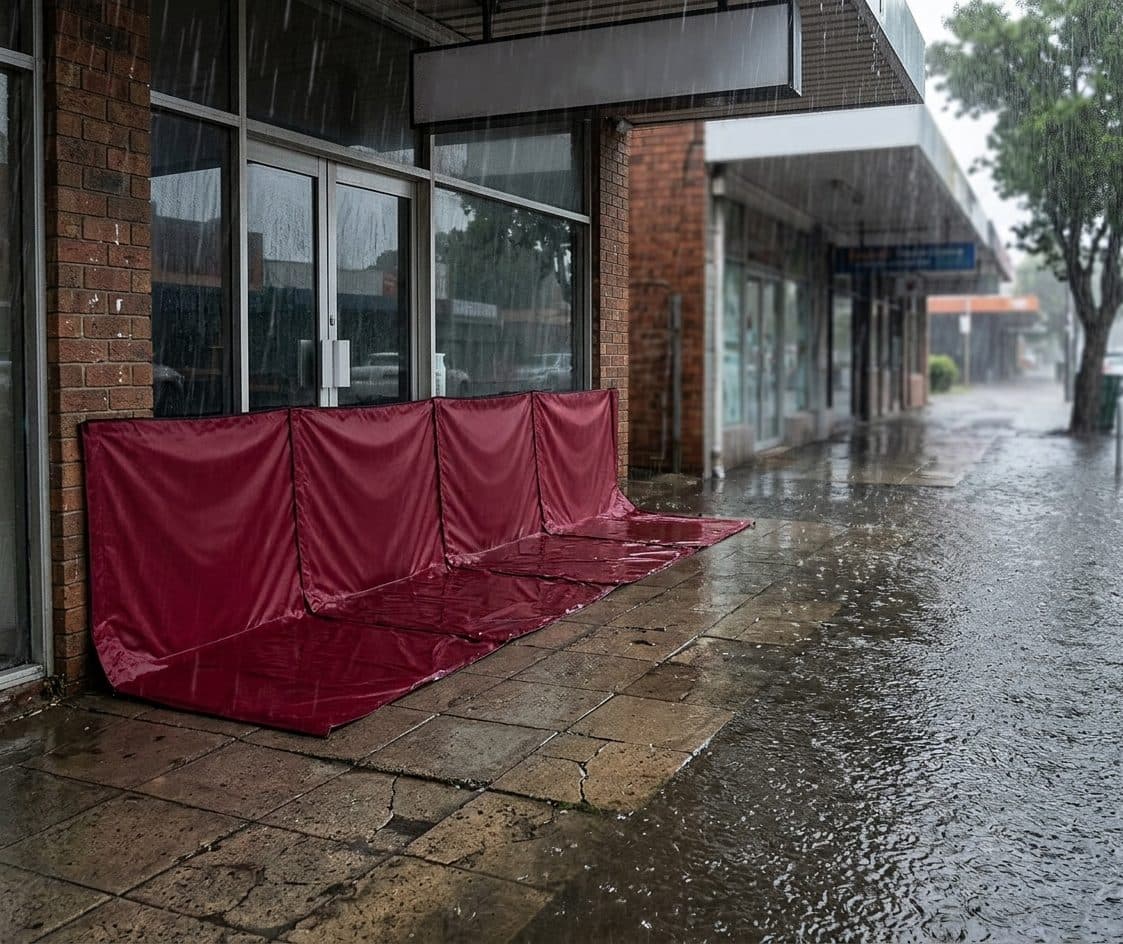
Cafés and hospitality
Standard doorways where one staff member has ten minutes. Oxford barriers deploy tool-free and store flat behind the counter until the warning lands.
Oxford barriers →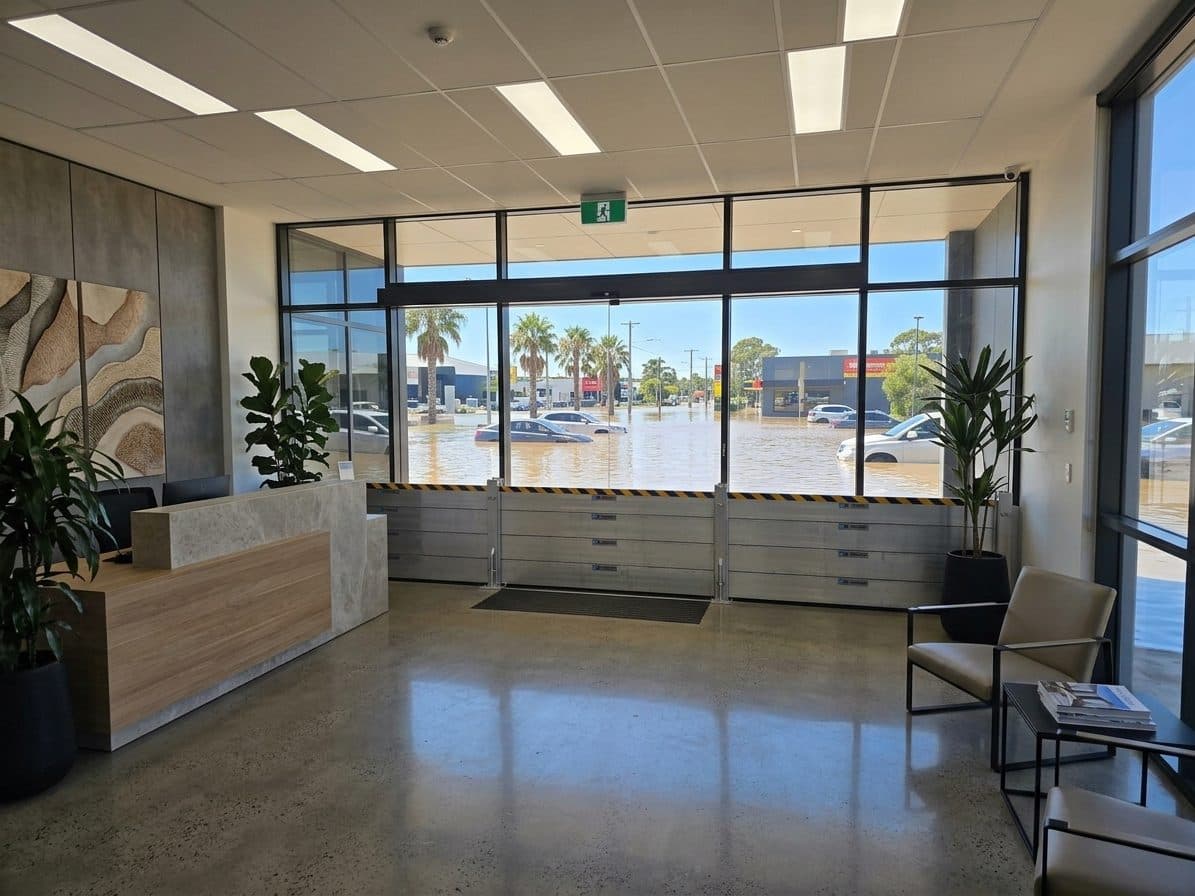
Offices and lobbies
Ground-floor entries in front of lifts, switchboards, and server rooms. Aluminium panels seal the doorway; a sandbag row behind them catches splash-through.
Aluminium flood barriers →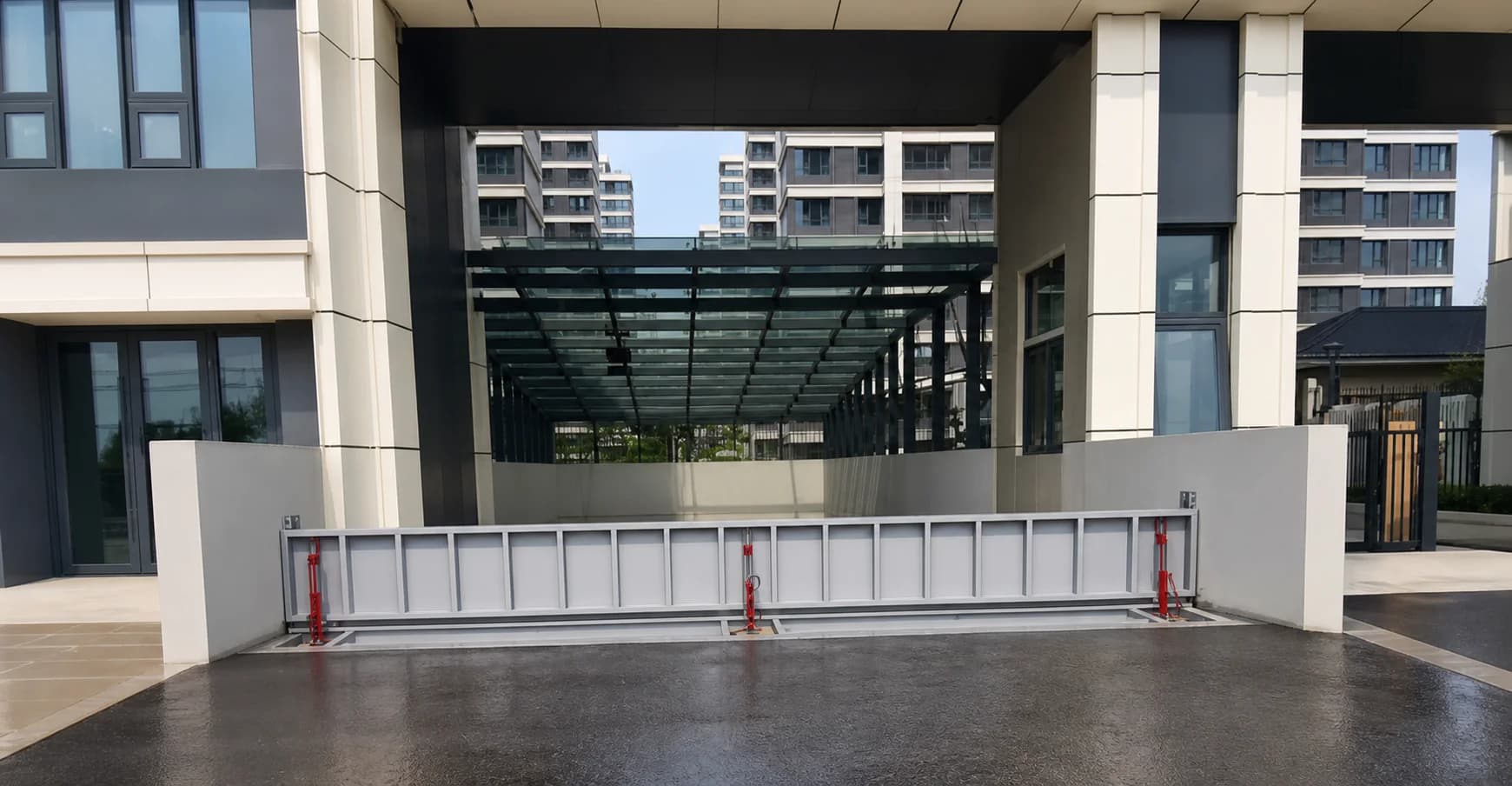
Unattended and after-hours sites
Nobody on site when the water arrives. An automatic gate rests flush with the ground, raises on water-level sensing, and needs no one present to deploy.
Automatic flood barriers →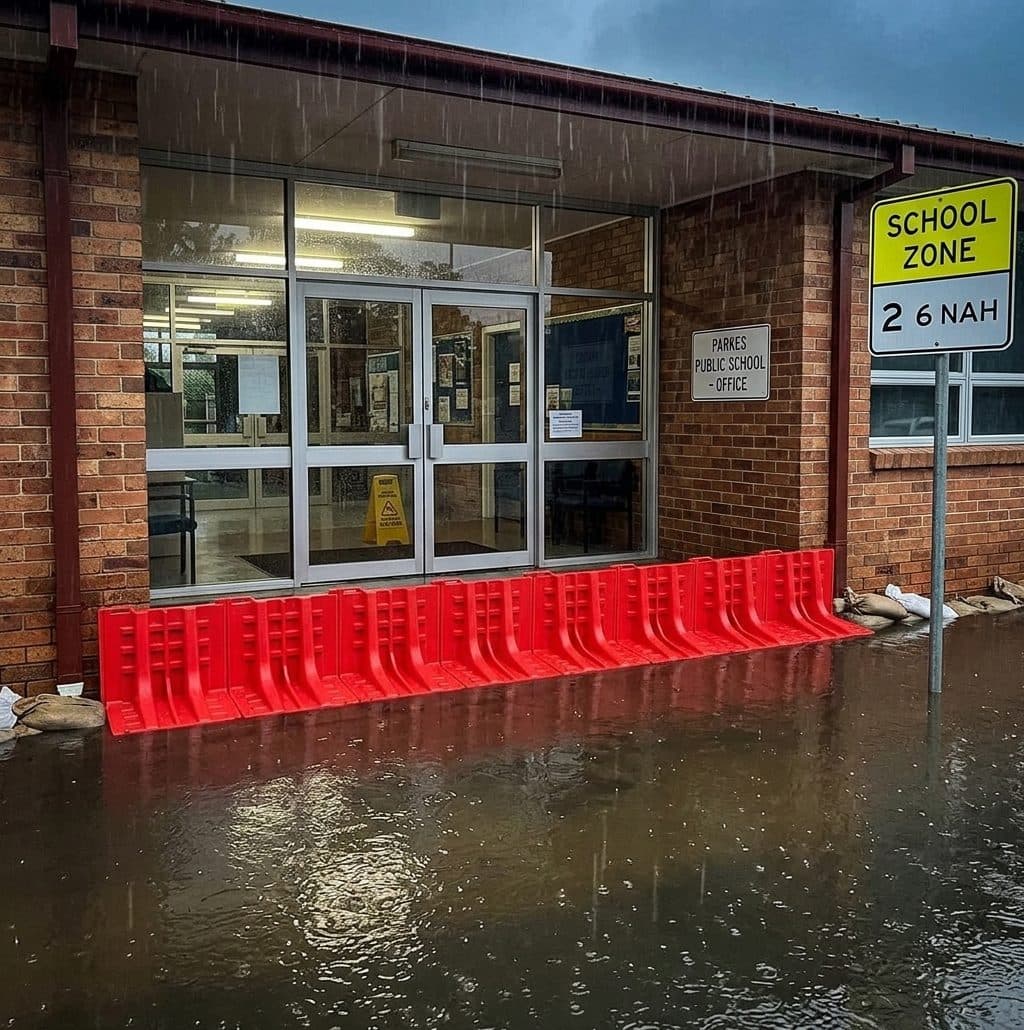
Schools and public buildings
Several buildings, several entries, one caretaker. Each opening is measured and specified separately, and barriers are stored at the opening they serve.
ABS portable barriers →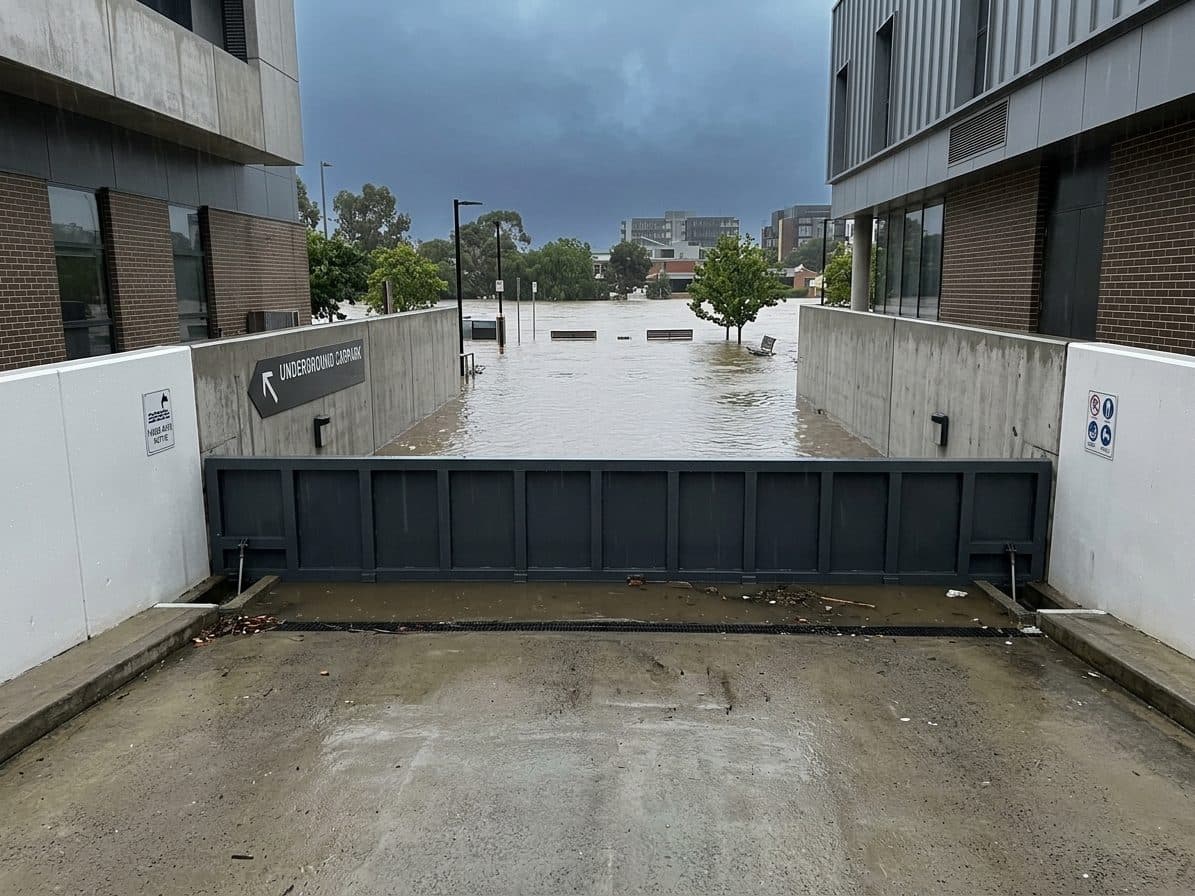
Hospital basement car parks
The ramp collects everything the surface sheds — and the emergency generator often sits at the bottom of it. Protection goes at the top of the ramp, before the fall.
Automatic flood barriers →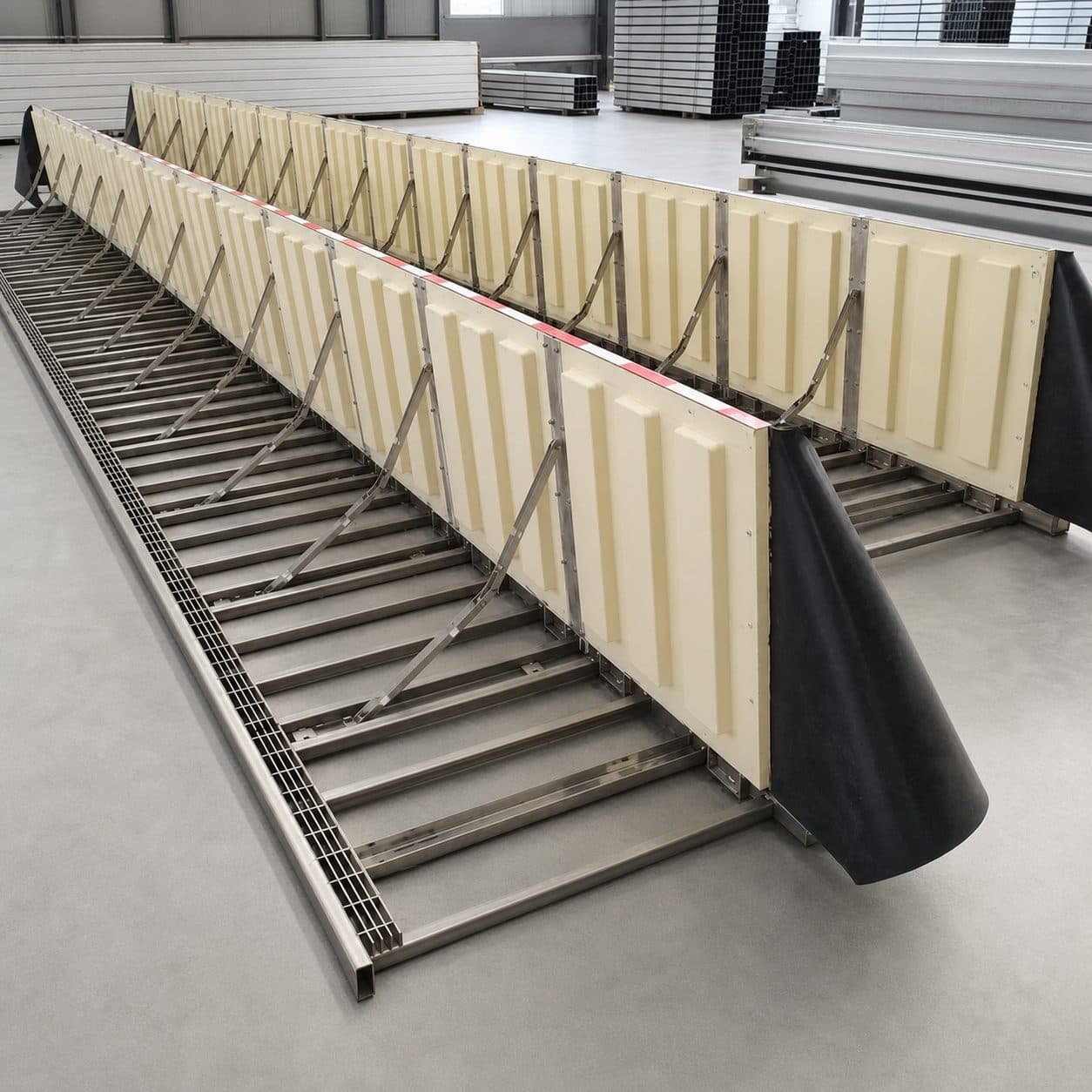
High-voltage and utility sites
Energised equipment, multiple access points, no operator. Passive barriers raise on the floodwater's own buoyancy and reset by gravity — no power path to lose.
Hydrodynamic passive barriers →Openings
What seals each kind of commercial opening.
| Opening | Recommended | Notes |
|---|---|---|
| Loading dock, 3–6 m wide | Two adjacent aluminium sets, or an automatic flood gate | Sandbags for the dock leveller threshold gap, which is rarely level. |
| Roller door, standard width | Aluminium set with a sandbag secondary row at the base | Bottom seals compress with age and hold almost nothing under pressure. |
| Personnel door, 900–1,200 mm | Single aluminium demountable set | Stores flat beside the door it protects. |
| Glazed retail shopfront, 2–4 m | Aluminium demountable, or ABS portable panels where drilling is not allowed | Aluminium posts are drilled into the wall, which needs the landlord's consent; ABS panels need no fixings. |
| Wide commercial aperture over 3 m | ABS portable flood barriers | Panels link and stack; two 8-packs join for 16 panels. |
| Irregular openings and gaps | Water-activated sandbags | Conform to profiles a rigid panel cannot seat against. |
| Floor drains | Backflow prevention valve or drain plug | Not addressed by any surface barrier. |
| Unattended site entry | Automatic flood gate | Water-level sensing and hydraulic control, specified after site assessment. |
Blind spots
Four things barriers do not cover.
- Drain backflowSurface barriers stop external water, not water rising through floor drains when the stormwater network surcharges. Backflow valves are a mandatory supplement, not an optional extra.
- Cable and pipe penetrationsConduit and pipe entries through external walls at ground level are consistent entry paths. Hydraulic foam sealants or mechanical plugs are the fix — not a barrier job.
- Internal splash damageWater driven through seal gaps under pressure damages stock and switchboards. A secondary sandbag row behind the main barrier reduces that exposure.
- Decision delayThe slowest part of most responses is deciding who deploys what. A written trigger, named roles, and a pre-season rehearsal fix this at zero product cost.
Detail
Guides by site type.
Warehouse and factory flood barriers
Dock measurement, drain backflow, equipment elevation, and the tiered campus model for industrial sites.
Flood preparation checklist
The pre-season sequence — risk assessment, entry-point audit, barrier selection, and dry-run practice — by Bureau of Meteorology alert stage.
Retail shopfront barriers
Lease-compliant options, glazed frontage sizing, and the four-part retail deployment plan.
Small business flood protection
Role assignment, activation triggers, and the recovery steps that shorten downtime.
Hospitals and aged care
Plant rooms, ambulance access, egress requirements, and accreditation-facing continuity planning.
Schools and public buildings
Campus flood types, fire-exit compatibility, and planning across multiple entry points.
Builders and developers
Specifying to a flood planning level at design stage, and casting the receiving frame before the pour.
Project: shopping centre and retail entries
Public entries and tenancy frontages, where the constraint is usually the lease and the glazing.
Project: a hospital basement car park
The vehicle ramp that carries the flood risk for the plant, switchboards, and generator below it.
Project: a school campus
Several buildings and several openings with one caretaker, specified opening by opening.
Flood barriers in Brisbane
Brisbane River and creek flooding, and the barriers that suit each type of opening.
Flood barriers in Melbourne
How flooding enters Melbourne commercial properties, and which barrier suits each one.
FAQ
Commercial flood barrier FAQs.
Which flood barrier suits a commercial loading dock?
What flood depth should a commercial site design to?
Can a tenant install flood barriers without landlord approval?
When should a business activate its flood plan?
Do flood barriers stop water coming up through floor drains?
Are commercial flood barriers tax deductible in Australia?
Every commercial site is different. Start with a site assessment.
Openings are measured, thresholds checked, and the right product specified per opening — with a written quotation for the whole site.
Request a Site Assessment