

Aluminium Flood Barriers
Made-to-measure aluminium barriers that clamp rubber seals against the frame and floor, fit in minutes, and lift straight back out.
Precision-engineered aluminium panels made to measure for every opening — there is no standard size, so each set is built to the width and height the entrance actually needs, up to 2 m high. Panels drop into the anchor channel by hand in minutes, and the rubber gaskets and compression seals along the base and side posts close the barrier against the frame and floor. When the rain stops the panels lift straight out and the opening returns to normal use. Every set is quoted for its opening after a measurement.
Why this product
Key features
- Rubber seals — gaskets and compression seals along the base and side posts are clamped against the frame and floor
- Panels slot into the anchor channel by hand — no fixings on the day
- Lifts straight out once the water is gone, leaving the opening clear for normal access
- One-person deployment and removal in under 10 minutes
- Made to measure — every set is built to the opening, in any width and height
- Panels stack in 200 mm increments, so the barrier height is set by how many go in — up to 2 m
- A spanner-tightened clamp at the top of each channel presses the stack down to compress the seals between panels and against the floor
- Top panel carries a black-and-yellow hazard strip so the barrier is visible in poor light
- Aluminium construction — lightweight and corrosion-resistant
- Powder-coated finish for UV resistance
Technical detail
Specifications
| Material | Marine-grade aluminium |
| Sizing | Made to measure — no standard size; every set is built to the opening |
| Width | Made to the measured opening width |
| Height | Set in 200 mm increments by panel count — 200 mm, 400 mm, 600 mm and up, to a maximum of 2,000 mm |
| Sealing | Rubber gaskets and compression seals along the base and side posts |
| Removable | Panels lift out between events; the opening stays clear in normal use |
| Deploy time | < 10 minutes, one person |
Before you order
How do demountable aluminium flood barriers work?
Two side channels are screwed to the wall or door frame on either side of the opening. When a flood is coming, the 200 mm aluminium panels slide down into the channels and stack to the height the opening needs, up to 2 m, and the rubber gaskets and compression seals close the barrier against the frame and the floor. Once the water is gone the panels lift straight back out and stack flat for storage near the opening. The channels are slim and stay in place, so the opening is clear for everyday use; they can be unscrewed, but removing them is rarely necessary. Openings wider than about 4 m take a removable intermediate post that supports the panels on either side.
Which openings can they protect?
Garage roller doors on homes, factory and warehouse entrances, doorways, shopfronts and lobby entries. Sets have been supplied for factory entrances and home garages across New South Wales and Queensland. For a site where nobody will be there to put the panels in, the hydrodynamic passive flood barrier rises on its own.
What does the opening need?
The side channels fix into a solid wall: concrete, brick or block. The bottom panel seals against the floor, so the threshold has to be firm and close to level. Where the barrier line crosses pavers on sand, gravel or soil, pour a concrete strip along it first, running the full width of the opening and under both channels. The channels can sit inside the opening or on the wall face just outside it, and a corner post carries the barrier around an L-shaped opening.
Who installs them?
You do, or your builder or handyman. Every set comes with an installation guide, and fitting the side channels is a one-off job with a drill. After that, the panels go in and come out by hand, and a spanner tightens and releases the clamps at the top.
What comes in the set?
The two side channels, the 200 mm aluminium panels, a neoprene seal strip that sits between each channel and the wall, the masonry bolts that fix the channels, the tool that tightens the clamps, and the installation guide. You supply the urethane silicone sealant that is run along the joint between each channel and the wall on the water side.
How do the panels go in when a flood is coming?
Put them in before the water arrives. Sweep grit and leaves off the threshold first, because the bottom seal needs a clean, level floor to close against. The bottom panel carries the thicker floor seal, so it goes in first and slides down the channels until it sits on the floor. Stack the rest on top of it, finishing with the panel that has the black-and-yellow hazard strip so the barrier is easy to see in poor light. Then press the clamp at the top of each channel down onto the stack and tighten it with a spanner, which squeezes the seals between the panels and against the floor.
How is a set measured and quoted?
Send us the width of the opening, the height you need to protect, what the floor is made of, and a photo showing the walls and floor on either side. If the channels will sit inside the opening, measure wall to wall. If they will go on the wall face outside it, measure the opening; the panels are made to run past it on both sides. Tell us if the door frame stands out from the wall or the door opens outwards, because the panels have to clear the frame and the door has to clear the channels. Request a quote and the set is built and quoted for that opening.
What happens if the water rises above the barrier?
It flows over the top, so set the height when you order. Choose a height above the deepest water the opening has seen, adding panels in 200 mm steps up to the 2 m maximum.
Can the door be used while the panels are in?
No. The panels close off the opening, so nothing drives in or out until they are lifted back out, and a door that opens outwards cannot be opened until then either. Between floods the panels are stored and the opening works as normal.
How do I look after the barrier?
After each use, hose mud and silt off the panels and seals with fresh water, and rinse them straight away if they have stood in salt water. Let everything dry, then stack the panels flat in their fitting order somewhere you can reach quickly. Before each wet season, check the rubber seals on every panel for cracks or tears, check the sealant between the channels and the wall and floor, and cut out and replace any bead that has cracked or pulled away. Then run a practice deployment so everyone in the household or on site knows how the panels go in.
Aluminium barriers, ABS barriers or sandbags?
Aluminium barriers suit an opening that floods again and again: the channels stay fixed, so each deployment takes minutes and the barrier can go up to 2 m. ABS portable barriers need no drilling at all, which suits renters and openings you cannot fix to. Water-activated sandbags are a quick top-up for gaps and one-off events.
Related guides
Learn where this flood barrier works best.
Compare this against every other option in the flood barriers Australia comparison — every barrier type side by side by rated depth, deploy time, and cost. The guides below go deeper on specific site types and use cases.
Continue browsing
Other products

Water-Activated Sandbags
6 fast-deploy water-activated sandbags — no sand or shovels needed.
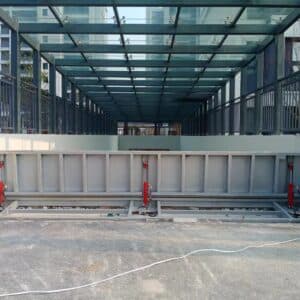
Automatic Flood Barrier System
Water-level sensing triggers an electrically powered hydraulic barrier when flooding reaches its set level.
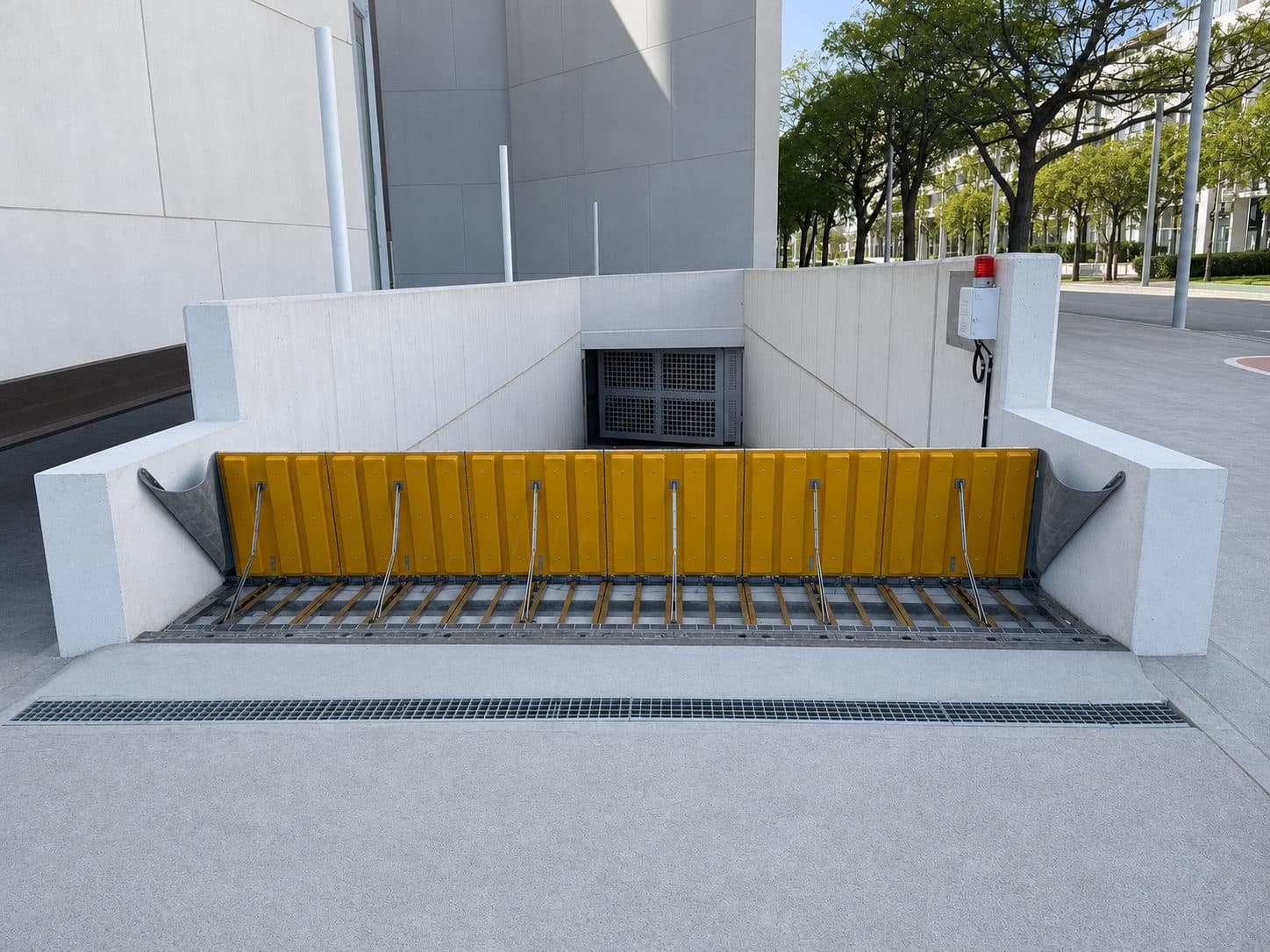
Hydrodynamic Passive Flood Barrier
Automatic flood protection powered by the floodwater itself. No power supply, no operator and no deployment time.
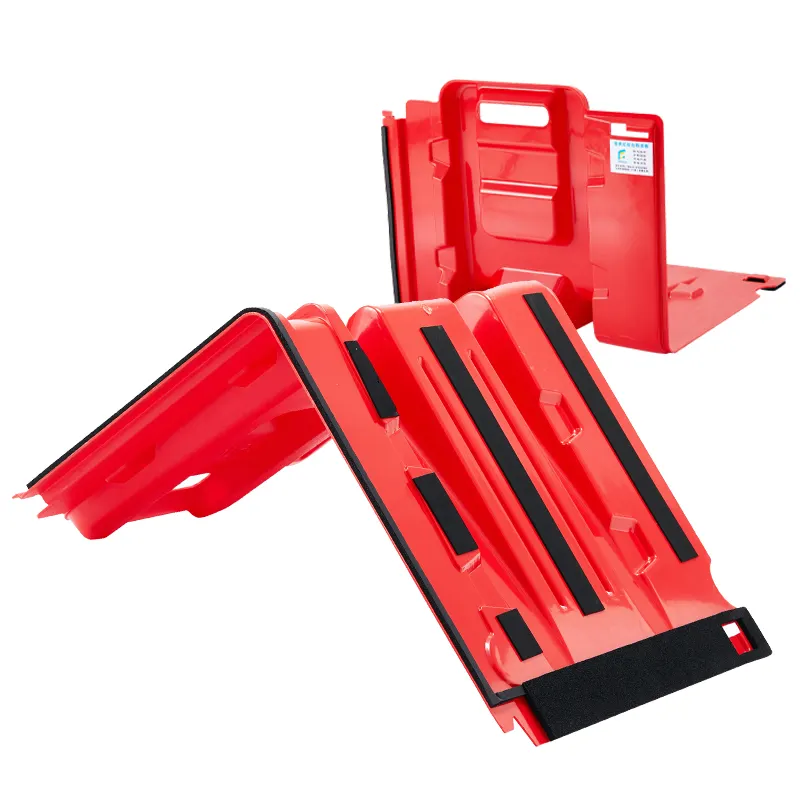
ABS Portable Flood Barriers
No installation — set the panels down where the water comes in, lift them away afterwards.
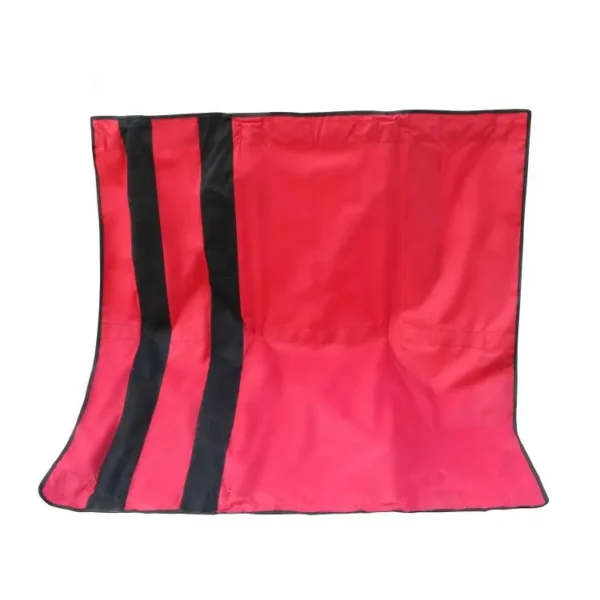
Oxford Barriers
A telescopic 2-pack that adjusts from 15 cm to 130 cm wide.