
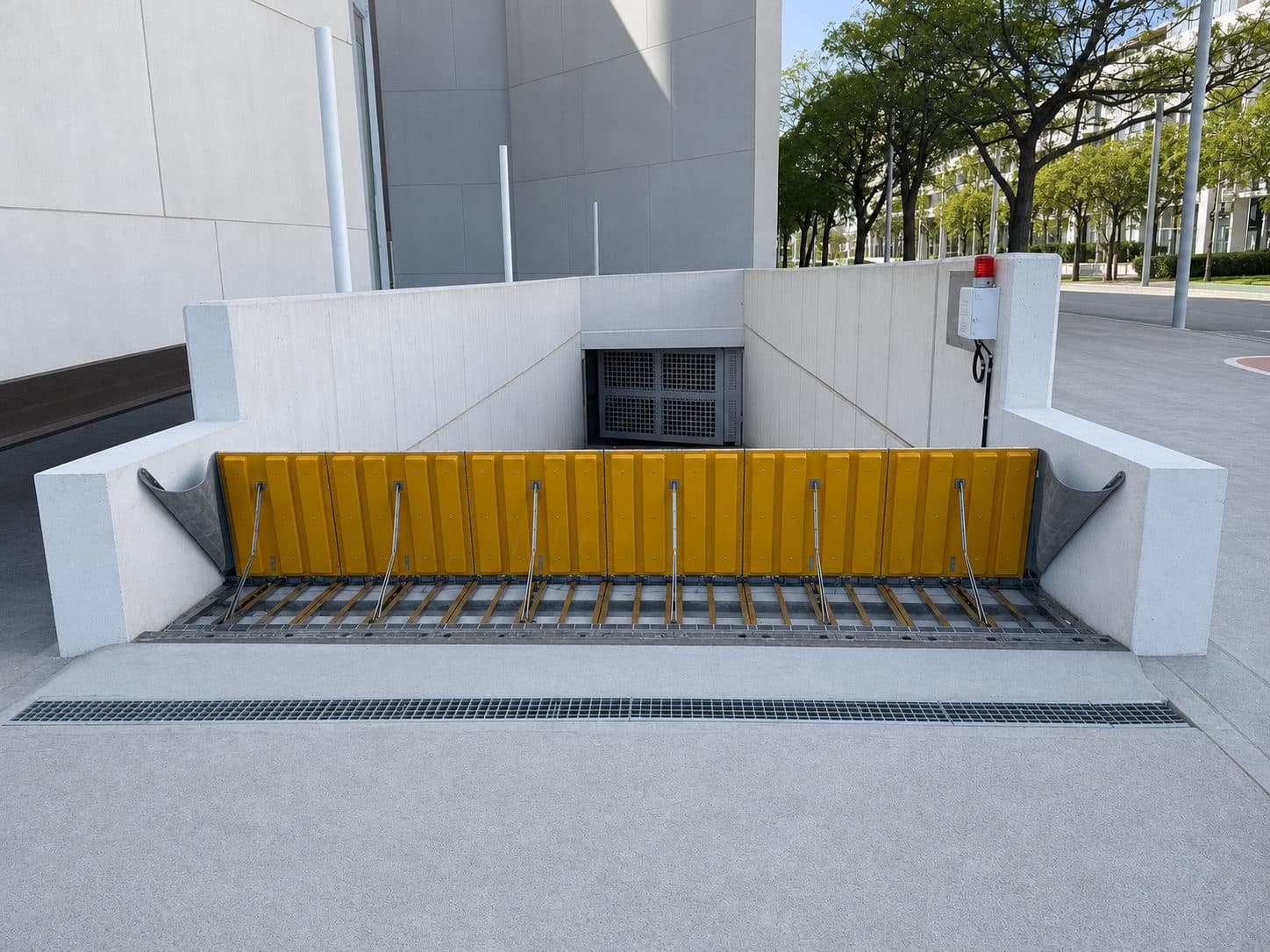
Self-Activating Passive Flood Barrier
Automatic flood protection powered by the floodwater itself. No power supply, no operator and no deployment time.
The Hydrodynamic Passive Flood Barrier is a self-activating flood barrier for basement car park entries, driveways, ramps and loading docks. On a new build it sits in a recess and lies flush with the finished surface, so vehicles and pedestrians cross it as normal. On an existing site it can be fixed onto the slab instead, with a ramp on each side. When floodwater arrives it flows in beneath the panel, and buoyancy lifts the panel upright to close the opening. As the water recedes the panel lowers under its own weight, ready for the next event. Nothing has to be switched on and nobody has to be on site.
Why this product
Key features
- Raised by the floodwater itself, so a blackout during a storm cannot stop it
- Deploys on its own at night, on weekends and on unattended sites
- No external power, motors, pumps or electronics to raise the barrier
- Trafficable to 20 tonnes GVM to AS 1170.1 when fully lowered
- Recessed flush with the slab on a new build, or surface-mounted with a ramp each side on an existing site
- Sits in a shallow recess rather than a deep pit, which keeps excavation and site preparation costs low and leaves every part reachable at ground level for maintenance
- Lowers under its own weight as the water recedes, with nothing to reset
- 304 stainless-steel base frame and a buoyant composite panel under a patterned steel top plate
- Optional aluminium chequer-plate top or anti-slip coating for extra grip
- Optional alarm with a water-level detector that flashes and sounds when floodwater reaches the barrier
Technical detail
Specifications
| Activation | Buoyancy, as floodwater flows in beneath the panel |
| Reset | Gravity return as the water level recedes |
| Power required | None for barrier operation |
| Protection height | 0.6 m, 0.8 m, 1.0 m or 1.2 m |
| Width | Made to the measured opening, up to 9.3 m as a single unit with no joint |
| Traffic rating | 20 tonnes GVM to AS 1170.1 when fully lowered |
| Installation | Recessed flush with the slab, or surface-mounted with a ramp each side |
| Base frame | 304 stainless steel |
| Panel | Buoyant polymer composite under a patterned steel top plate |
| Options | Aluminium chequer-plate top, anti-slip coating, flood alarm with water-level detector |
| Designed to | AS 4100, AS 1163, AS/NZS 1554.6, AS 1170.1 |
| Manufacturing | ISO 9001, ISO 14001 and ISO 45001 certified factory |
Before you order
What is a self-activating flood barrier?
It is a barrier that closes an opening by itself when floodwater arrives, with no power supply and nobody on site. It is also called an automatic flood barrier, passive flood barrier, self-closing or self-operating flood barrier, self-actuating flood gate, flip-up or tilting flood barrier, mechanical flood barrier or automatic flood gate. The Hydrodynamic Passive Flood Barrier is this type. To specify one, see what an automatic barrier has to do.
How does a self-activating flood barrier work?
In standby the panel lies flat and traffic crosses it as normal. When floodwater reaches the opening it flows through the inlet into the space beneath the panel. Buoyancy lifts the panel into its upright position and closes the opening. As the water recedes the panel lowers under its own weight back to flush. No sensor, motor, pump or battery is involved in raising it.
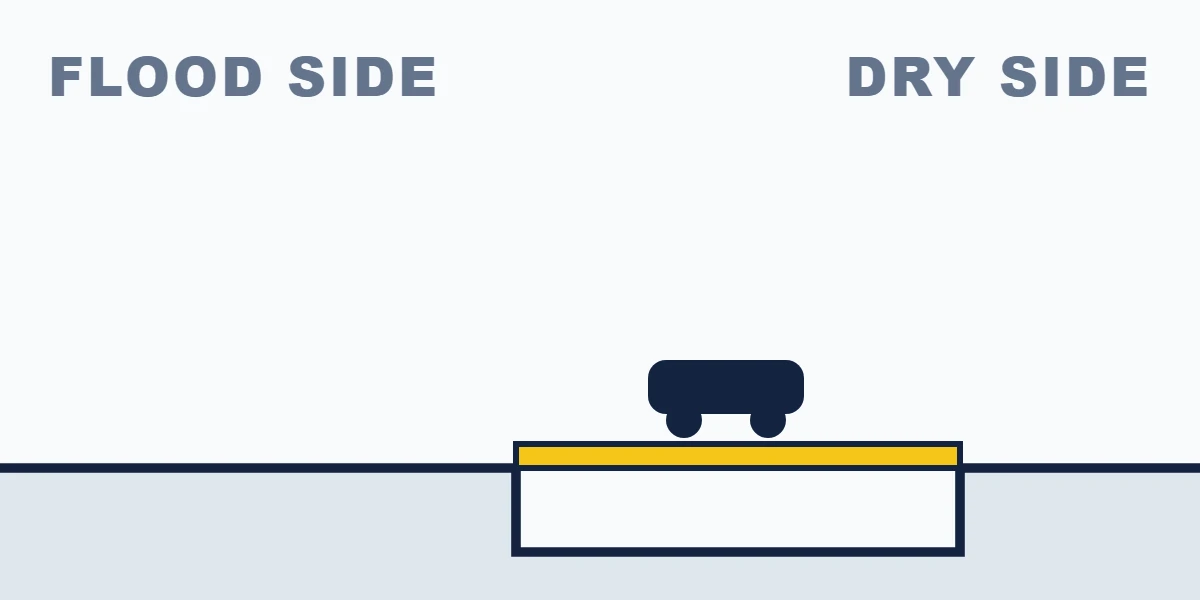
1. Standby. The barrier lies flush with the driveway. Cars and pedestrians cross it as normal. 
2. Flood arrives. Rising floodwater flows through the inlet into the recess beneath the panel. 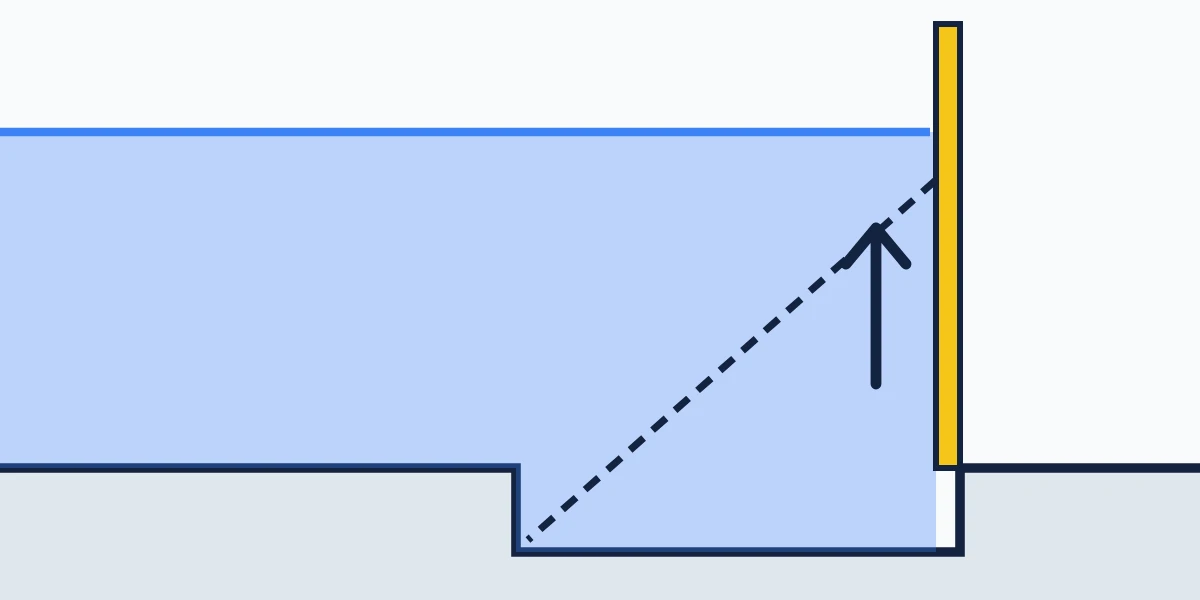
3. Rises automatically. Buoyancy lifts the panel into its upright position and closes the opening. 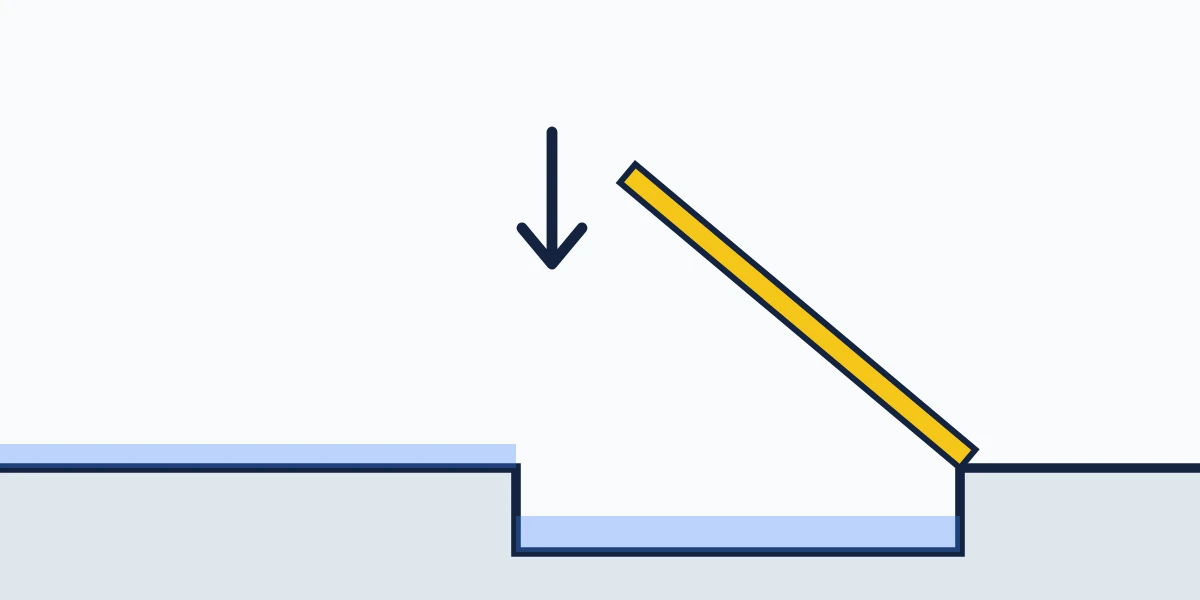
4. Resets itself. As the water recedes, the panel lowers under its own weight back to flush.
Does it need power?
No. The barrier is raised by the floodwater itself, so a blackout during a storm cannot stop it. The only powered component is the optional alarm, a separate visual and audible warning that flashes and sounds when floodwater reaches the barrier and stops on its own when the water recedes. The alarm does not deploy the barrier.
Can vehicles drive over it?
Yes. Fully lowered, the barrier is trafficable to 20 tonnes GVM to AS 1170.1, so it suits loading docks and truck ramps as well as car park entries and pedestrian entries.
Has it been tested?
A production unit was tested by an independent third-party inspection institute. In the static head test it held 1.2 m of water for 22 hours with no leakage observed and no visible deformation, and in the function test the panel rose automatically and retained water when water was admitted. The result applies to the unit tested. The support frame and fabrication are designed to AS 4100, AS 1163 and AS/NZS 1554.6, and the factory is certified to ISO 9001, ISO 14001 and ISO 45001.
What does the site need?
On a new build the barrier sits in a recess in the slab and finishes flush with the floor, so it has to be allowed for before the slab is poured. For a 1.2 m barrier the recess is 220 mm below finished floor level and the base frame is 1,450 mm front to back. On an existing site where cutting a recess is not practical, the barrier is fixed directly onto the slab and we supply a ramp for each side, like a speed hump, so vehicles drive up and over the lowered panel. Either way the barrier is made to the measured opening, in a height of 0.6 m, 0.8 m, 1.0 m or 1.2 m, and the lead time is about 90 days.
Who installs it?
Your builder or contractor. Flood Control supplies the barrier with shop drawings, an installation guide and an operation and maintenance manual, and gives remote technical support while it goes in.
Passive barrier, hydraulic barrier or demountable panels?
The passive barrier needs no power and no controls, which suits unattended sites and entries where the power may fail in a storm. The Automatic Flood Barrier System is raised by an electrically powered hydraulic pump on water-level sensing, and can be lowered and reset by remote or central control. Its top can be paved to match the driveway or footpath, a finish the passive panel cannot carry, so it suits an entry where the barrier has to disappear into a stone or paver finish. Aluminium demountable barriers suit an opening where someone is on hand to put the panels in before the water arrives.
Where it is used
Openings it protects.
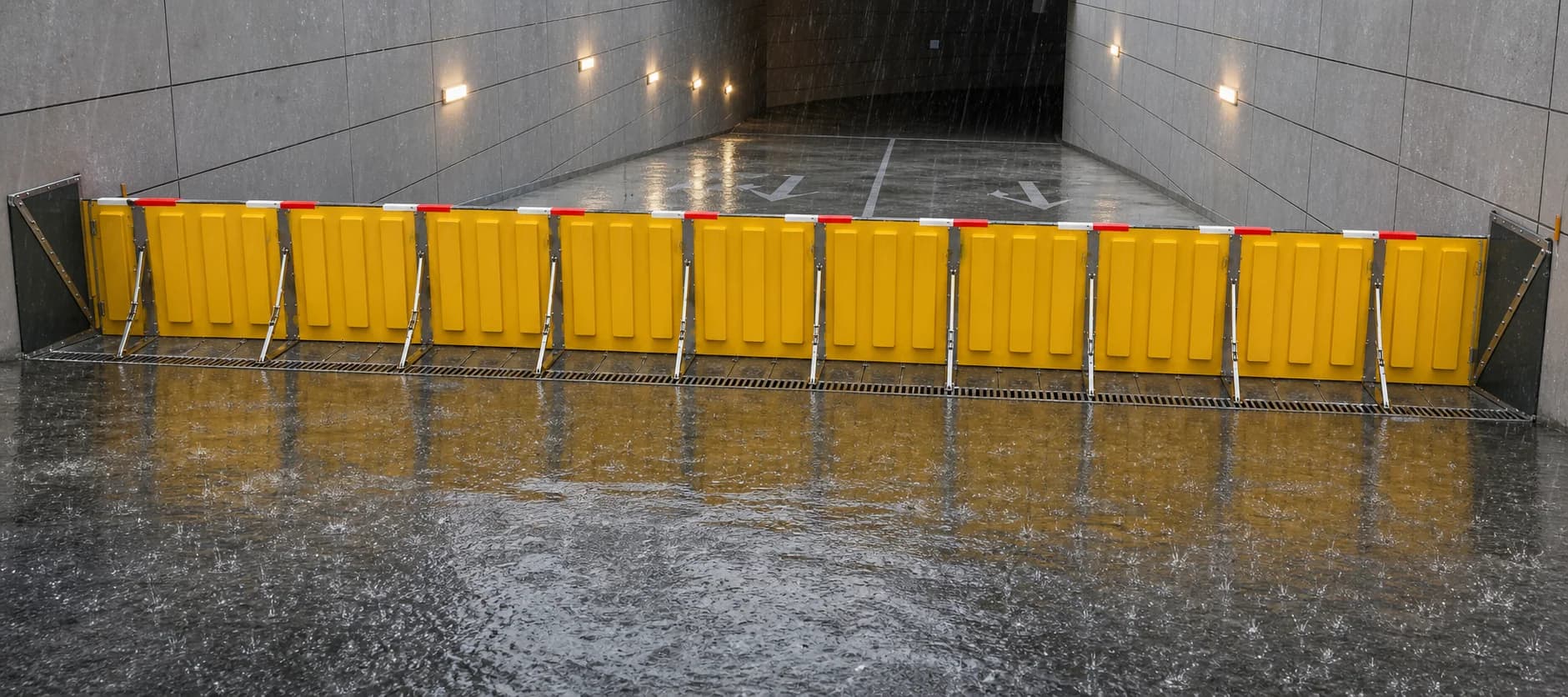
Basement car park entries
The ramp is the lowest opening in the building and nobody is standing at it when the water arrives. The barrier closes it without anyone being called out.
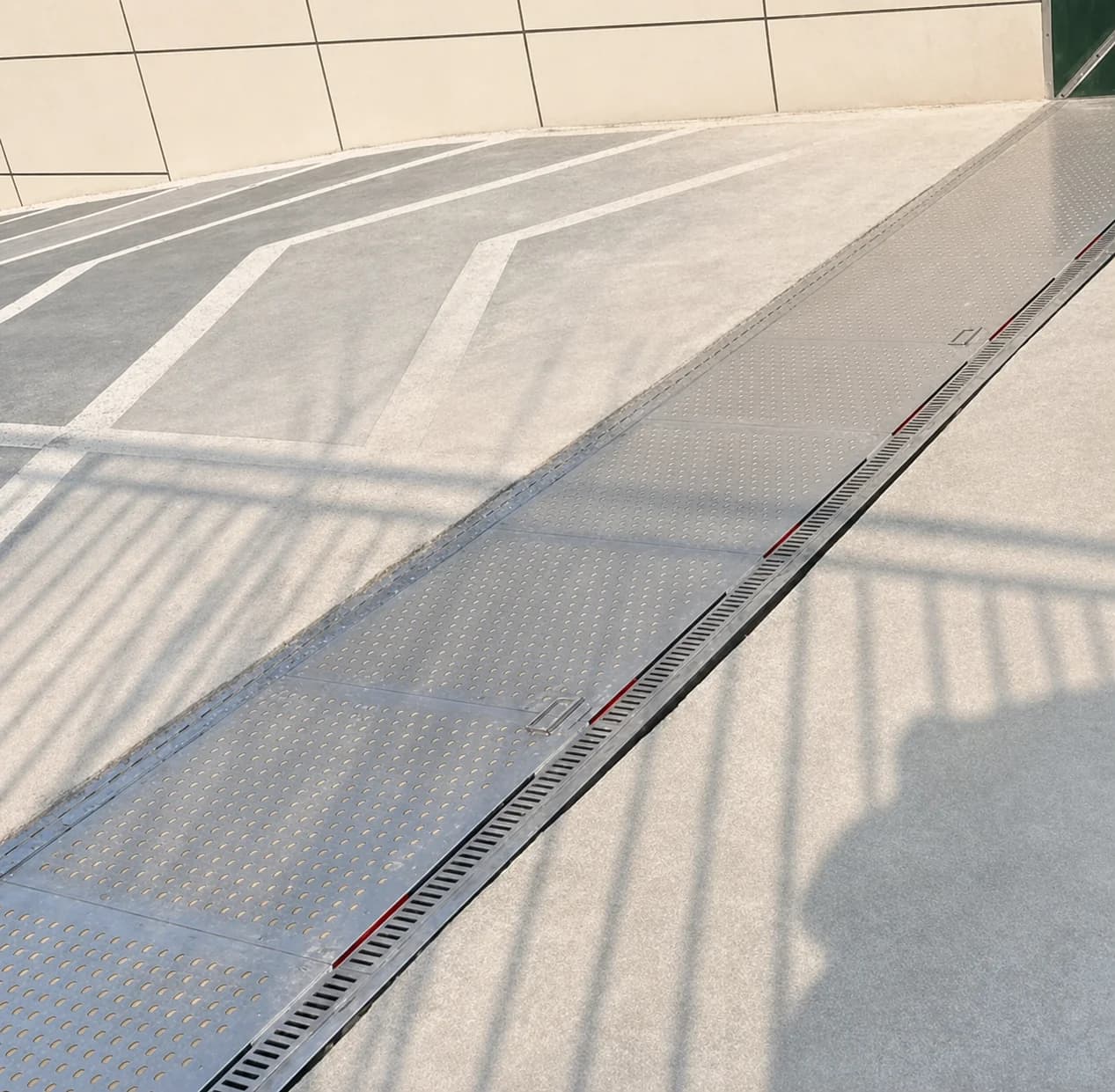
Driveways and ramps
Recessed into the slab, the lowered barrier is part of the driveway surface. Cars and pedestrians cross it every day.
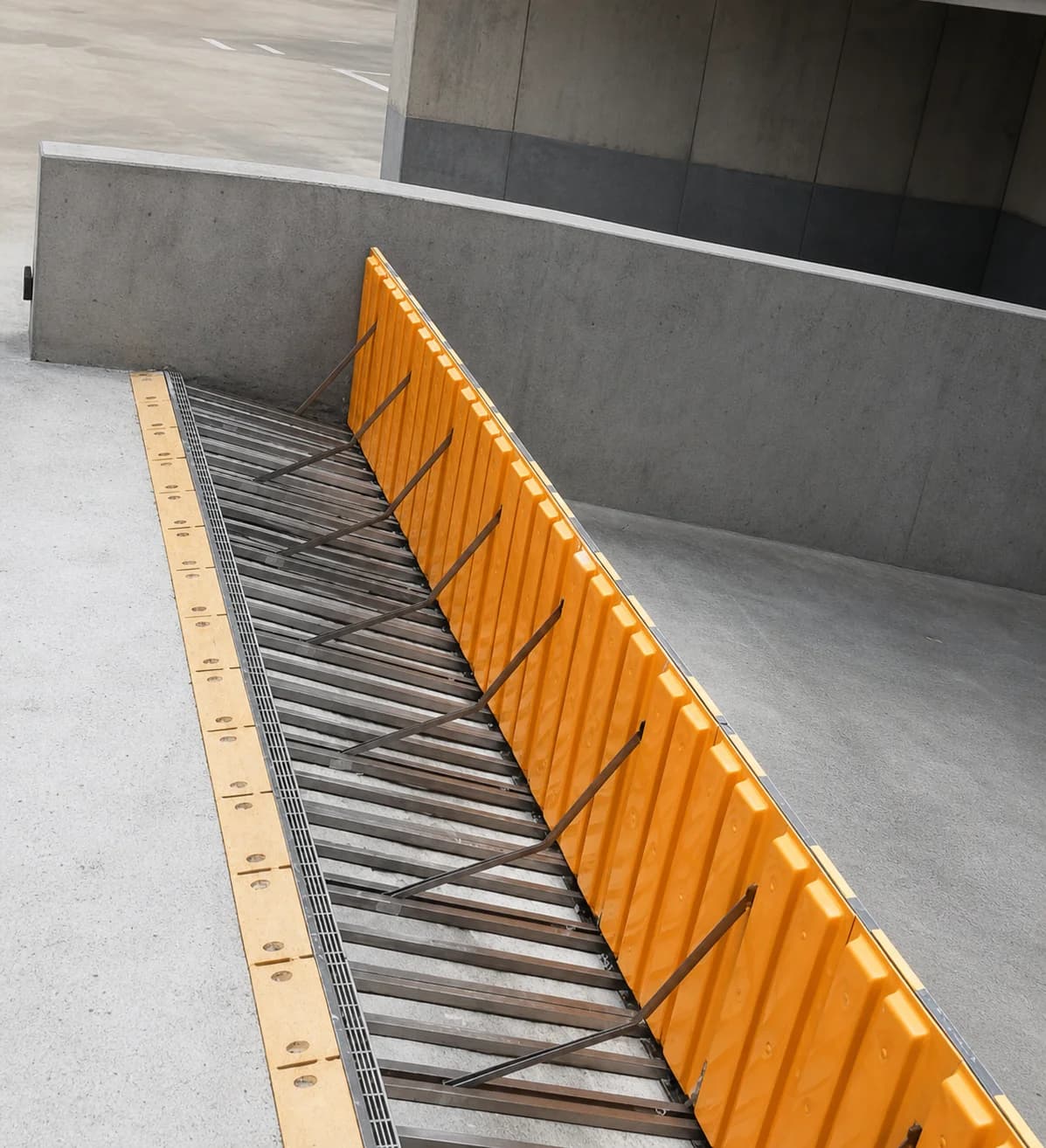
Loading docks and service entries
Trafficable to 20 tonnes GVM when fully lowered, so delivery trucks keep using the dock.
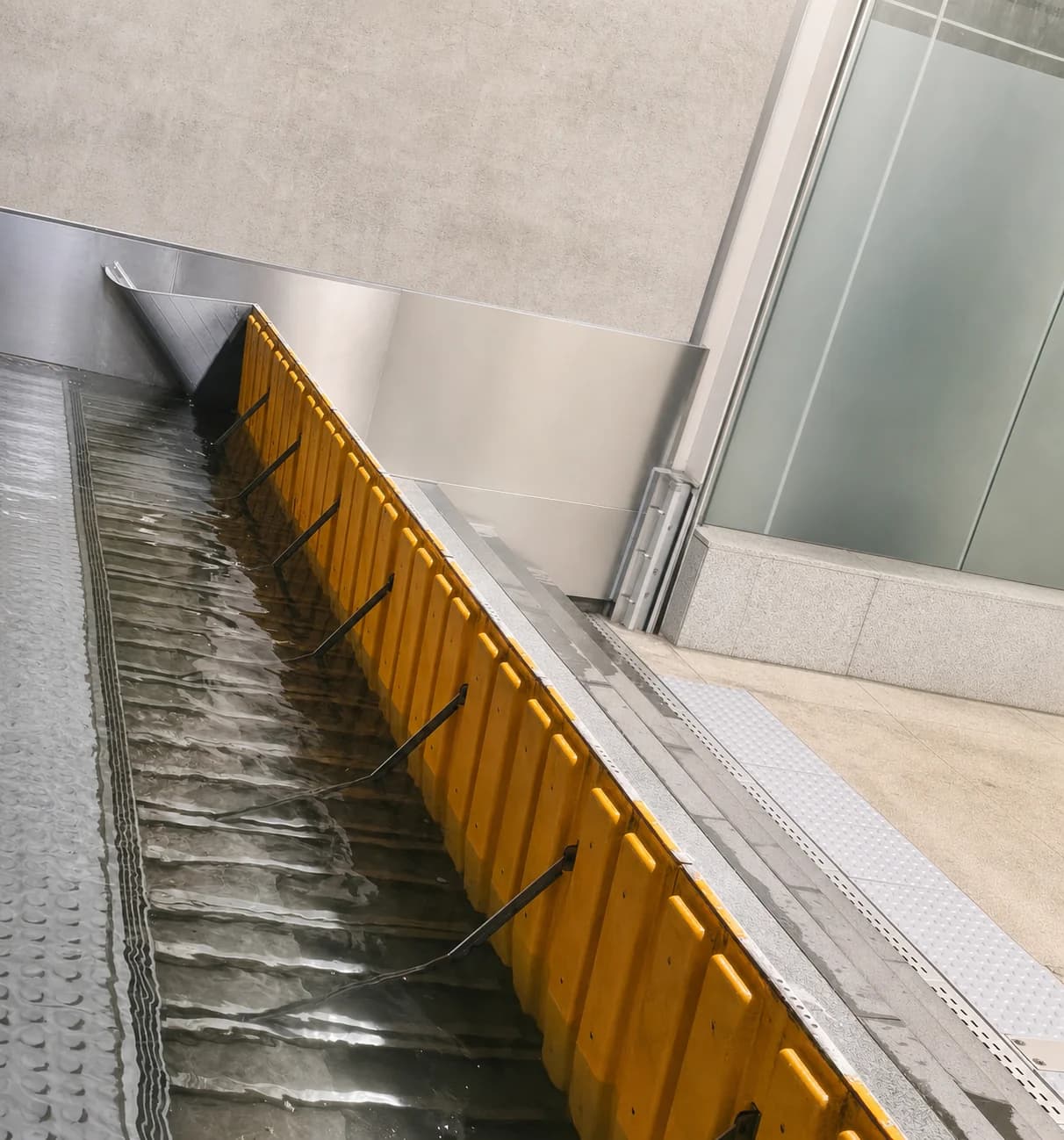
Transit and pedestrian access
Lobby entries, concourses and stair heads that have to stay open to the public until the moment the water arrives.
Related guides
Learn where this flood barrier works best.
Compare this against every other option in the flood barriers Australia comparison — every barrier type side by side by rated depth, deploy time, and cost. The guides below go deeper on specific site types and use cases.
Continue browsing
Other products

Water-Activated Sandbags
6 fast-deploy water-activated sandbags — no sand or shovels needed.
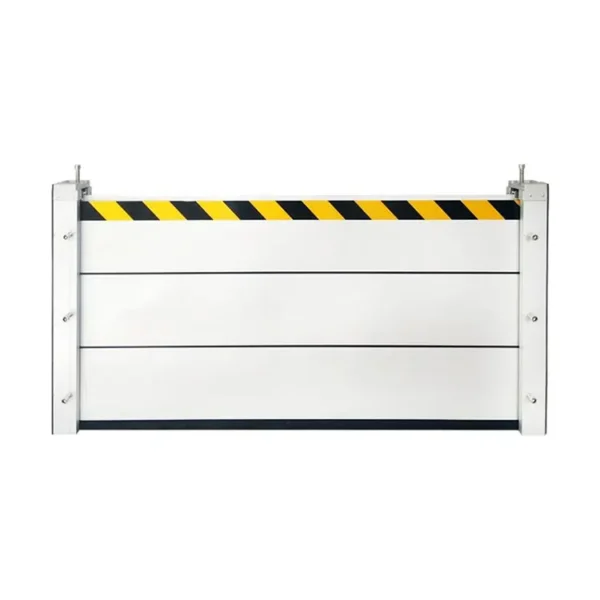
Aluminium Flood Barriers
Made-to-measure aluminium barriers that clamp rubber seals against the frame and floor, fit in minutes, and lift straight back out.
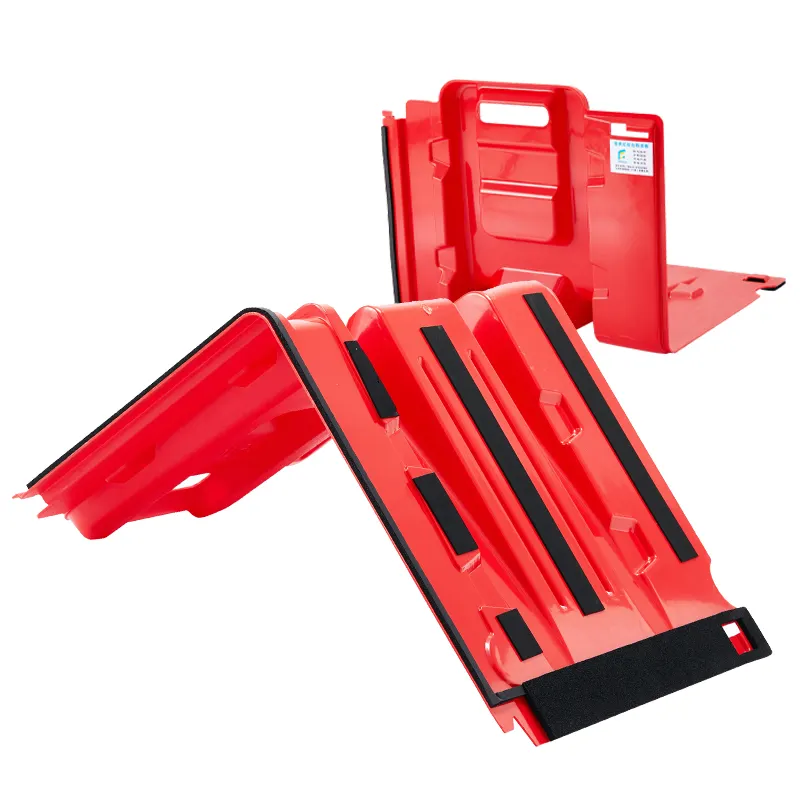
ABS Portable Flood Barriers
No installation — set the panels down where the water comes in, lift them away afterwards.
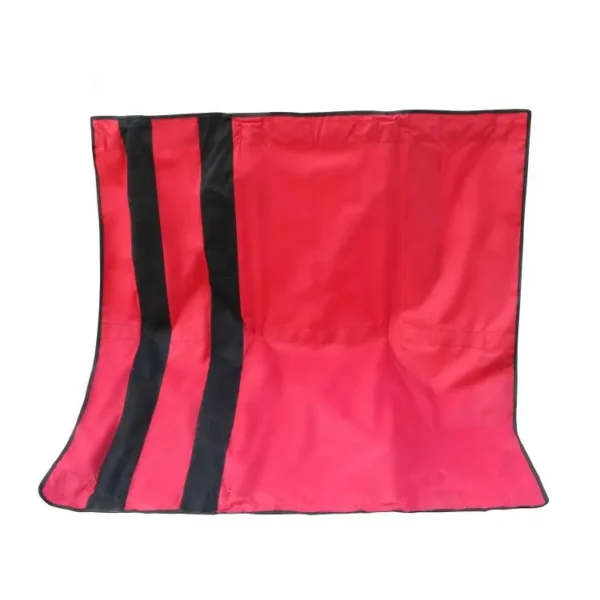
Oxford Barriers
A telescopic 2-pack that adjusts from 15 cm to 130 cm wide.