
Homes and rentals
Flood barriers for Australian homes.
Water gets into a house through a handful of predictable openings — the garage, the doors, the side gate. Protect them in that order, because an open side gate undoes a protected front door.
Use cases
Where water actually enters a house.
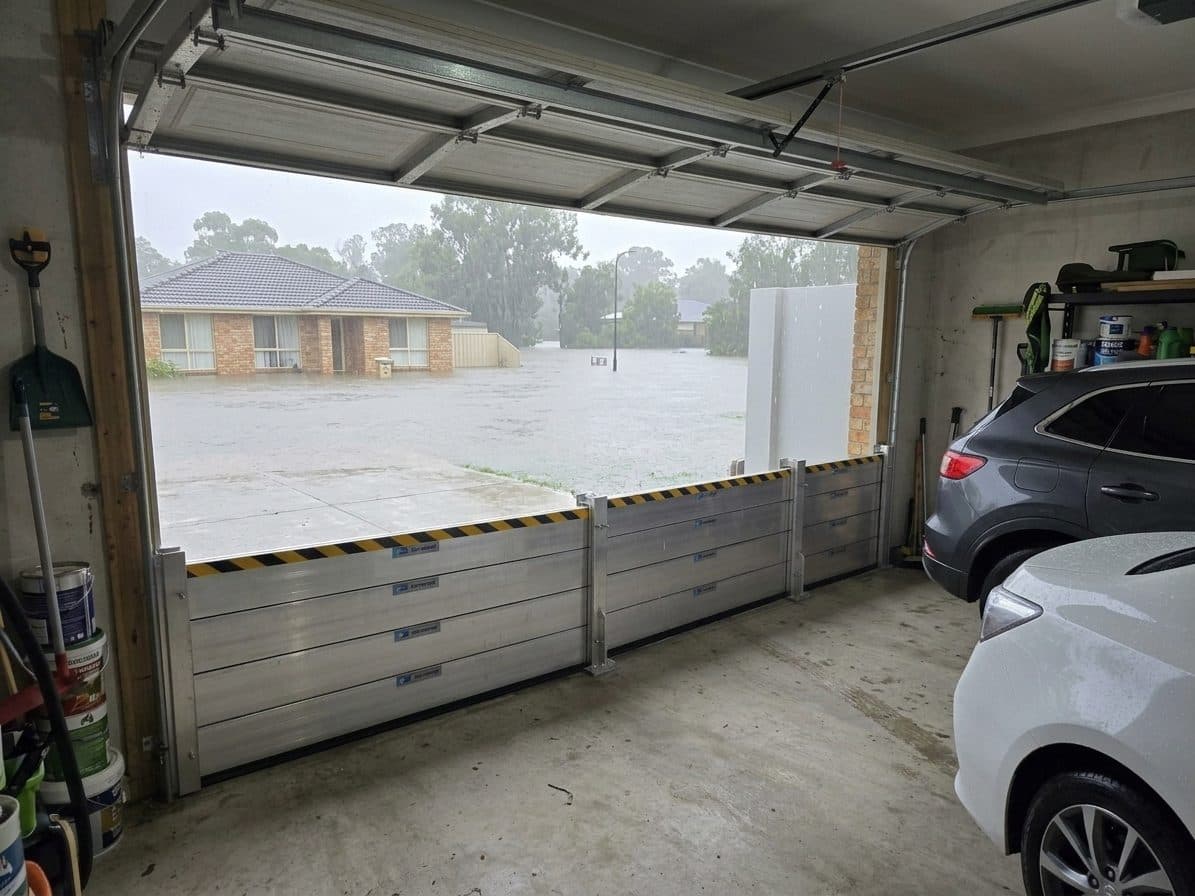
Garage roller doors
The base seal on a roller door is a dust seal, not a water seal. Treat the base of the door as an open gap the full width of the opening and size the barrier for the opening.
Oxford barriers →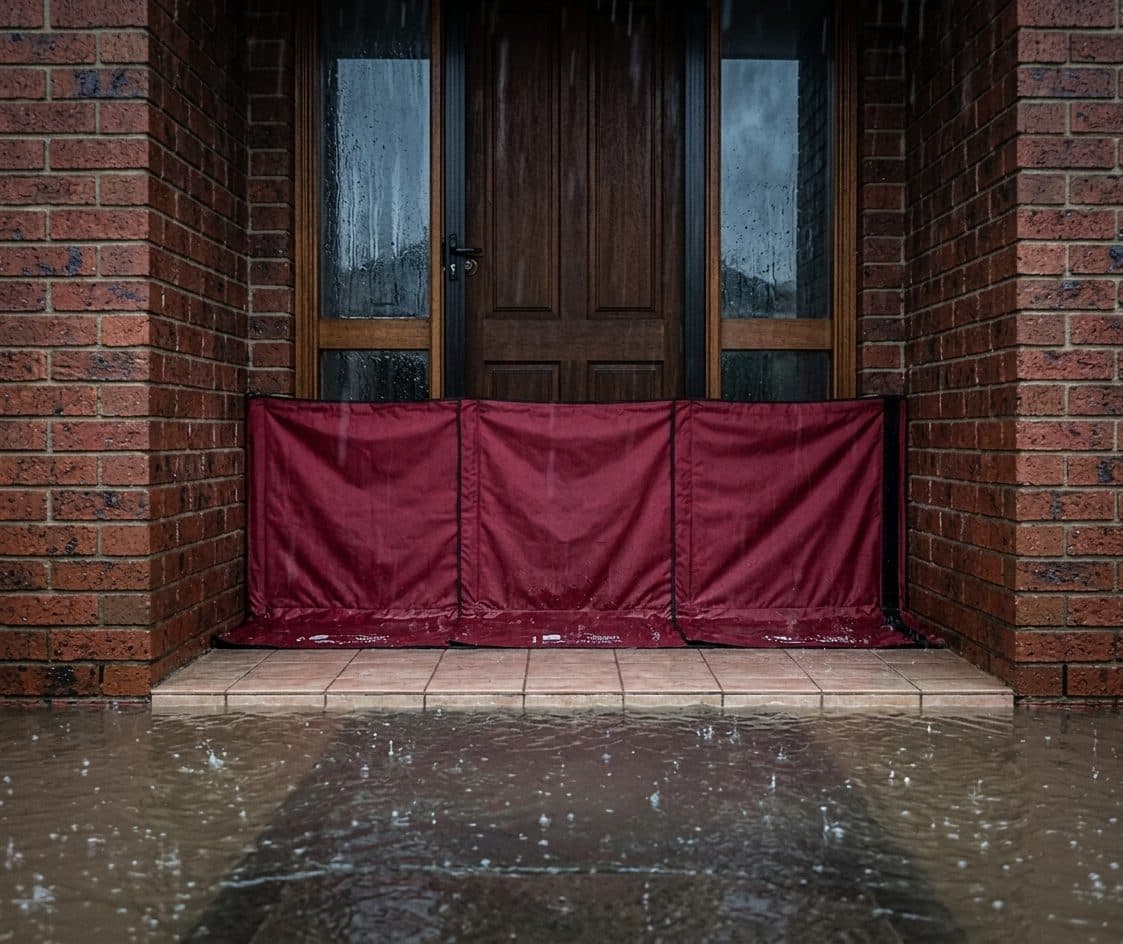
Front and side doors
A single Oxford barrier adjusts to a standard doorway, deploys tool-free in minutes, and stores flat behind the door it protects. A sandbag along the threshold seals the gap.
Oxford barriers →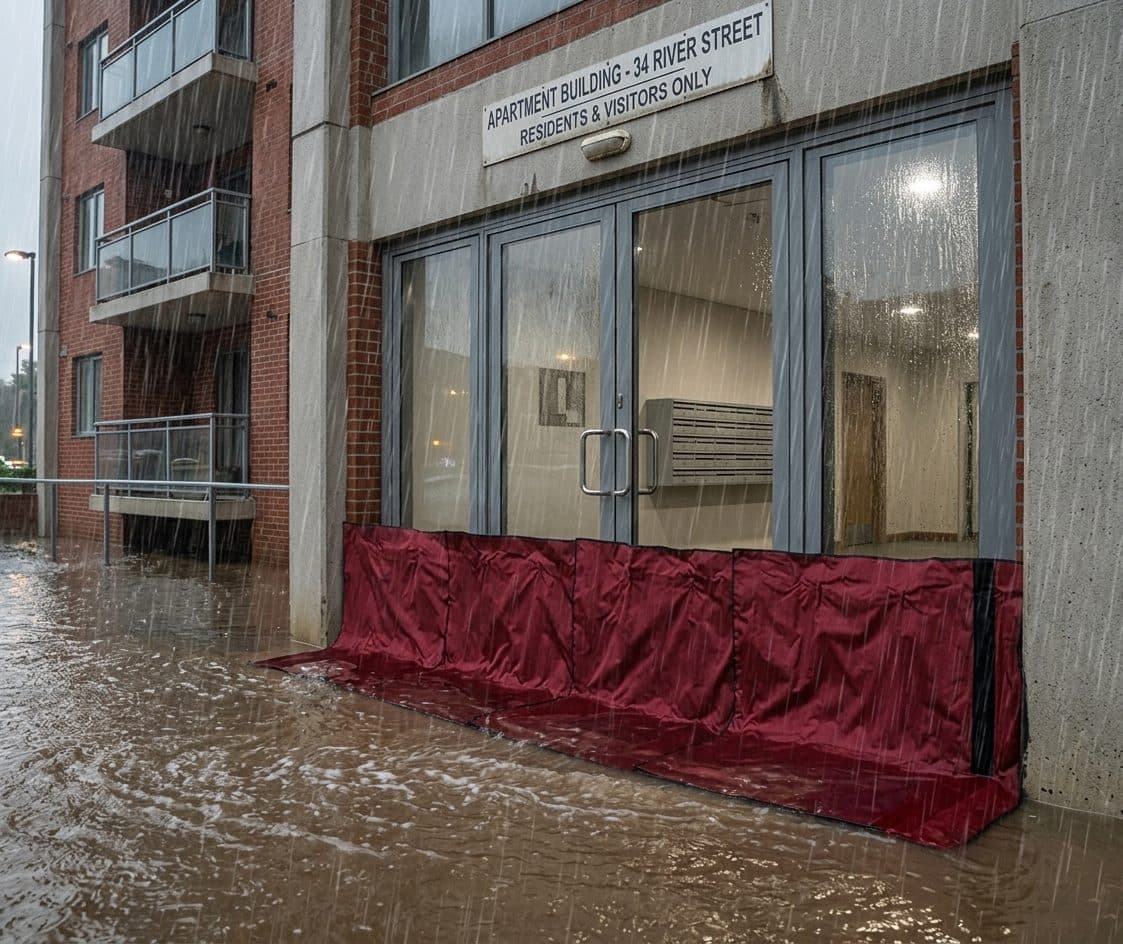
Apartments and townhouses
Ground-floor unit entries and internal garage doors. Portable barriers leave no fixings, so they suit lot entries where the building itself is common property.
Oxford barriers →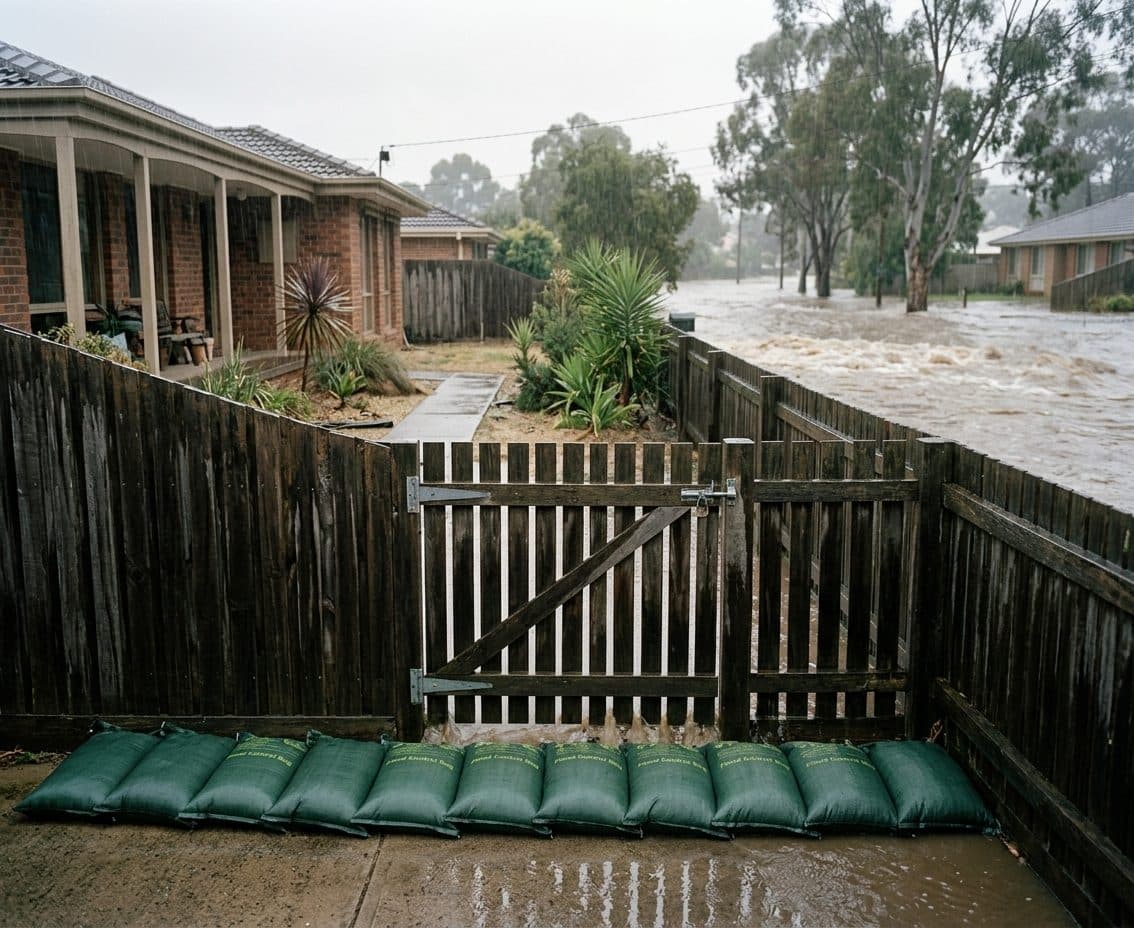
Backyard gates and side access
Water routes around a protected front door and takes the easiest path in. Sandbags conform to gate profiles and uneven paths that a rigid panel cannot seat against.
Water-activated sandbags →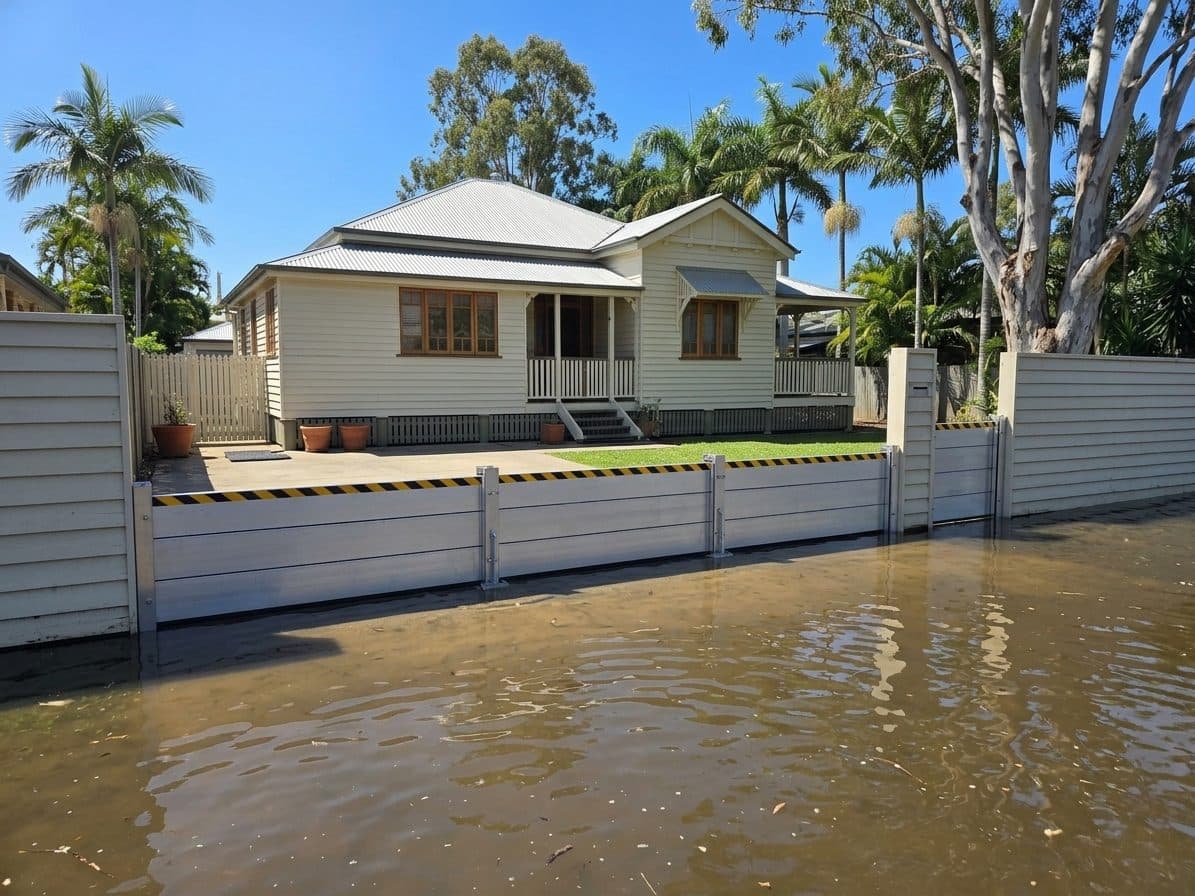
Driveways and front gates
A sloped driveway feeds everything downhill to the garage. Aluminium sets are made to measure for wide gate and driveway openings, and deploy in under ten minutes.
Aluminium flood barriers →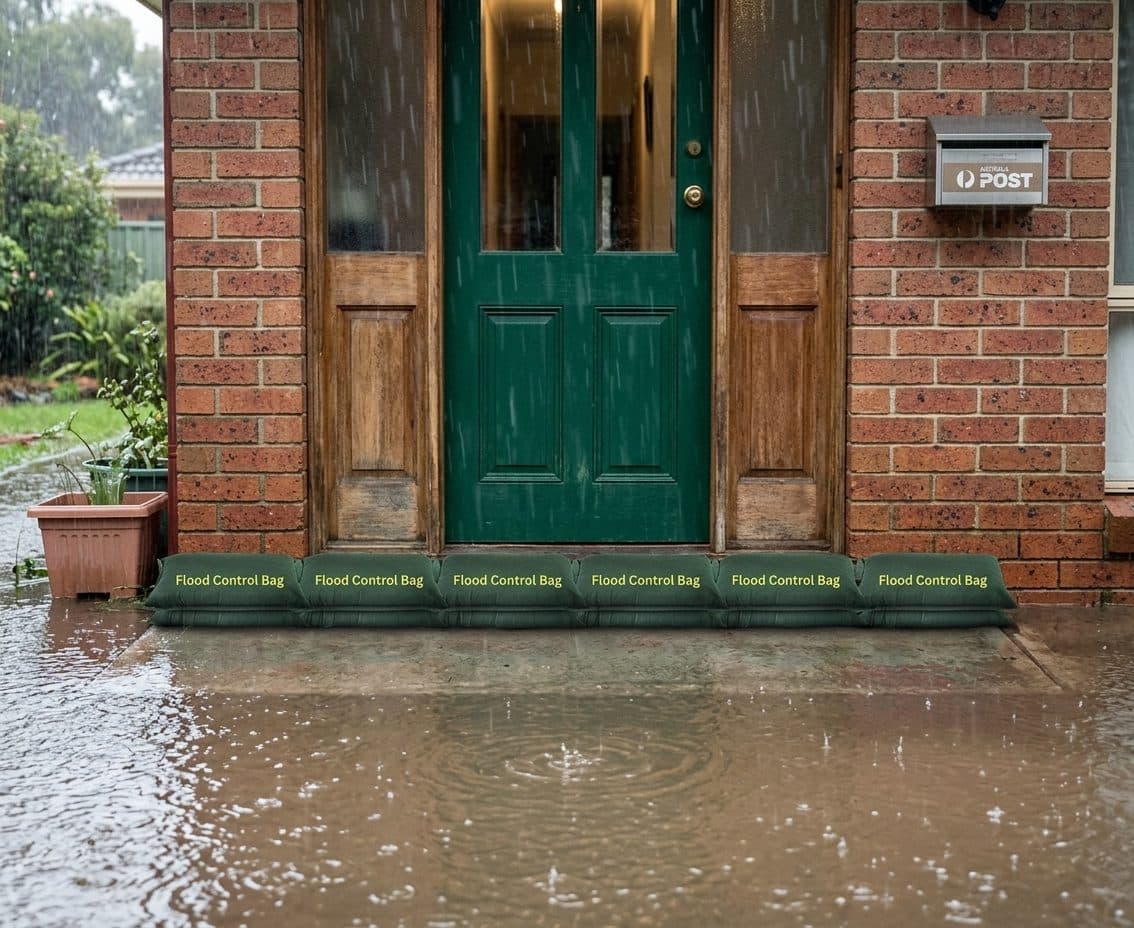
Rental properties
Sandbags, Oxford barriers, and ABS panels leave no fixings, so a tenant can deploy them without landlord involvement. Anything drilled or fixed needs written consent first.
Renter's guide →Sizing
Which barrier fits which opening.
- Single roller door, around 2.4 mOne Oxford 2-pack spans the width, with a sandbag row along the base to seal against an uneven driveway.
- Double roller door, 4.5–5 mTwo Oxford 2-packs linked end-to-end, or an ABS 8-panel pack where the surface is uneven or the door is used often.
- Side-entry personnel door, 820–900 mmA single Oxford 2-pack adjusted to door width, paired with a sandbag along the threshold gap.
- Sliding glass door or rear balcony accessOxford barriers on the upstream face. Commonly overlooked where the flood arrives as stormwater runoff rather than an overflowing waterway.
- Textured or uneven driveway surfaceAdd a row of water-activated sandbags along the base to fill anywhere the barrier fabric does not seat flush.
One rule covers most mistakes: an Oxford 2-pack is two barriers, each adjusting to 1,300 mm, so a pack spans up to 2,600 mm — a single door, not a double. Sandbag height is counted in courses: one course stands 120 mm, two reach roughly 240 mm.
Detail
Guides for homeowners and renters.
Flood barriers for home garages
Roller door sizing, deployment sequence, storage and reuse, and the flood-watch action list.
How to flood proof a house
The full entry-point audit, interior preparation, and product selection by scenario.
Flood barriers for rental properties
Landlord and tenant responsibility, and what a tenant can deploy without consent.
Portable flood barriers for homes
Oxford barriers and ABS panels compared for typical residential and garage openings.
Flood barriers vs sandbags
How the two work together in a layered setup rather than as alternatives.
Flood preparation checklist
The pre-season sequence, from measuring openings through to a dry-run deployment.
FAQ
Residential flood barrier FAQs.
What flood barrier suits a residential garage roller door?
How deep does a residential flood barrier need to be rated?
Can a tenant install flood barriers without the landlord's permission?
What should be done inside the house before floodwater arrives?
Do flood barriers need council approval on a home?
Can water-activated sandbags be reused?
Not sure which barrier fits your opening?
Send us the opening width and a photo of the threshold, and we’ll recommend the right product for it.
Get a Recommendation