Article · 15 November 2024
Flood Barriers vs Sandbags: What Works Best
Compare flood barriers vs sandbags in Australia: deployment speed, real-world performance, and long-term cost for homes and businesses in NSW and QLD.

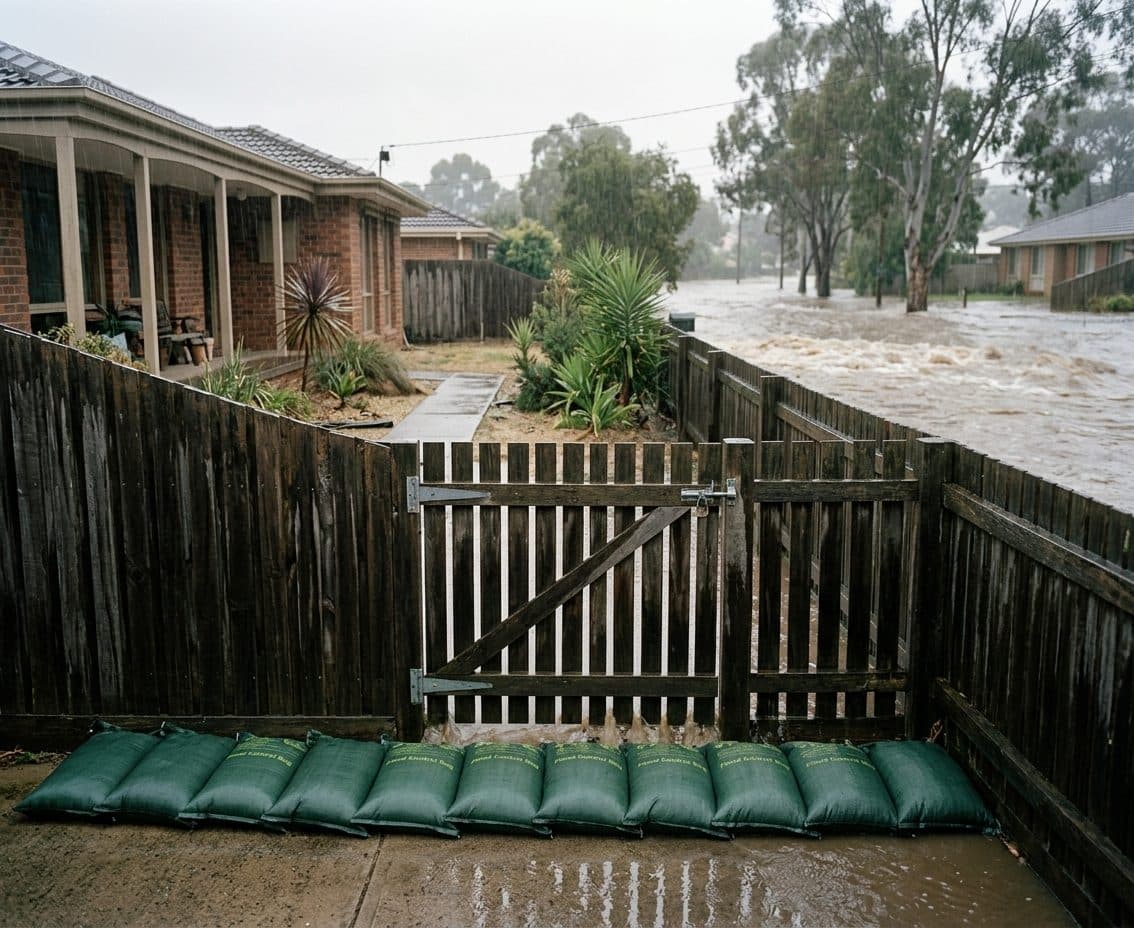
Modern flood barriers are faster to deploy, cleaner to handle, and more practical for repeat storm seasons than traditional sandbags. Sandbags still have a place — for filling irregular gaps and emergencies — but they are labour-intensive and often underperform during rushed deployments when timing is most critical.
How do flood barriers and sandbags compare at a glance?
| Factor | Flood Barriers | Sandbags |
|---|---|---|
| Deployment time | Fast (minutes with pre-planned layout) | Slow (fill, carry, stack manually) |
| Team size required | 1–2 people | Larger team |
| Repeat use | High (reusable across seasons) | Low (often single-event) |
| Seal consistency | High when correctly installed | Variable depending on stacking quality |
| Clean-up load | Lower | Higher disposal burden |
| Best use case | Doorways, driveways, repeat-risk sites | Gap-filling and irregular edges |
Does deployment speed actually matter during a flood event?
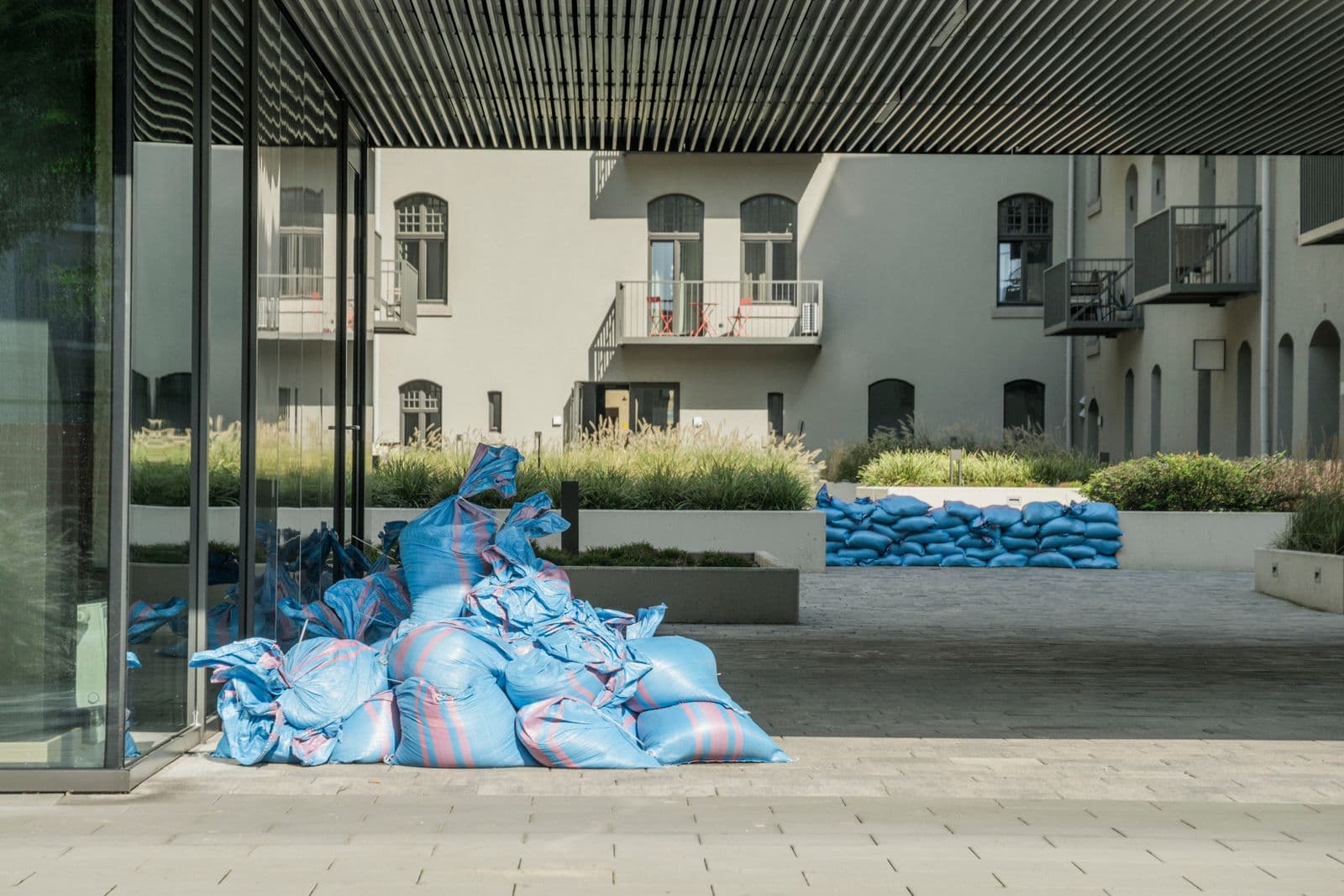
Speed matters more than most property owners expect. Sandbags carry significant friction at every stage: sourcing bags, filling them, transporting materials, and stacking under pressure with limited time and potentially limited staff. A depleted sandbag supply at the wrong moment means partial protection or none at all.
Reusable barriers can be stored assembled or near-ready and placed against a predetermined layout in minutes. Faster deployment directly improves protection outcomes — the barrier line goes up before runoff peaks. This advantage is largest in areas that experience intense rainfall with short warning windows, which describes much of coastal NSW and south-east Queensland during summer storm season.
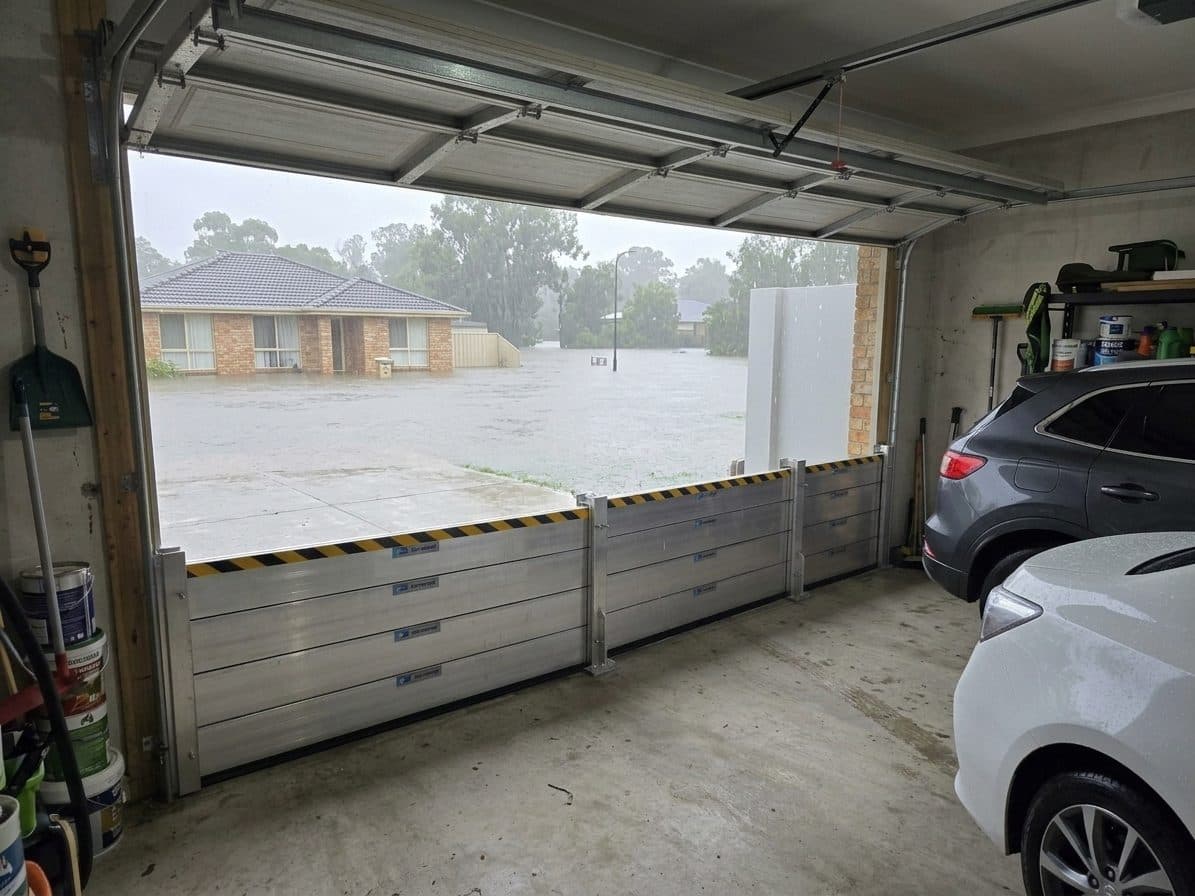
In suburban properties, a well-drilled two-person team can deploy a full aluminium barrier set across a double garage and front entry in under 15 minutes. The same task with sandbags — sourcing, filling, and correctly stacking to a seal — rarely achieves comparable coverage in less than an hour, and the seal quality is lower.
How do barriers and sandbags perform at doorways, driveways, and shopfronts?
Both systems reduce damage but they fail differently. Sandbags leak through imperfect stacking, gaps between bags, and uneven base surfaces. Barriers fail when sizing is wrong or side interfaces are not sealed properly. Neither system is foolproof, but the failure modes of rigid barriers are more predictable and correctable during dry-run testing.
For straight-line openings and locations that flood repeatedly, rigid barriers typically deliver more consistent results than manually stacked bags. This is particularly true for businesses with defined vulnerable areas such as roller doors, glazed shopfronts, and wide driveway entries where stacking bags evenly across a 2–3 metre span is difficult under time pressure.
Aluminium demountable flood barriers are engineered specifically for this problem: marine-grade panels that slot between side posts fixed either side of the opening, deployable by one person in under 10 minutes, made to measure for the opening. The seal is consistent because the system geometry does not depend on the quality of manual stacking.
What is the real cost comparison over multiple flood seasons?
Initial sandbag costs look lower, but total spend often climbs steeply with repeated events. Labour hours, material replenishment, disposal fees, and cleanup time are routinely underestimated. In many states, used sandbags require disposal as contaminated waste if they have contacted floodwater containing sewage overflow, which is common during significant events. Reusable systems require higher upfront investment but typically become cheaper over two to three high-risk seasons once labour, disposal, and replenishment costs are factored in.
For businesses, the financial picture must also include downtime and repair. A single interrupted trading period — even one day of closure for cleanup — can exceed the annual cost difference between cheap temporary bags and a well-specified reusable barrier system.
Water-activated sandbags at $59 for a pack of 6 offer a middle-ground option: no filling required, activate in 2–3 minutes, and each bag swells from 270 g to 18–22 kg. They are best deployed as emergency backup at irregular openings rather than as the primary barrier at a high-risk entry point. For exact quantities per opening, correct placement sequence, and disposal guidance after a flood, see the water-activated sandbags guide.
Which flood barrier suits detached homes in NSW and QLD?
For detached residential properties, prioritise driveway and garage entries first — these are typically the highest-volume ingress paths during overland flow. The most cost-effective setup for a typical suburban property combines a modular reusable barrier at the primary entry with a small reserve of water-activated sandless bags for awkward threshold gaps and corners.
Key factors for residential selection:
- Opening width — standard doorways suit most modular barrier systems; wide roller doors need a barrier rated to 2–3 metres
- Flood frequency — properties in identified flood-prone areas benefit from a more capable primary barrier system
- Storage space — barriers need to live somewhere accessible, not in a difficult-to-reach location when time is short
- Household capacity — choose a system that one or two people can deploy without specialist tools
For suburbs with a history of repeated flash flooding — which includes parts of the Sydney basin, Brisbane's inner suburbs, and wide areas of the NSW mid-north coast — the case for investing in a reusable system rather than relying on sandbags strengthens considerably with each event cycle.
What is the best flood protection setup for retail shopfronts?
Retail entries have different requirements from residential ones: wider openings, higher foot traffic, and a stronger case for speed and repeatability because staff turnover means the person deploying the barrier may have limited experience.
Speed and repeatability win for commercial shopfronts. A layout that one or two staff can install without specialist tools, with a practice run once a season, keeps the deployment window real. The 10 minutes between "this is getting serious" and "there is water at the door" is a realistic window only if the equipment is accessible and the sequence is understood.
Reusable aluminium barriers suit primary shopfront entries, with ABS barriers for wide openings where nothing can be fixed. Keep a small reserve of absorbent water-activated bags for signage bases, cable entry points, and threshold gaps where a rigid barrier cannot achieve a clean seal.
How to measure openings correctly before purchasing barriers
- Measure clear width at floor level and at 200 mm height — openings often taper slightly.
- Record threshold height and slope direction — a cambered threshold requires different base hardware than a flat one.
- Photograph left and right side interfaces — that is where leakage starts, not through the panel itself.
- Identify obstacles: door tracks, rollers, floor drains, expansion joints, and uneven concrete joins.
- Build a deployment map with quantities and a sequence — front-of-house first, secondary entries second.
Most failed installations are planning failures, not product failures. A brief dry run before storm season meaningfully reduces damage risk. The goal is to complete the installation once slowly and correctly, so that every subsequent deployment is fast and familiar.
What triggers should I use to decide when to deploy?
Deploy based on forecast risk, not visible water. For suburbs with repeated runoff history, trigger setup earlier and treat official warnings as action signals rather than information only.
Reliable trigger sources for Australian properties:
- Bureau of Meteorology flood warnings and watches
- NSW State Emergency Service alerts
- Queensland Disaster Management advice
Register for location-based flood alerts through local council and state emergency services before the wet season. Being notified ahead of a peak event is the most reliable way to ensure deployment happens in time.
For a complete pre-season preparation sequence — from risk assessment, opening measurement, and barrier selection through to dry-run practice — see the flood preparation checklist for Australian homes and businesses.
How does a combined barrier and sandbag system work in practice?
The strongest real-world setup combines both:
- Primary line: reusable barriers at main openings — the driveway, garage door, or front entry threshold
- Edge control: a small reserve of water-activated sandless bags for corners, side gaps, and irregular edge interfaces
- Procedure: quarterly 20–30 minute training drills so the setup is familiar before the pressure of an actual event
For a typical suburban property, one driveway line, one front entry line, and two backup gap kits covers the highest-volume ingress points. Mark placement points with weatherproof tape so anyone in the household can deploy, not just the person who originally set it up.
After each event, document what failed, what slowed setup, and where quantities were short. That feedback loop steadily improves real protection performance season over season.
Townhouses, strata, and shared access points
Townhouses and strata properties face a specific challenge: who is responsible for deploying shared entry protection? Document the arrangement clearly — named primary person, named backup, and a storage location that is accessible to both. Response delay caused by uncertainty about responsibility is a bigger risk than product choice.
Focus on shared access points and low doorways, not just individual unit entries. A flood that enters through a shared corridor or basement-level car access point can affect multiple units regardless of what individual residents have done. Strata committees should include flood barrier deployment in the property emergency management plan and schedule an annual practice run.
For a tailored recommendation, contact our team — send your address, opening dimensions, and a photo of the entry, and we will respond within 1 business day.
Recommended next step
Match the guide to a flood barrier option.
These are the product pages and guides most relevant to this topic. Use them to compare flood barriers Australia-wide, then request a site-specific recommendation.