Article · 6 August 2026
Oxford Flood Barriers for Australian Homes
Oxford flood barriers suit Australian homes — adjustable from 15 cm to 130 cm wide, 900 mm flood depth rating, tool-free setup, free shipping from $449.
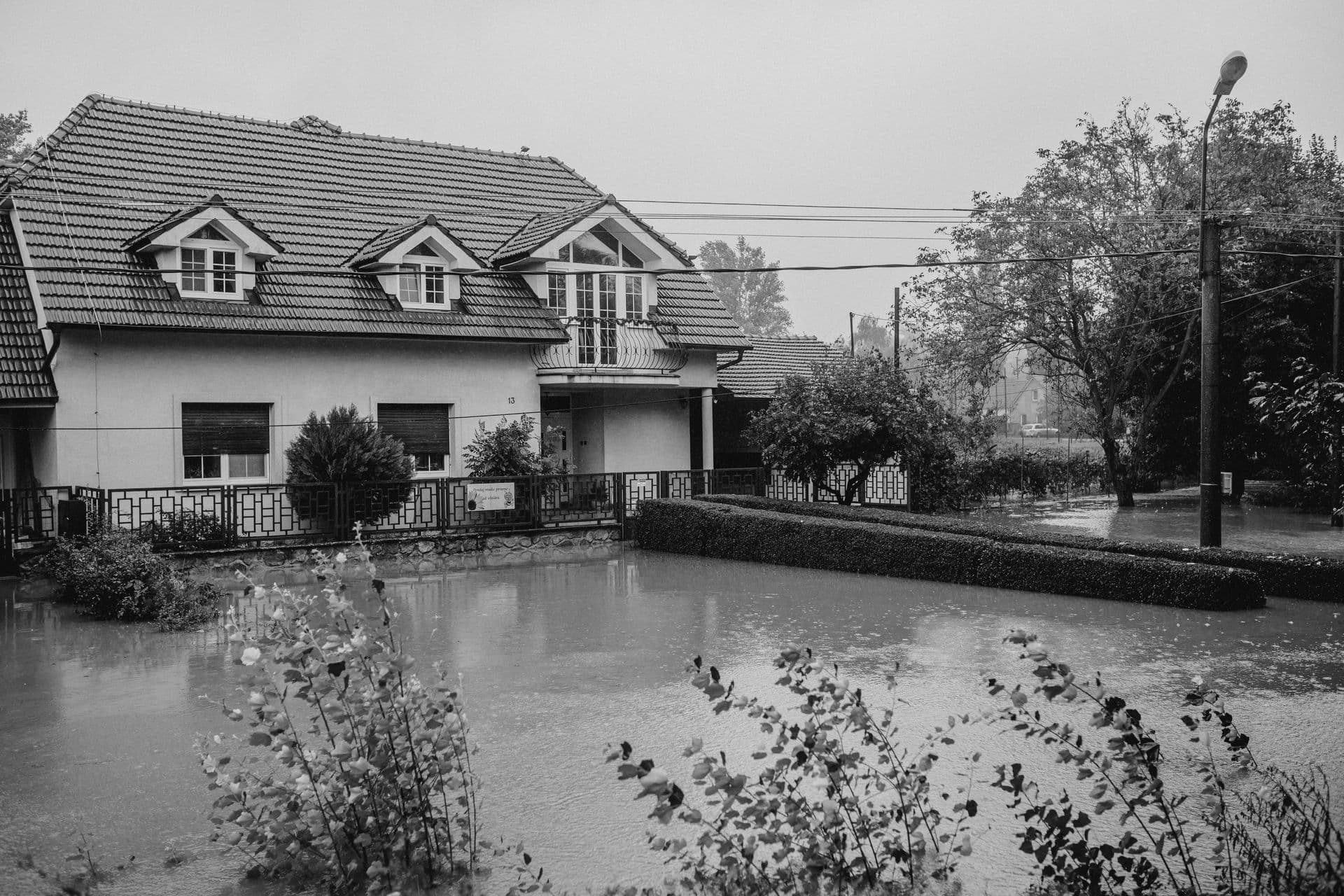
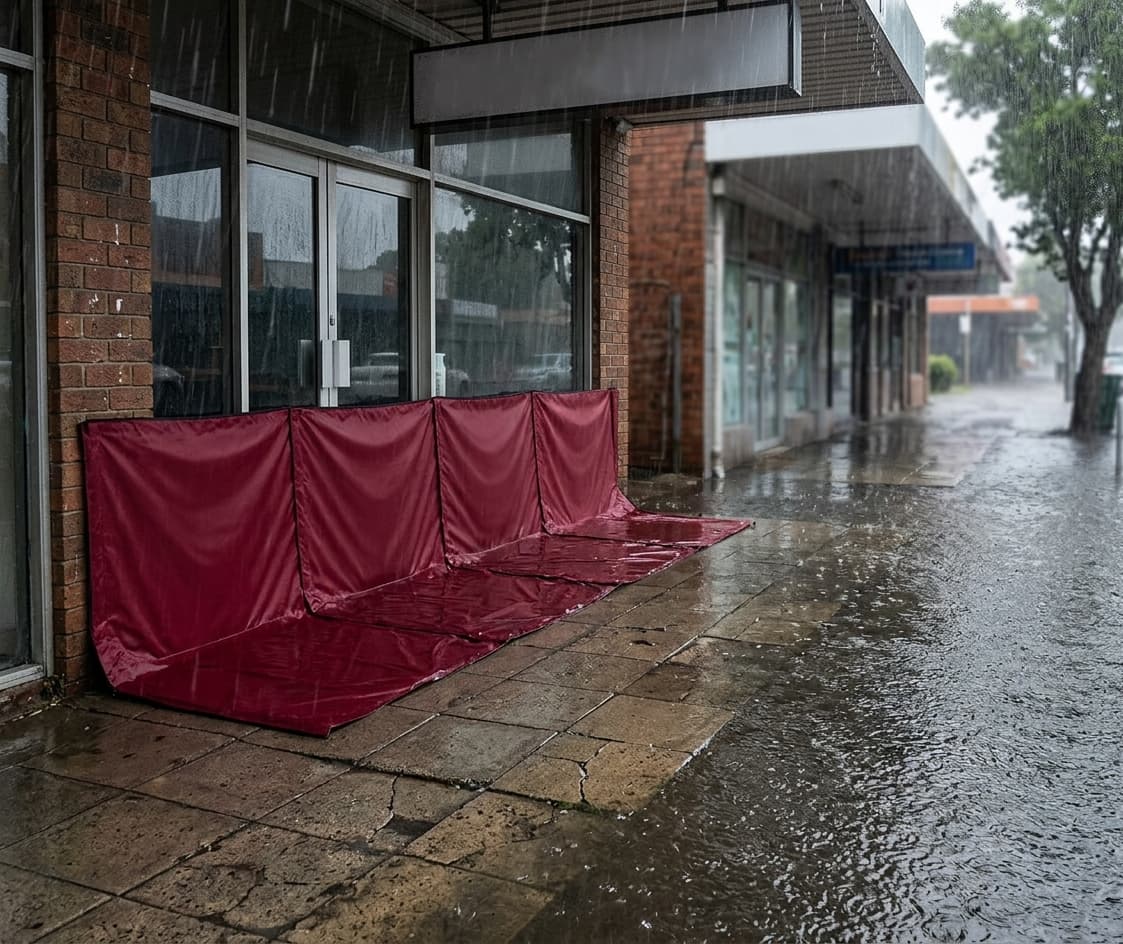
Oxford flood barriers are the most straightforward reusable flood protection option for Australian homeowners: tool-free to set up, light enough for one person to carry, and capable of stopping water at doorways and garage entries before it reaches the floor. The telescopic design fits most standard residential openings without cutting or modification, and the barriers store flat in a cupboard or garage shelf between events. For properties that see occasional flooding and need a ready-to-deploy solution that doesn't require a contractor to install, they are a practical and affordable starting point.
What is an Oxford flood barrier?
An Oxford flood barrier is a self-supporting, telescopic flood guard built from PVC-coated Oxford cloth and a reinforced steel pipe frame. Each unit adjusts from 150 mm to 1,300 mm wide — covering the full range of standard residential doorways, side access gates, and most single-car garage roller door openings without needing to be cut or fitted by a professional.
The barrier works by using water pressure to form its seal rather than mechanical fasteners or clamping. As floodwater rises against the outer face of the barrier, the water's own weight pushes the cloth down and outward against the floor, creating an increasingly tight seal the deeper the water gets. This means no pre-tensioning, no screws, and no special floor preparation — the setup is completed in minutes, and the rising water does the rest.
Each unit in the 2-pack weighs 5.3 kg and folds flat for storage. The Oxford flood barriers 2-pack provides two barriers, enough to cover a standard entry door and a secondary opening such as a back door or laundry access. For wider openings, two 2-packs linked end-to-end extend coverage to approximately 260 cm.
How do Oxford barriers compare to other flood protection options?
Oxford barriers occupy a specific position in the residential product range: more robust than water-activated sandbags for protecting defined openings, faster to deploy than aluminium panel systems requiring anchor installation, and considerably less expensive than automatic or passive flood gate systems.
| Barrier type | Flood depth rating | Deploy time | Price from | Best for |
|---|---|---|---|---|
| Oxford barriers | 900 mm | Under 5 minutes | $449 / 2-pack | Standard doorways, garage entries, side gates |
| Water-activated sandbags | 120 mm per course, ~240 mm stacked two deep | 2–3 minutes | $59 / pack of 6 | Gaps, irregular surfaces, secondary protection |
| Aluminium demountable | Made to measure | Under 10 minutes | Quoted per opening | Wide openings, high flood depth, repeated seasonal use |
| ABS portable panels | Site-specific | 15 minutes | $1,659 / 8-pack | Warehouses, wide commercial entries, loading bays |
| Automatic flood gate | Up to 2,000 mm | Automatic | Quote | Unattended sites, carpark ramps, critical infrastructure |
For most residential doorways and standard garage entries in flood-prone areas of NSW, Queensland, and Victoria, Oxford barriers cover the primary exposure point. If the opening exceeds 130 cm or flood depths are likely to reach above 900 mm, aluminium flood barriers are the next step up — they are made to measure for the opening, with the height built up in 200 mm panel steps.
Water-activated sandbags remain useful alongside any reusable barrier: they fill gaps along the base of roller doors, seal around irregular surfaces, and provide a secondary layer of protection at access points where a rigid barrier is not practical. A pack of 6 costs $59 and activates in 2–3 minutes on contact with fresh water.
Which openings suit an Oxford flood barrier?
Standard doorways (600–1,300 mm wide) are the primary application. Most residential front and back doors, laundry entries, and side access gates fall within the 1,300 mm maximum width. The telescopic frame adjusts to the exact opening, and the base rail sits flat against most door thresholds and sill profiles.
Single-car garage entries work with two 2-packs linked side by side. A single-car garage door is typically 2,400–2,700 mm wide; two Oxford barriers linked together cover up to approximately 260 cm of that opening. The remaining gap at one end can be supplemented with water-activated sandbags along the roller door base channel — roller doors are rarely perfectly sealed at the base, and the combination handles most surface water events effectively.
Sliding door frames and glass door entries also suit Oxford barriers well. The PVC cloth seals evenly against smooth surfaces including polished concrete, tiles, and timber decking. The barrier sits inside or just outside the door frame with the cloth pressed flat by the water load.
Basement stairwell entries at ground level are another common application. A single Oxford barrier positioned across the stairwell entry prevents surface water from cascading down the stairs during a heavy rain event — one of the most common residential flood damage pathways in Queensland's older housing stock.
Where Oxford barriers are not the right fit: openings wider than 260 cm that require a single sealed continuous barrier, sites where flood depth regularly exceeds 900 mm, and unattended sites where no one is present to deploy the barrier when flooding begins. For those scenarios, automatic flood gates or a custom-engineered solution are the appropriate specification.
How do you set up and store an Oxford flood barrier?
Setup takes under five minutes and needs no tools:
- Extend the telescopic frame to match your opening width and lock it at that length
- Position the barrier across the opening with the PVC-coated cloth facing outward toward the water source
- Ensure the base rail sits flush against the floor along the full width
- The barrier is now in position — no clamping, no screwing, no anchoring required
As floodwater rises against the outer face, the water pressure seals the cloth to the floor and walls. The deeper the water, the tighter the seal.
After an event: allow the water level to drop before removing the barrier, drain any water from within the cloth, rinse with fresh water, and dry fully in a ventilated space before folding. Folded flat, each Oxford barrier fits in a standard storage bag or cardboard sleeve and can be stored under a workbench, in a wall-mounted bracket, or in an outdoor storage box.
When should I deploy an Oxford flood barrier?
The Bureau of Meteorology uses a three-tier warning system — Flood Watch, Flood Warning, and Emergency Warning — that determines how much time you have for barrier setup.
A Flood Watch is issued when conditions may produce flooding in the next 24 to 48 hours. This is the preparation window: locate your barriers, extend and test the fit against each opening, and check whether you need additional water-activated sandbags for gap-filling. You have time to work methodically without urgency.
A Flood Warning means flooding is occurring or imminent. At this point, deploy your Oxford barriers immediately — a Flood Warning window may be measured in hours, and barriers should be positioned before floodwater begins moving toward the property.
An Emergency Warning is issued when flooding is already severe. If you receive an Emergency Warning without barriers already in place, focus on personal safety and evacuation rather than property protection.
From 1 July 2026, the Bureau of Meteorology expanded its riverine flood forecasting for Greater Melbourne, adding 27 new monitoring locations across the metropolitan area and bringing the statewide total to 98. Property owners in catchments that were previously unmonitored now receive earlier warning times, extending the preparation window available before a Flood Warning is formally issued. Across Western Australia's southwestern catchments, active severe weather warnings during August reflect the region's typical winter storm pattern — cold-front systems moving through the Bight and driving heavy rainfall across coastal and semi-coastal areas.
The BOM's flood warning service allows you to sign up for alerts for your specific catchment, so you receive notification before a Flood Watch escalates to a Warning.
How many Oxford flood barriers do I need?
Start by counting the openings at your property that sit at or below street level, or below the height of any surrounding hardstand.
For a single entry door or back door, one 2-pack provides two barriers — enough to cover the primary entry and a secondary opening such as a laundry door or side gate.
For a single-car garage plus front door, order two 2-packs: two barriers linked for the garage opening, and one barrier for the front door, with the fourth barrier available for a back door or secondary opening.
For a property with three or more exposed openings, order based on the number of openings you need to protect simultaneously. A typical detached home on a flood-prone street in Brisbane or Newcastle will have a front entry, a garage, and a back access door — three barriers covers all three if the garage is standard-width.
Multiple Oxford barriers can be linked end-to-end, but for openings wider than 260 cm or where a single continuous seal is needed, a custom-sized aluminium barrier system offers a more reliable solution. Contact Flood Control for a site assessment — most residential properties have drainage patterns and entry point configurations that determine the most effective combination of barrier types, and a brief site review ensures you are not over-specifying or leaving a gap exposed.
Recommended next step
Match the guide to a flood barrier option.
These are the product pages and guides most relevant to this topic. Use them to compare flood barriers Australia-wide, then request a site-specific recommendation.