Article · 10 May 2026
Automatic Flood Gates for Carparks
How electrically powered hydraulic flood barriers use water-level sensing to protect underground carparks and unattended commercial sites in Australia.

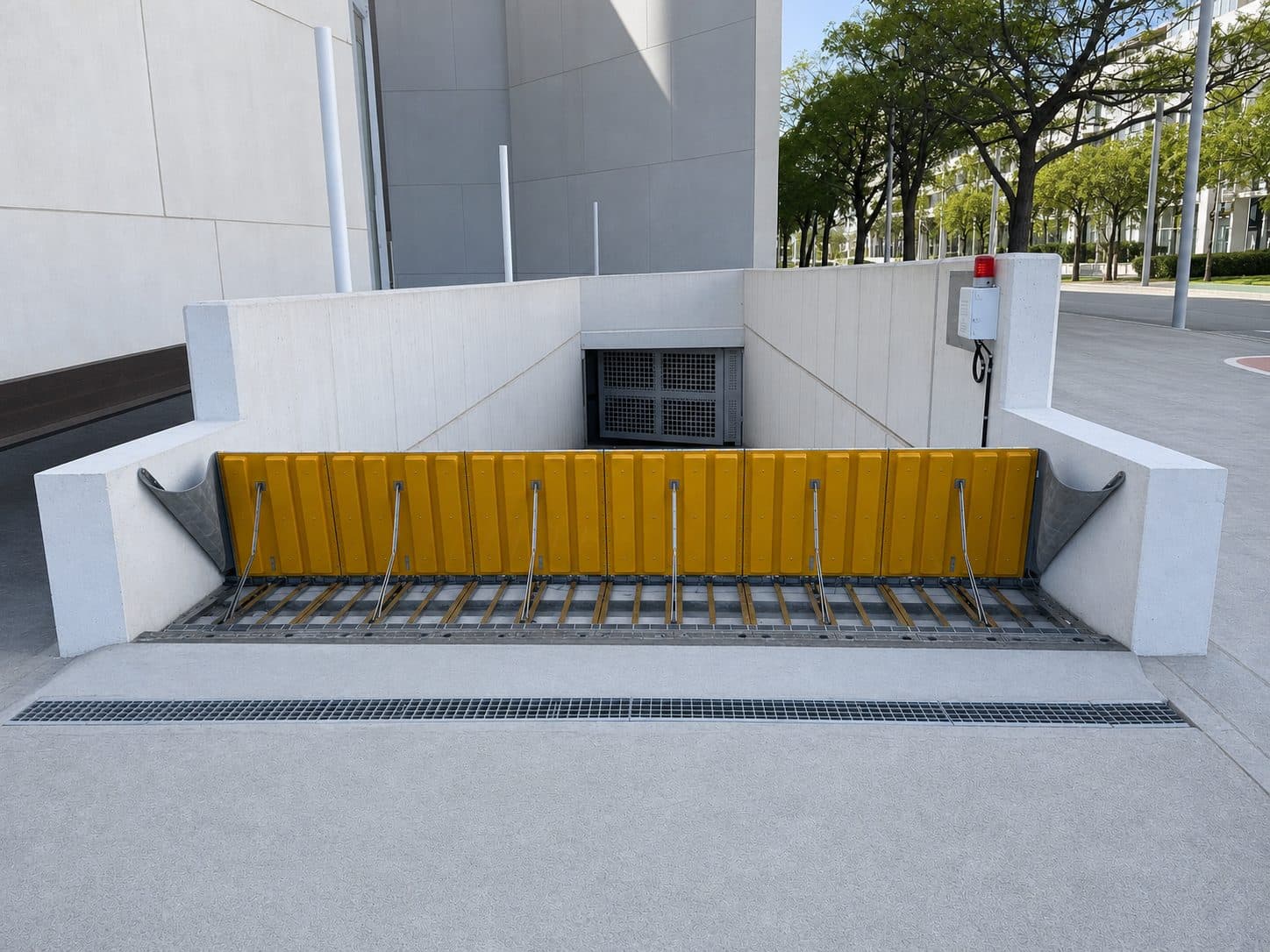
Flood protection often depends on someone being present to deploy it. That can be impractical for a carpark ramp, loading dock or commercial access point when flooding develops after hours. An Automatic Flood Barrier System addresses this with water-level sensing and an electrically powered hydraulic lifting system.
How does an automatic hydraulic flood barrier work?
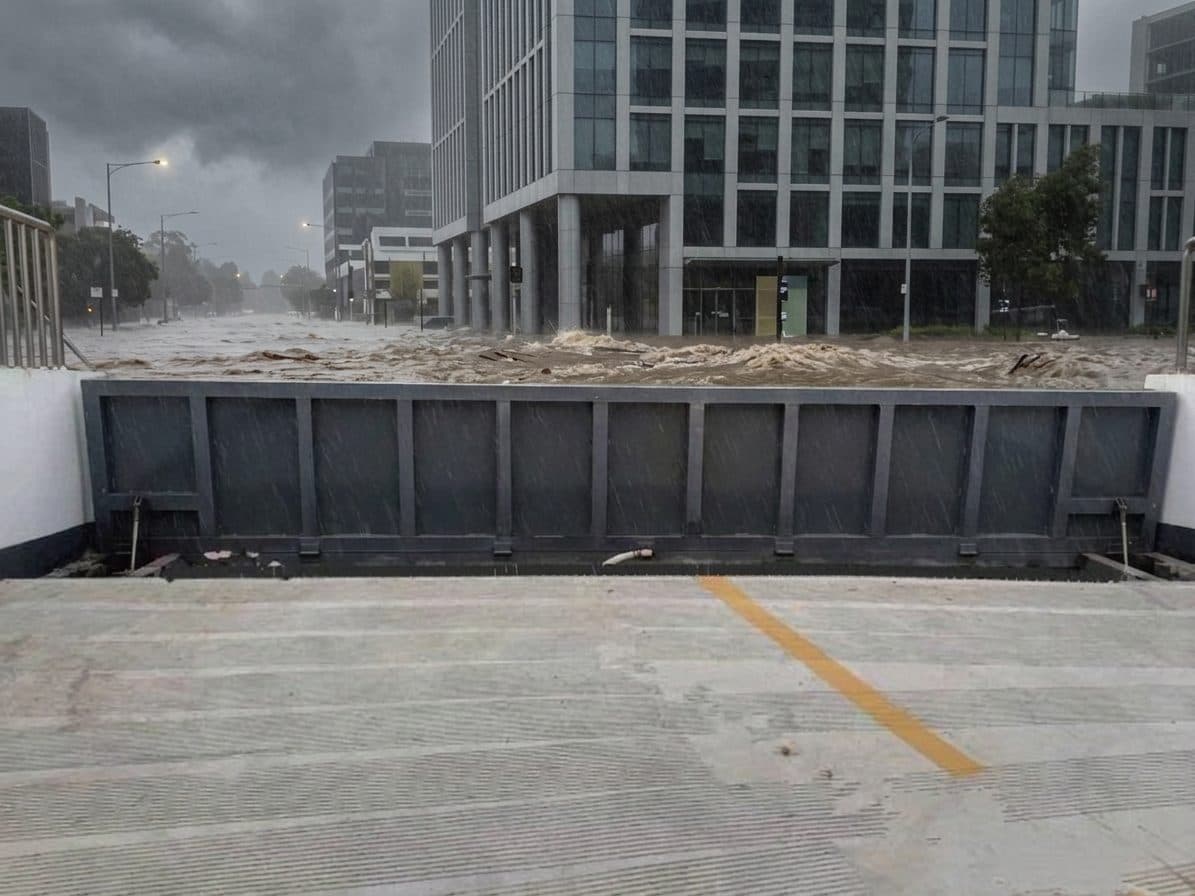
The barrier is installed in a recessed housing and remains flush with the ground during normal operation. When water reaches the configured activation level, the sensing system signals the control system. Electrical power drives the hydraulic pump, which raises the barrier into its water-blocking position.
The system is not passive and it does require power: the electrical supply operates the control system and hydraulic pump. When the barrier needs to be lowered, it can be controlled by remote control or a central control switch.
- Water-level sensing can be configured for the site
- An electrically powered hydraulic pump raises the barrier
- Remote or central controls lower and reset the barrier
- The system can be specified for unattended sites with suitable power, controls and maintenance arrangements
Our Automatic Flood Barrier System is custom-engineered to the opening and site conditions. We carry out a site assessment before providing a quotation.
Why are underground carparks at high flood risk?
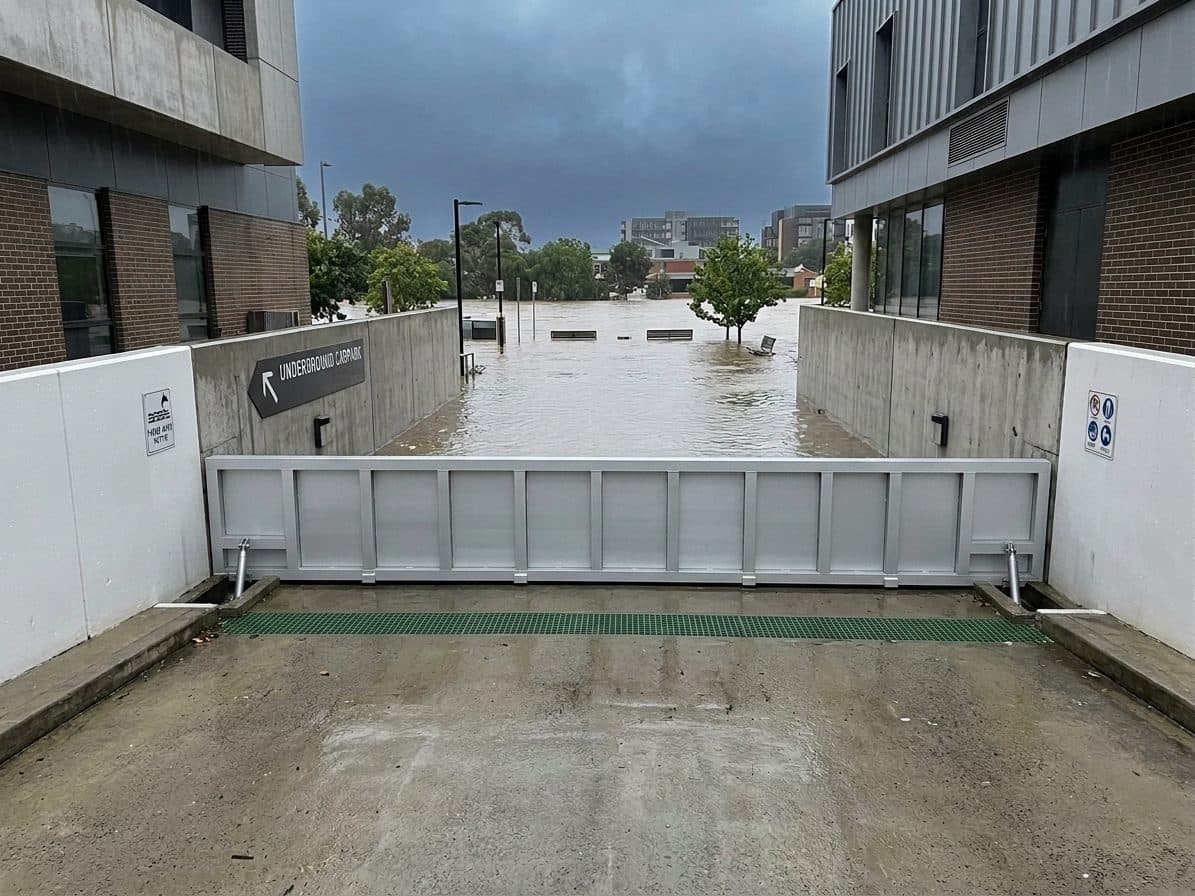
Underground carparks and basement entries sit below street grade. During intense rainfall or an overwhelmed stormwater system, water can follow ramps and stairwells into the lower level. This can damage vehicles, switchboards, plant rooms and building services.
The ramp entry is often a primary flood path. An automatic hydraulic barrier can be specified at the entry, together with drainage and protection for any other openings identified in the site assessment.
What needs to be assessed before installation?
Each system is engineered for its location. The assessment typically considers:
- Clear opening width and the threshold or ramp profile
- Expected flood depth and flow conditions
- Drainage, debris exposure and adjacent flood paths
- Vehicle and pedestrian loading while the barrier is lowered
- Electrical supply, control location and remote-control requirements
- Access for inspection and maintenance
The assessment determines the barrier configuration and installation requirements, so a supply price is provided after the site has been reviewed. An installation guide is supplied with the system.
Managing automatic barriers in strata and commercial sites
An automatic barrier removes the need to manually assemble a temporary barrier at the point of a flood event, but it still needs an operating and maintenance plan. Building managers and facility teams should know where the central controls are located, who is responsible for inspection, and how the system is tested.
For strata sites, the project may also require owners corporation approval for changes to common property. The final installation requirements depend on the property and the relevant local approvals.
Where is an automatic flood barrier a good fit?
Automatic hydraulic barriers are commonly considered for:
- Underground carpark ramps and basement vehicle entries
- Loading docks and service entrances
- Factory gates and lower-level commercial openings
- Metro, airport and tunnel access points
- Other sites where a flush barrier is required during normal traffic
What are the limitations?
An automatic barrier protects only the opening it is designed for. A complete flood plan may also need to address adjacent doors, stairwells, drains and other water paths. The barrier also depends on a correctly specified electrical, sensing and hydraulic installation, plus regular inspection and maintenance.
How do automatic barriers compare with manual barriers?
| Factor | Automatic hydraulic barrier | Manual barrier |
|---|---|---|
| Activation | Water-level sensing triggers the hydraulic system | Staff deploy it before water arrives |
| Power | Electrical supply required | Usually no electrical supply required |
| Reset | Remote or central control | Staff remove and store the barrier |
| After-hours operation | Can operate automatically when correctly installed | Depends on trained staff being available |
| Configuration | Custom-engineered to the site | Often modular or opening-specific |
Where the entry has no dependable power supply, a hydrodynamic passive flood barrier is raised by the floodwater itself, and mechanical flood barriers for basement car parks compares the passive and powered types side by side. Lobby doors and stairwell entries beside the ramp are usually covered with aluminium flood barriers, and basement car park flood protection covers what a strata committee needs to settle before it specifies a barrier.
For specifications and a site-specific quotation, contact our team. We assess automatic flood barrier systems for carparks and commercial sites across Australia.
For basement ramp protection, automatic versus passive selection, and the body corporate approval process, see strata flood barriers.
Recommended next step
Match the guide to a flood barrier option.
These are the product pages and guides most relevant to this topic. Use them to compare flood barriers Australia-wide, then request a site-specific recommendation.