Article · 15 July 2026 · Updated 1 October 2026
Hydrodynamic Flood Barriers in Australia
Hydrodynamic passive flood barriers raise automatically with the water flow and reset by gravity, protecting unattended, off-grid sites across Australia.
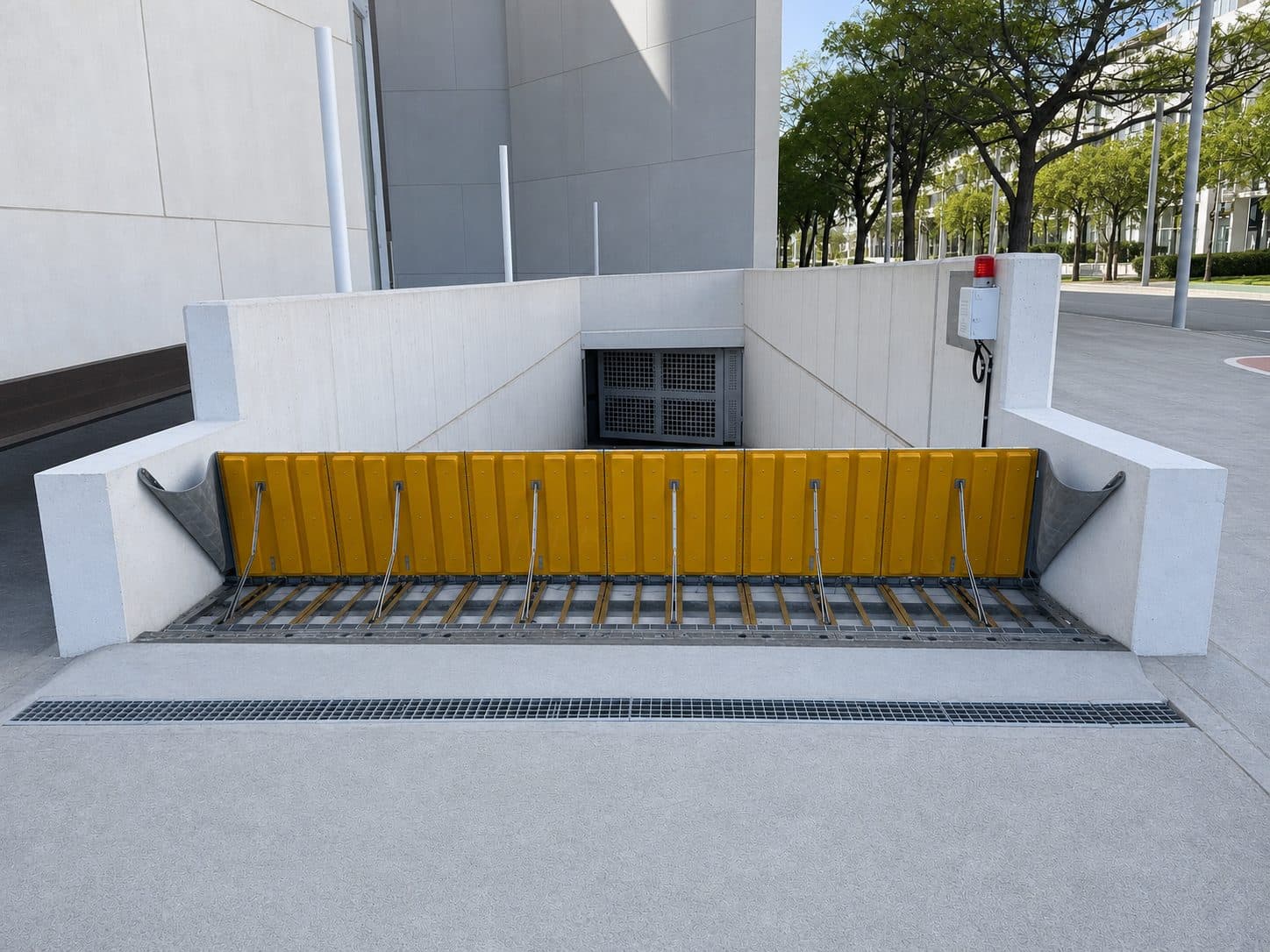
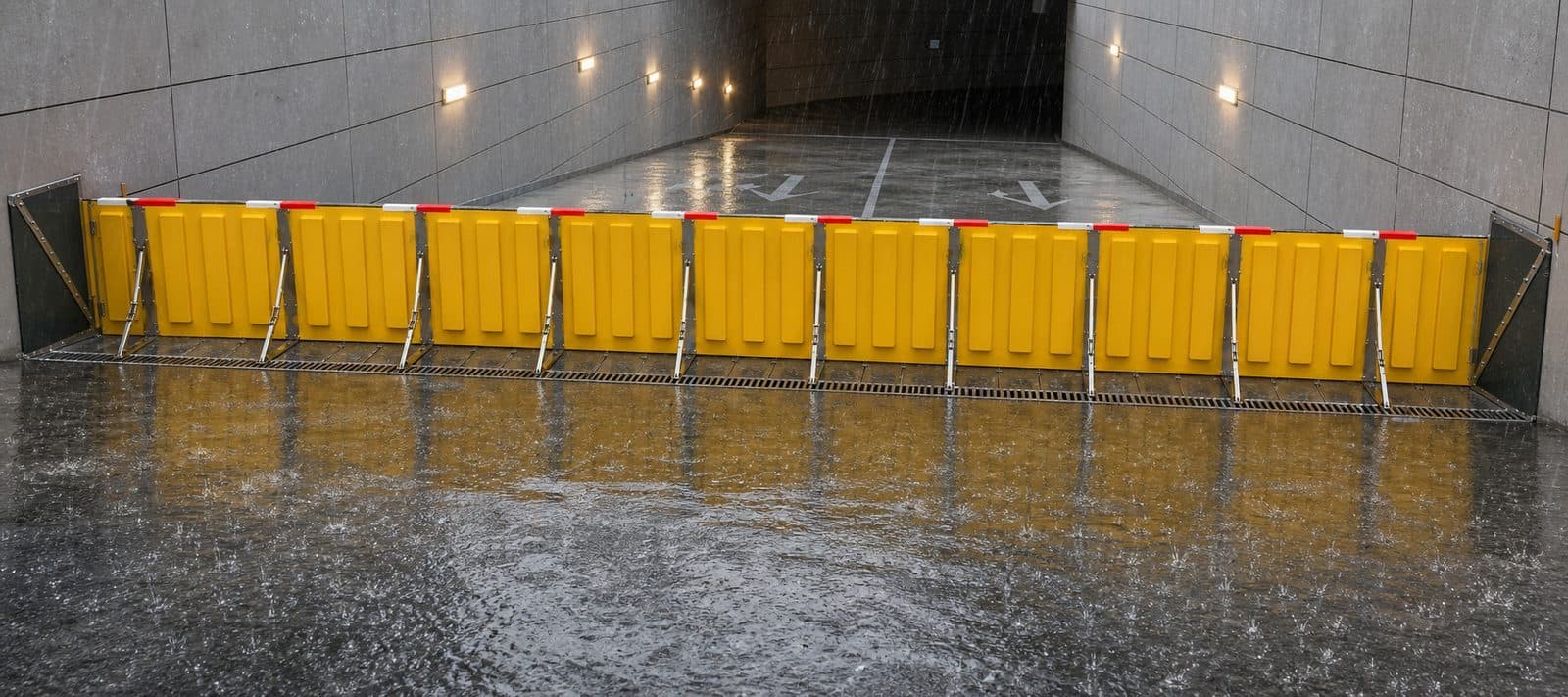
A hydrodynamic passive flood barrier protects an opening automatically, using the floodwater itself as its power source. As floodwater reaches the barrier, it raises the barrier into place; as the water recedes, gravity returns it to a flush position. There is no mains power, no electronics and no operator required, which makes it the right choice for flood-prone access points that sit unattended when a flood actually arrives.
What makes a flood barrier "passive"?
Most engineered flood barriers depend on something happening at the moment of the flood. A demountable barrier needs staff to assemble it before water arrives. An automatic hydraulic gate needs an electrical supply, sensors and a pump to lift it. Both work well when those conditions are met — but both have a point of failure if power is lost, or if no one is present after hours.
A passive barrier removes that dependency. The hydrodynamic passive flood barrier is engineered so that the rising water does the work. Flow pressure and buoyancy act on the gate mechanism and raise the panel. Nothing has to be switched on and no one has to be called out. For a site that floods at 2am during a mains outage, that difference matters.
How does a hydrodynamic barrier raise and reset itself?
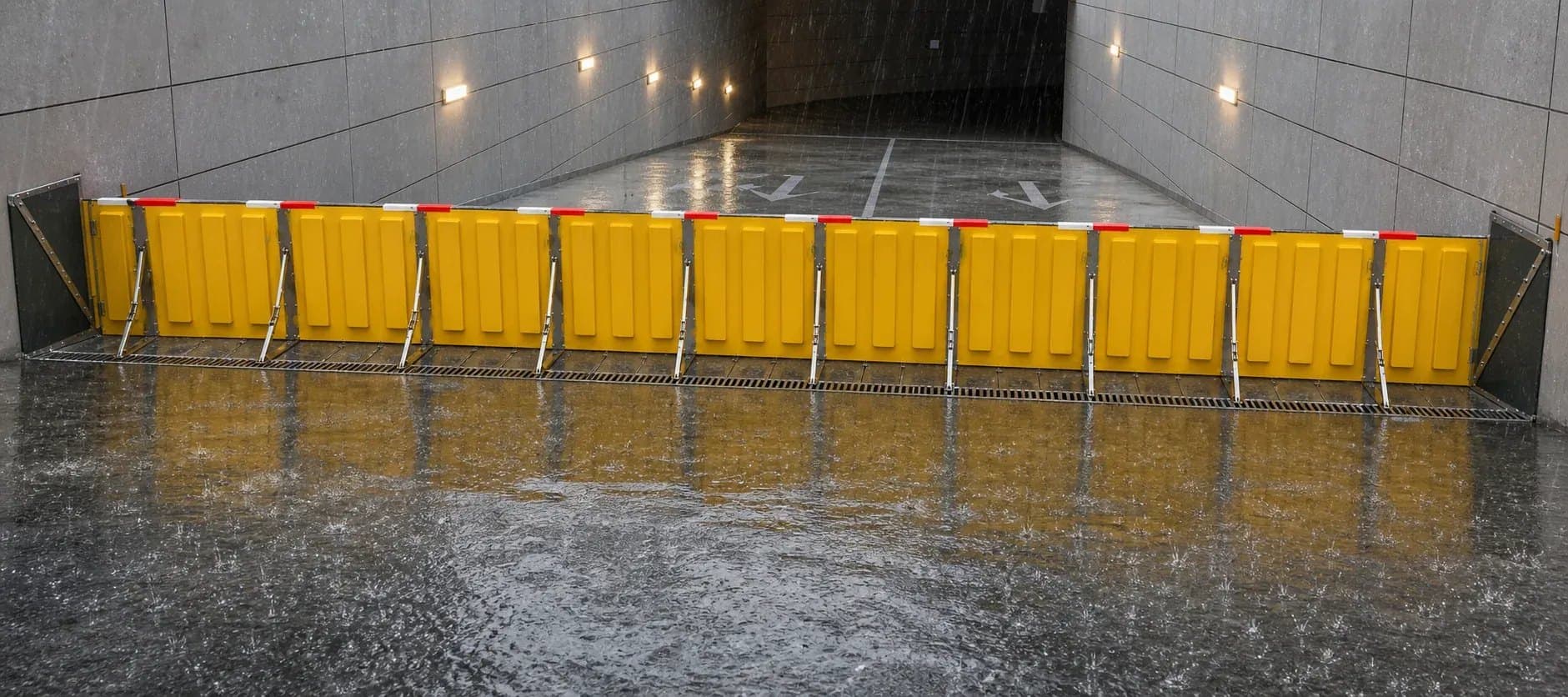
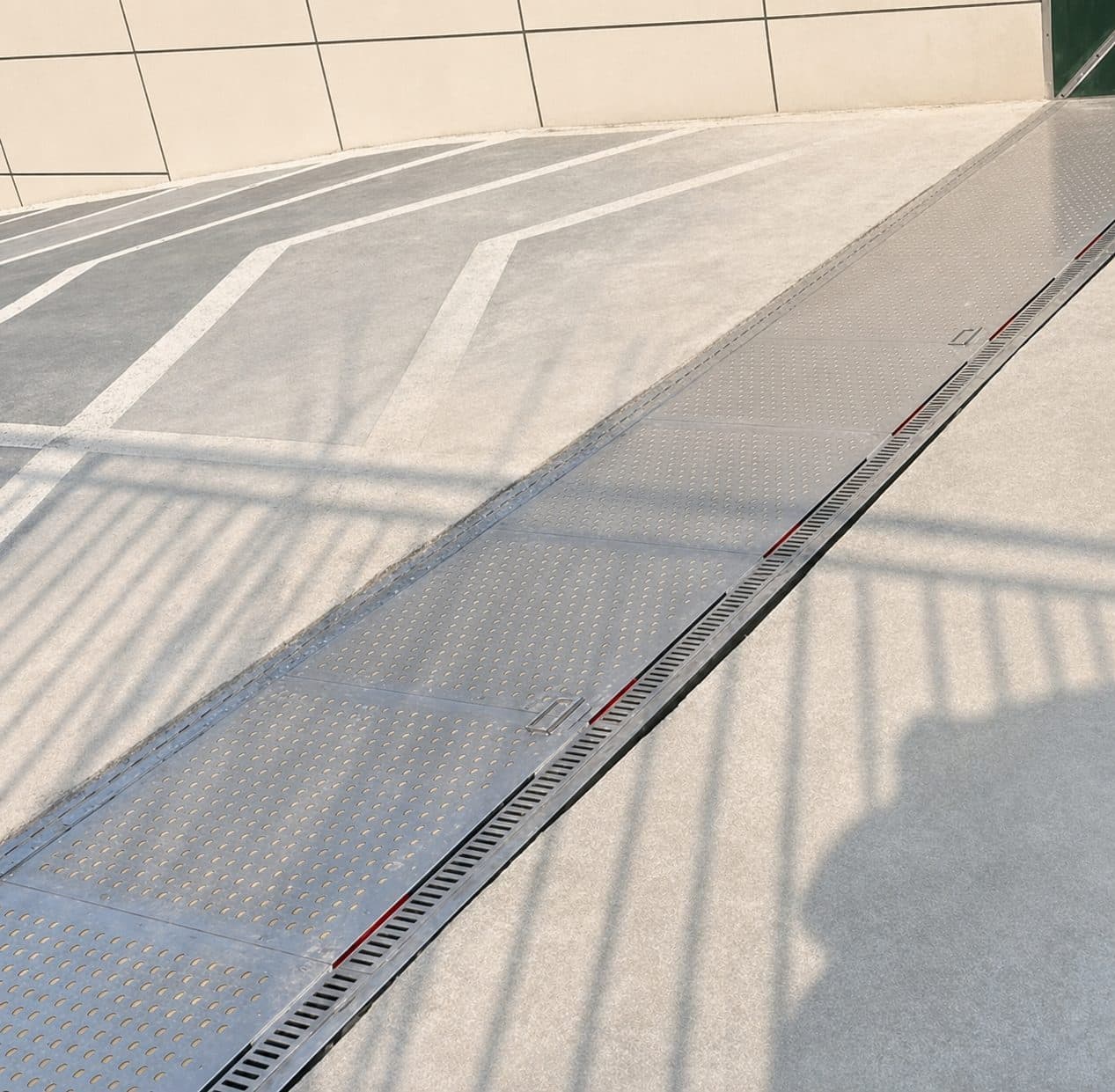
The barrier sits in a recessed housing and stays flush with the ground during normal use, so vehicles and pedestrians pass over it without obstruction. The mechanism has two states and moves between them on its own:
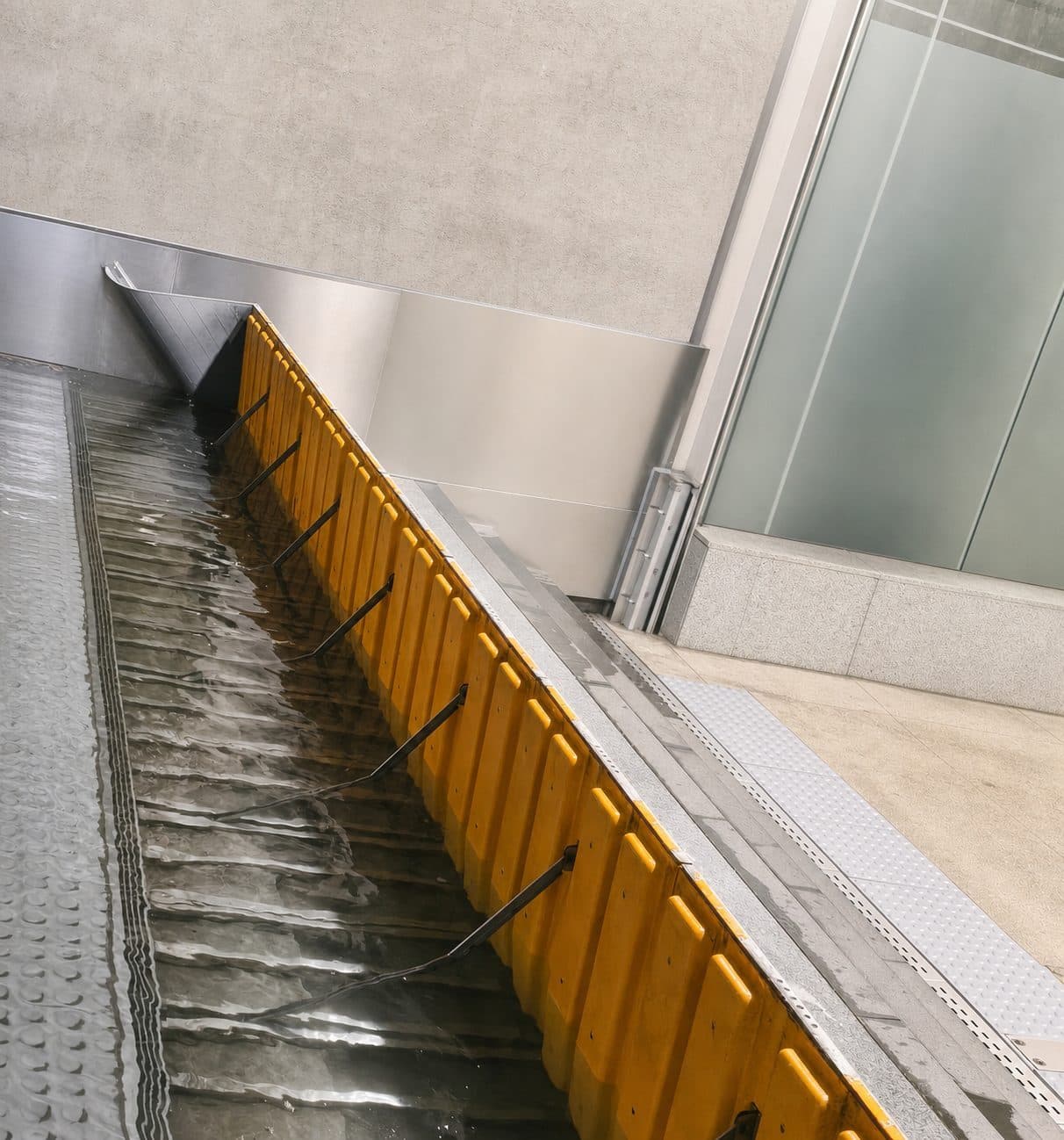
- Rising: when floodwater reaches the barrier, flow and buoyancy lift the panel into its raised, water-blocking position.
- Resetting: as the flood recedes, the panel gradually lowers back to flush under its own weight.
Because the whole cycle is driven by the water and by gravity, there is no pump to service, no battery to keep charged and no control panel that can fail during a storm. Routine inspection still matters — the housing needs to stay clear of debris so the panel can move freely — but the operating principle is deliberately simple.
Which sites suit a passive flood barrier?
This barrier is at its best where power and people are both unreliable. Typical locations include:
- Basement car park entries
- Driveways and ramps
- Loading docks and service entries
- Vehicle entries at remote or lightly staffed sites
- Access points that are unattended overnight or on weekends
The common thread is that no one can be relied on to deploy a barrier in time, and there may be no mains supply to drive an automatic system. If a site has trained staff on hand and a stable power supply, an automatic flood gate with water-level sensing may be the better fit. The two products solve the same problem from different starting points, and a site assessment establishes which suits the opening.
Why does after-hours flooding catch sites out?
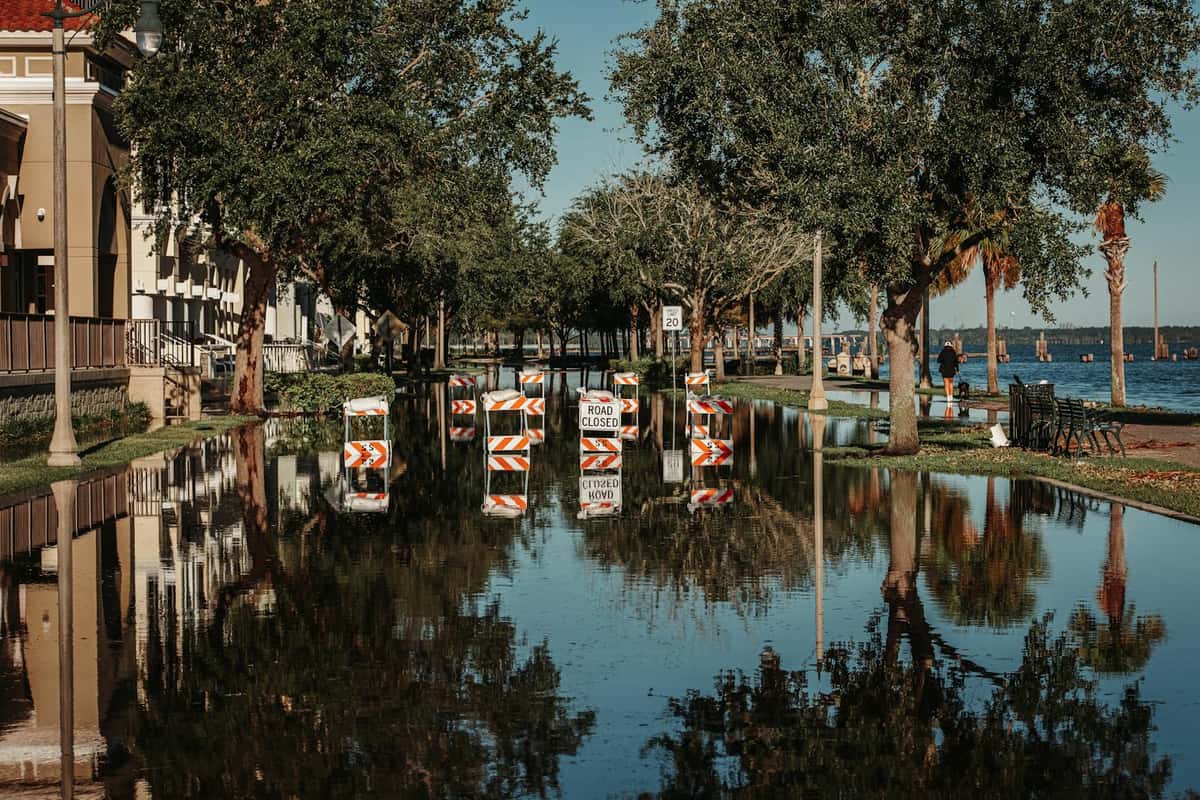
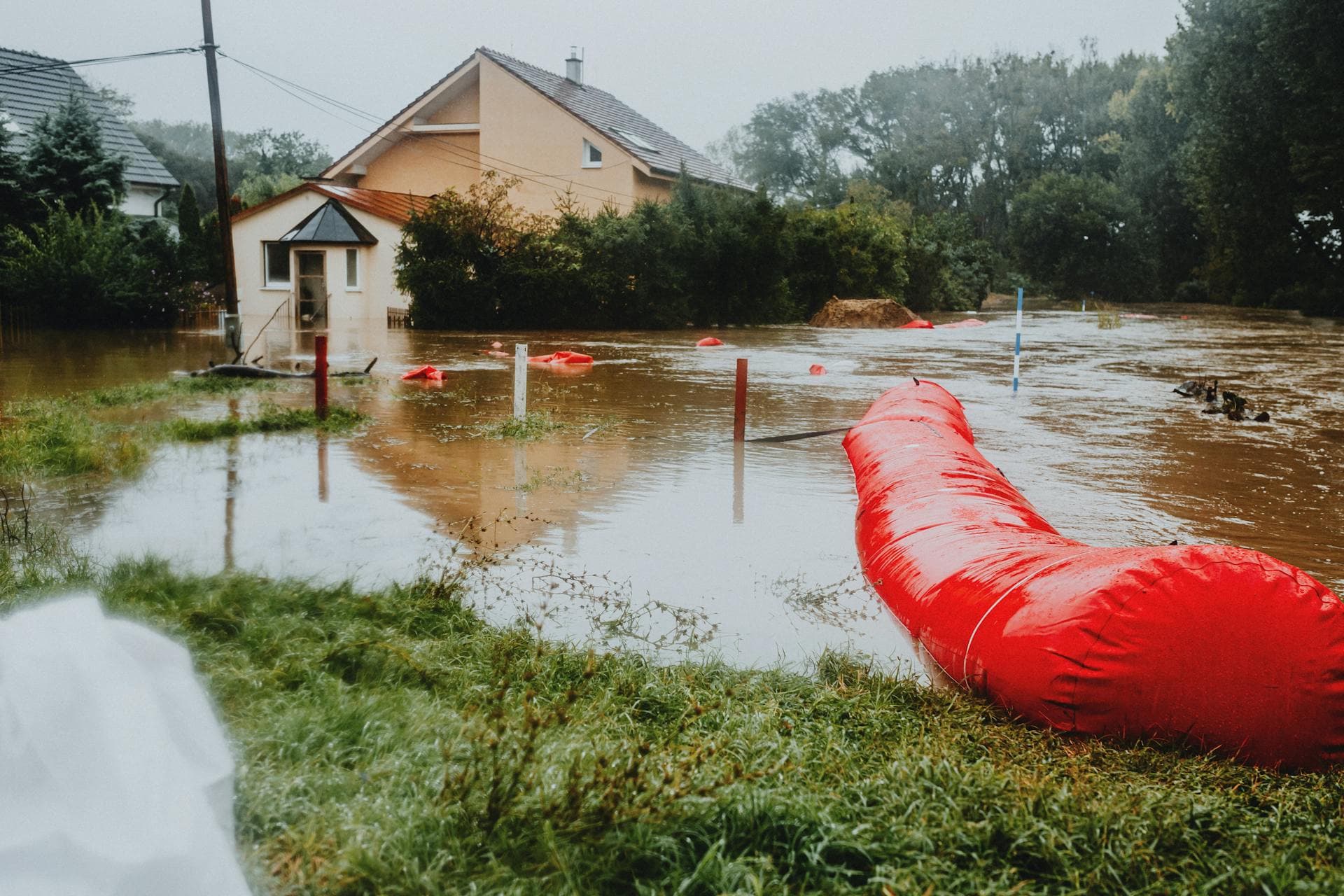
Flash flooding rarely keeps business hours. According to the Bureau of Meteorology's flood knowledge centre, flash floods can develop within hours — and sometimes minutes — of intense rainfall, which leaves very little time to mobilise people or equipment. When that rainfall lands overnight, on a public holiday, or during a power outage caused by the same storm, the practical window to deploy a manual barrier can close before anyone is aware there is a problem.
A passive barrier is designed around exactly that scenario. It does not need a warning to be received, a decision to be made, or a crew to travel to site. The first thing that reaches the opening — the water — is also what closes it.
How does it compare with automatic and manual barriers?
| Factor | Hydrodynamic passive barrier | Automatic hydraulic gate | Manual barrier |
|---|---|---|---|
| Activation | Floodwater raises it on arrival | Sensors trigger a powered pump | Staff deploy it before water arrives |
| Power | None required | Electrical supply required | Usually none required |
| Reset | Gravity return as water recedes | Remote or central control | Staff remove and store it |
| After-hours, no power | Operates unaided | Depends on backup power | Depends on staff availability |
| Best suited to | Remote, off-grid, unattended sites | Powered, staffed commercial sites | Sites with a reliable on-site team |
No single barrier type is right for every opening. The passive barrier's advantage is independence from power and people; its main limitation is that its response depends on the water flow available at the site. Where water moves very slowly, the barrier may respond more slowly, and that needs to be considered in the design.
What is a hydrodynamic barrier made from?
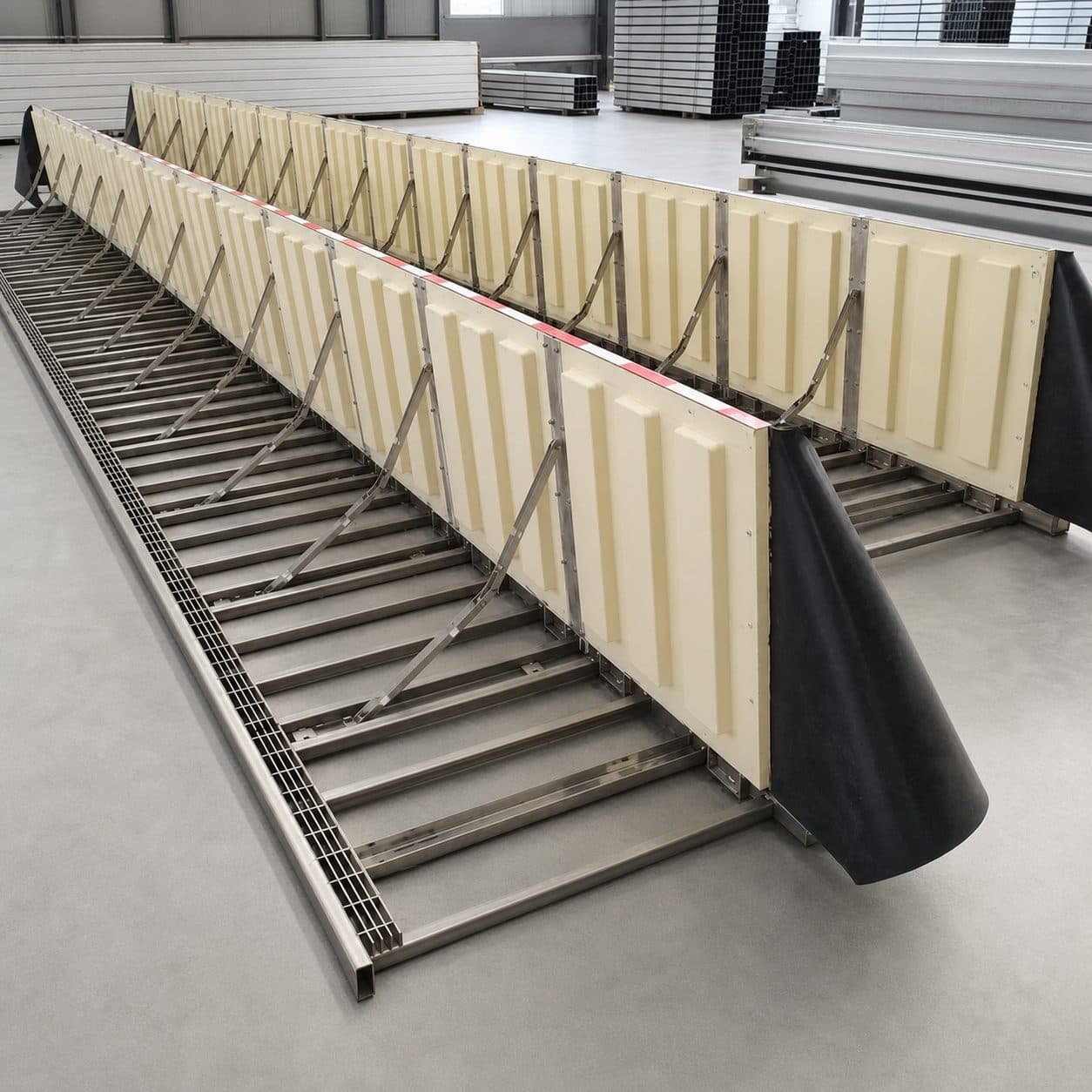
Each unit is a custom configuration rather than a stock size. The base frame is 304 stainless steel, and the panel is a buoyant polymer composite under a patterned steel top plate, with an aluminium chequer-plate top available as an option. Because the barrier is engineered to the specific opening — its width, threshold profile, expected flood depth and flow conditions — pricing follows a site assessment rather than a fixed unit rate.
That assessment records the same details any flood-barrier project needs: the clear opening, the drainage and debris exposure, the loading over the barrier while it sits flush, and the access required for inspection. For a passive system, the assessment pays particular attention to the water flow at the location, because that flow is what drives the barrier.
What does installation involve?
The barrier is set into an in-ground housing at the opening, so the bulk of the work happens before the panel is ever fitted. The housing has to be formed to the correct dimensions and tied into the surrounding surface. On a vehicle entry, the finished surface over the housing also has to carry the expected traffic and loading while the barrier sits flush.
Because each unit is engineered to its opening, the sequence is assessment first, then fabrication, then installation. Rushing to a fixed product size tends to create sealing and clearance problems later, which is why the site review comes before any pricing. Ground conditions, the threshold profile and the position of nearby services all feed into the housing design. Once installed, commissioning confirms the panel raises and reseats cleanly through its full range of movement, and the maintenance plan sets out the inspection intervals that keep it doing so.
What are the limitations to plan for?
A passive barrier protects the opening it is engineered for, not the whole site. A complete flood plan may still need to address adjacent doors, stairwells, drains and other water paths. Two points are specific to this product:
- Flow dependence. The barrier relies on water flow to raise it. Very slow-flowing sites may respond more slowly, so the design has to confirm that the expected flood behaviour will actually drive the mechanism.
- Maintenance access. The housing and panel need to stay clear of silt and debris so the barrier can move freely. A maintenance plan and periodic inspection keep the passive mechanism reliable over its service life.
Neither point is unusual for an in-ground flood barrier, but both are worth confirming during the site assessment rather than after installation.
Is a passive barrier right for your site?
If you are protecting a remote outlet, a river or drainage crossing, or a vehicle entry that no one attends when a flood hits — and especially if that site cannot rely on mains power — a hydrodynamic passive flood barrier is worth assessing. It trades the configurability of a powered system for something valuable at an unattended site: it works on its own, every time water reaches the threshold, with nothing to switch on and no one to call.
For specifications and a site-specific quotation, contact our team. We engineer and assess passive and automatic flood barrier systems for sites across Australia.
Recommended next step
Match the guide to a flood barrier option.
These are the product pages and guides most relevant to this topic. Use them to compare flood barriers Australia-wide, then request a site-specific recommendation.