
Utilities and infrastructure
High-voltage switchyard access points
Flood barriers at the multiple access points of a high-voltage switchyard — a yard full of energised equipment, several separate entries, and no operator on site to deploy anything.
At a glance
- SiteHigh-voltage switchyard
- OpeningsSeveral vehicle and personnel access points around the yard perimeter
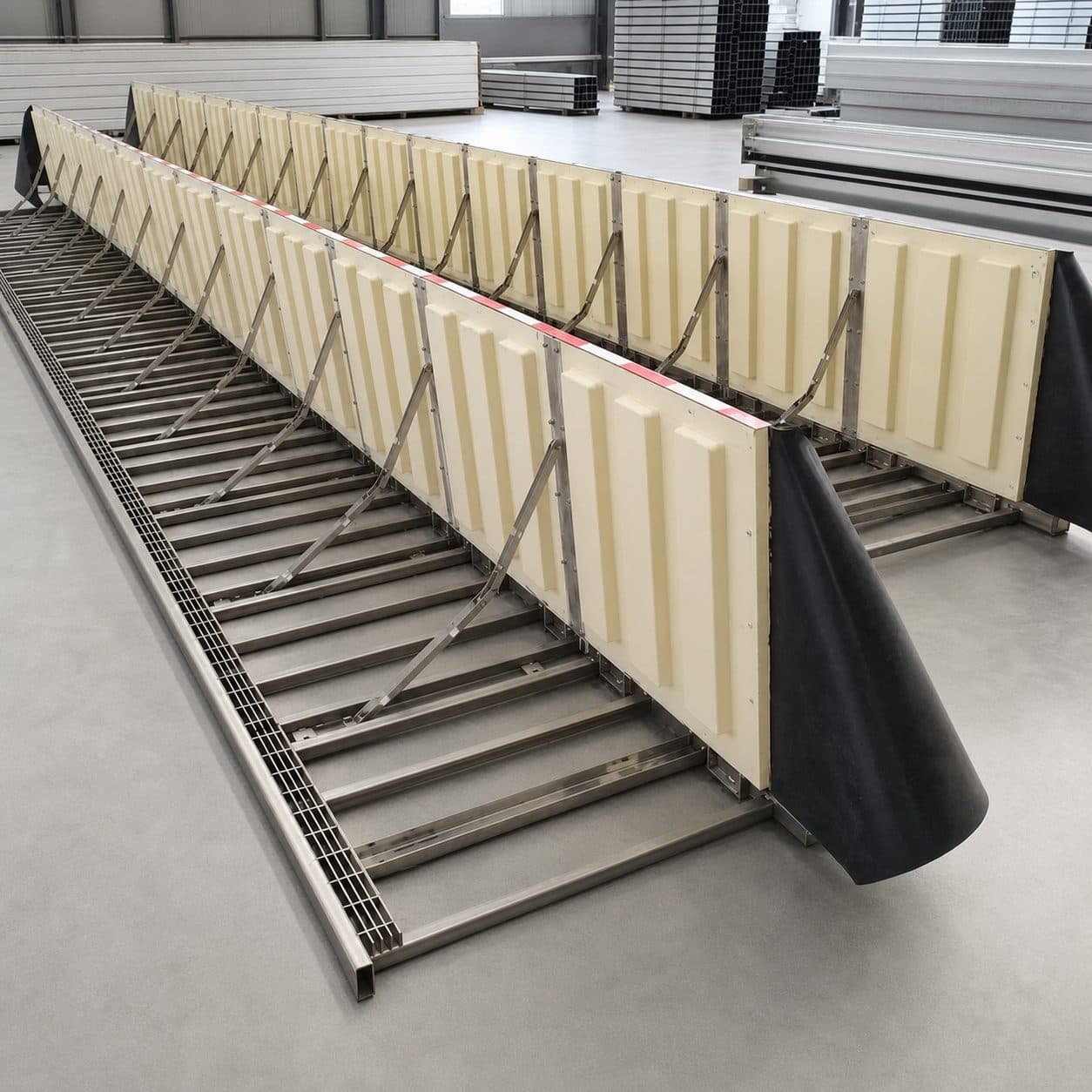
- ProductHydrodynamic passive flood barriers at the unattended entries
- ScopeSite assessment, specification, supply
The constraint
Nothing about the protection here is optional, and none of it can rely on someone being on site to deploy it. Energised equipment and standing water do not meet halfway. The entries were treated as a set and specified together, because a yard with four protected gates and one open one is an unprotected yard.
Why passive at every entry
Each access point took a hydrodynamic passive barrier: raised by the floodwater's own buoyancy, returned by gravity, no power to the barrier, no deployment time, no one to call. On a site that exists to move electricity, a flood barrier that depends on electricity is the wrong dependency — and a site that cannot be entered safely during the event is one where a manual barrier would never be raised anyway.
The one thing a passive barrier needs is enough flow to lift it, so the drainage paths toward each entry were the first thing checked at assessment, and that is what screened the entries before anything was specified.
Products on this project
Have a site like this one?
A site assessment measures every opening and produces a written specification per opening.
Request a Site Assessment