Article · 18 June 2026
Water-Activated Sandbags Australia
How water-activated sandbags work, when to deploy them, and how many packs you need to protect Australian homes and businesses from flash flooding.
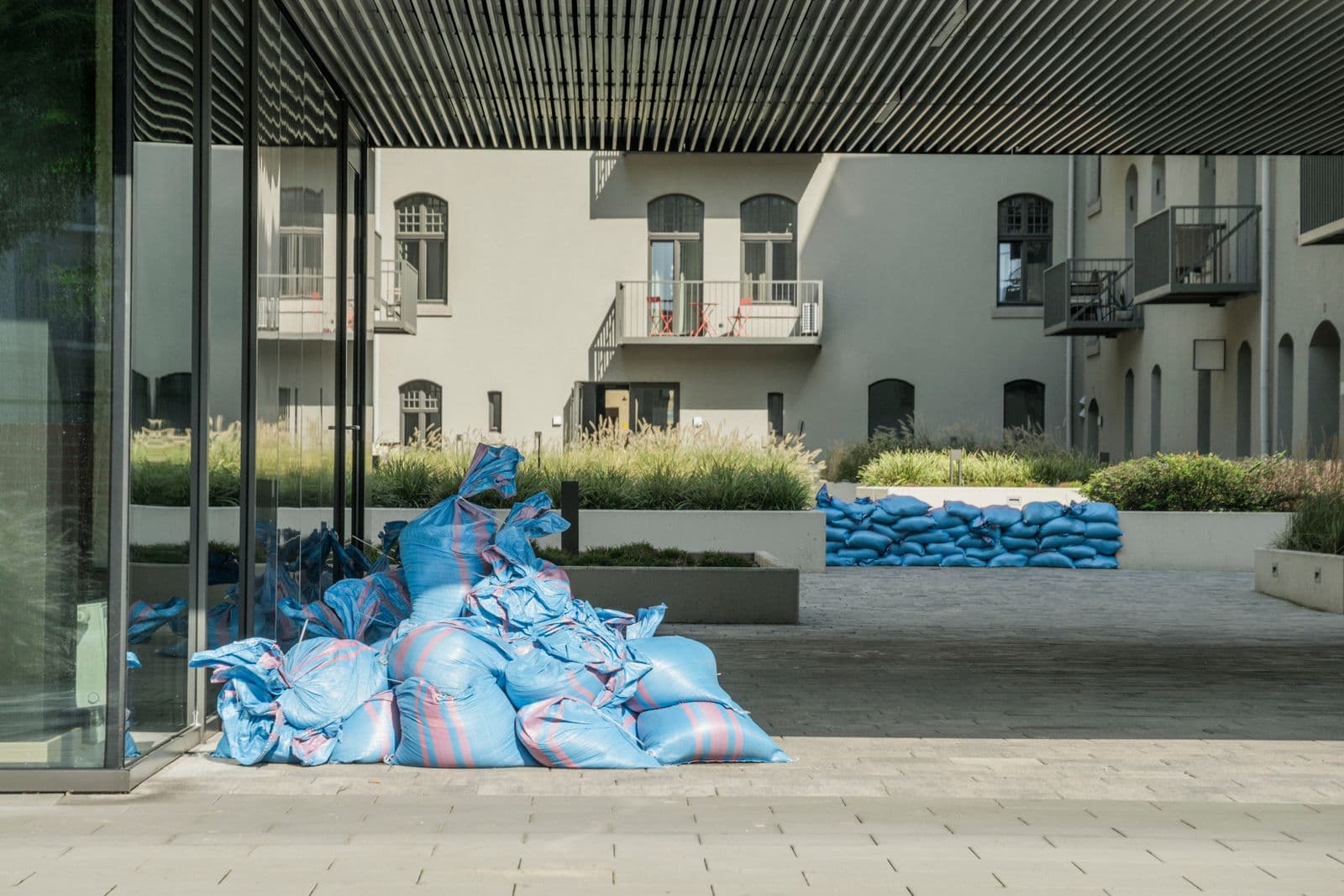
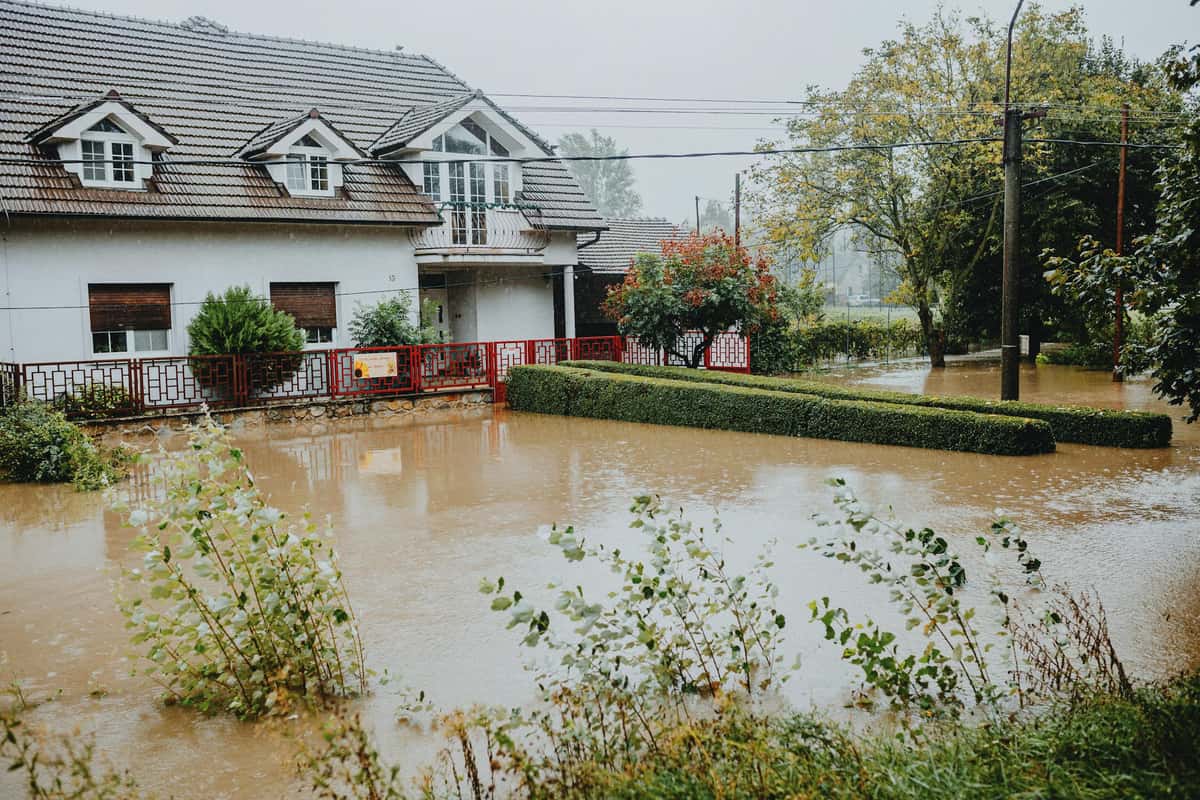
Water-activated sandbags protect doorways, garage entries, and low-lying openings from flooding in 2–3 minutes with no sand, shovels, or filling equipment. When the Bureau of Meteorology issued a severe weather warning for South Australia on 16 June 2026 — warning of flash flooding across the North West Pastoral, West Coast, and Eyre Peninsula, with six-hour rainfall totals up to 60 mm — the gap between "warning issued" and "water at the door" was measured in hours. This is exactly the scenario water-activated sandbags are designed for.
How do water-activated sandbags work?
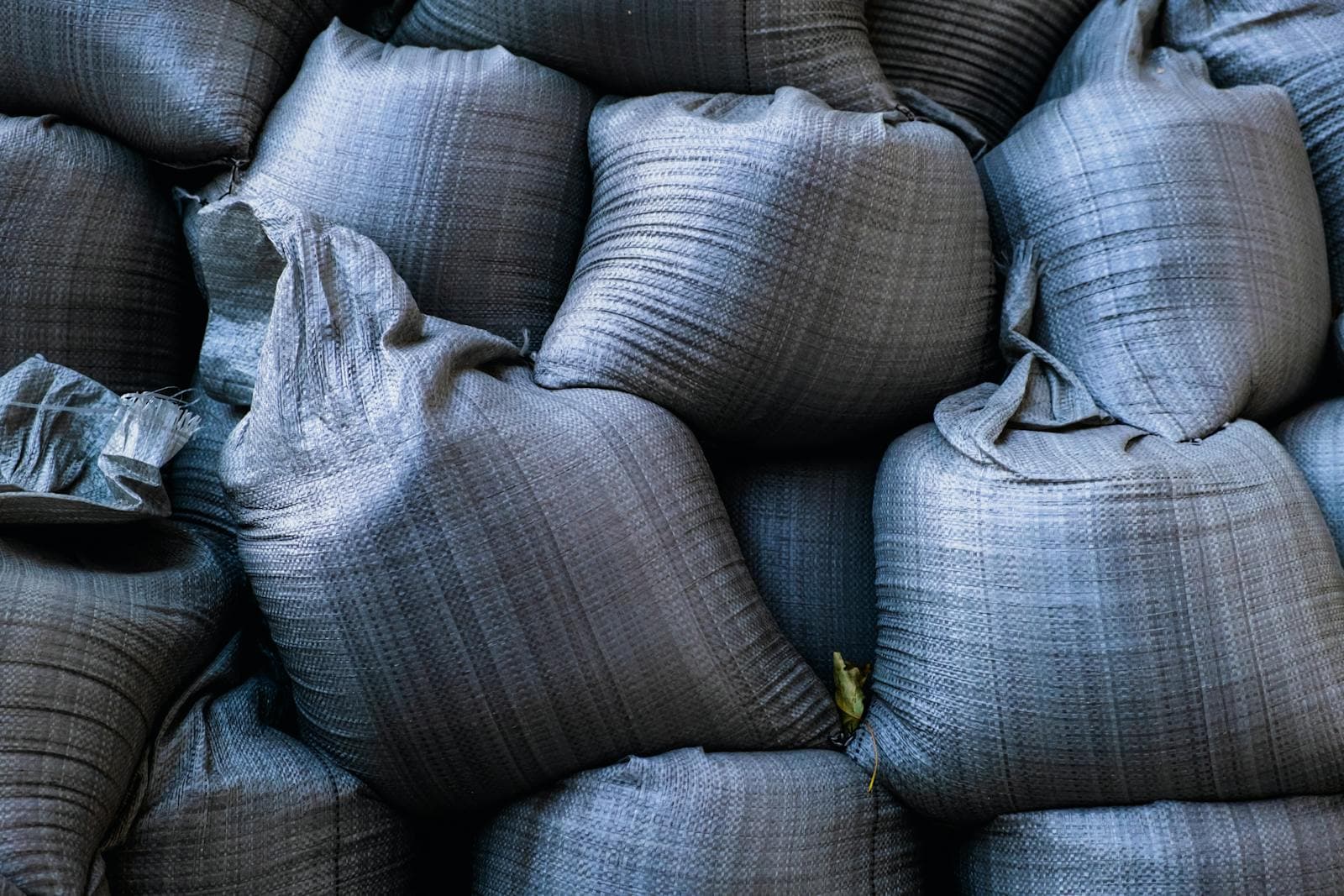
Each bag contains a core of sodium polyacrylate — a super-absorbent polymer that draws in fresh water and expands rapidly on contact. The bag arrives flat and dry, weighing 270 g: roughly the weight of a can of soft drink. Contact with fresh water triggers absorption through the UV-protected non-woven polypropylene shell, and within 2–3 minutes each bag reaches 18–22 kg and measures approximately 600 × 400 × 120 mm.
That weight and shape matter for effective flood protection. At 18–22 kg per bag, a stack of 16 bags — four packs — creates approximately 290–350 kg of interlocked weight across a standard opening. The bags conform slightly to irregular surfaces as they swell, reducing seepage paths that rigid barriers can leave at corners or uneven thresholds.
Unlike traditional sand-filled sandbags that require a fill station, shovels, and two people to carry, water-activated sandbags are light enough for one person to carry a full pack of 6 in one hand before activation. The $59 per pack price point includes free Australia-wide shipping, which means holding a stockpile at the property before the season starts is practical rather than expensive.
What flood scenarios suit water-activated sandbags?
Water-activated sandbags are most effective when:
The water source is fresh. Cold front rainfall, storm runoff, creek overflow, and overland surface flow are all fresh water. Coastal storm surge and estuarine flooding may carry salt or brackish water, which reduces sodium polyacrylate activation and should be treated as a separate risk requiring a different solution.
The expected depth is under 300–400 mm. Two staggered rows of sandbags provide approximately 240 mm of height. Three rows, stacked carefully with good stagger and side confinement, can reach 360 mm. Beyond this, sustained lateral water pressure tends to shift the stack, and a rigid barrier with a defined depth rating is more reliable.
The opening is narrow enough to span with available bags. A standard residential doorway (600–900 mm wide) needs one row of 2–3 bags per layer. A double garage roller door (4,000–5,000 mm) needs far more bags than a typical household stocks. For wide openings, bags work well as gap-fillers around a rigid barrier system, not as the primary seal.
Deployment time is short. Bags placed dry at known entry points before conditions deteriorate will begin activating on contact with rising water or rain. This passive activation makes them the right choice when a warning arrives late or when a site may be unattended during the event.
How many water-activated sandbags do you need?
The required number depends on opening width and the depth of protection you need.
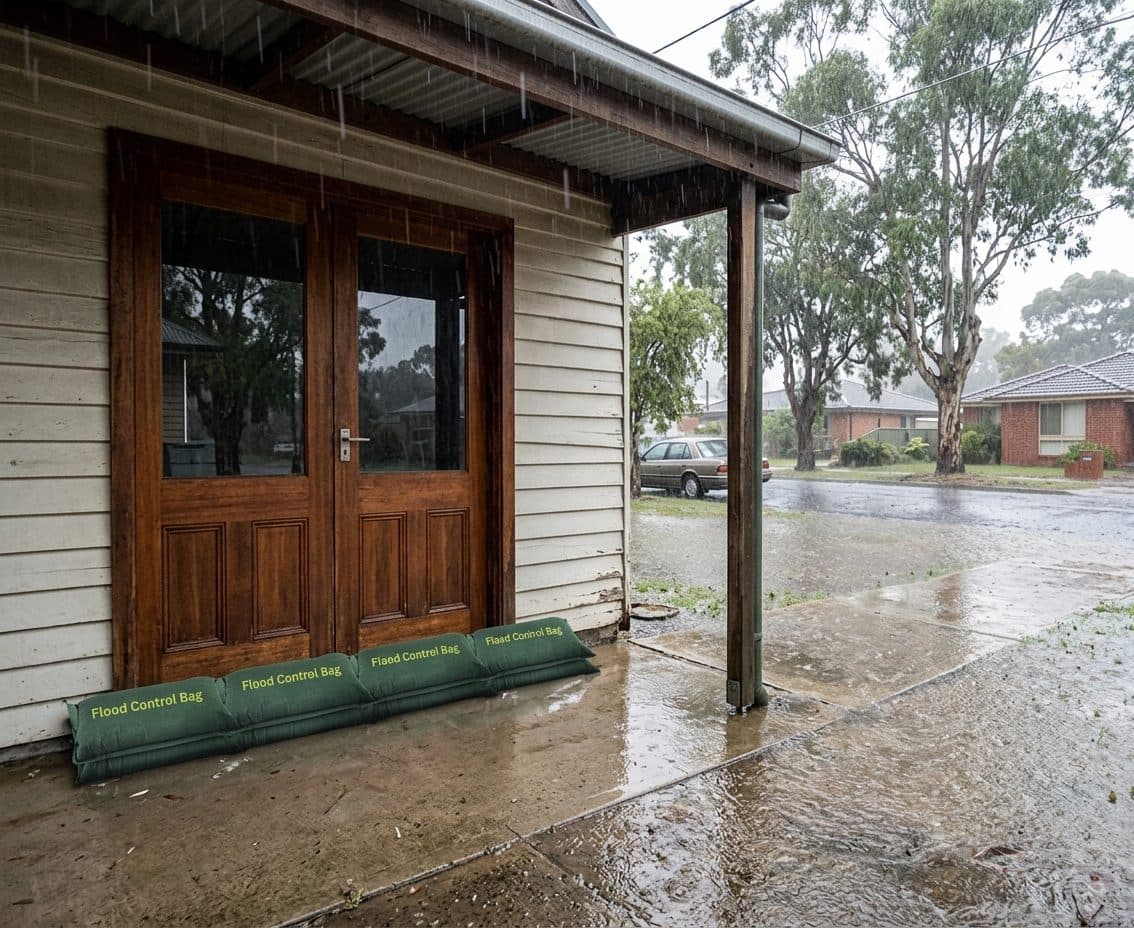
Standard residential doorway (600–900 mm wide): 2–3 bags per row laid flat across the threshold. Two staggered rows — 4–6 bags — provide approximately 240 mm of height. One pack of 6 covers this with a bag or two spare.
Sliding or double-leaf door (1,200–1,800 mm wide): 4–6 bags per row, two rows: 8–12 bags. Two packs of 6.
Shopfront entry (1,500–2,400 mm wide): 5–8 bags per row. A two-row stack across a standard shopfront requires 10–16 bags — two to three packs of 6.
Double garage roller door (4,000–5,000 mm wide): 14–17 bags per row. Two rows across this width requires 28–34 bags — five to six packs of 6. For wide openings like this, consider whether a rigid modular barrier system is more practical for your property.
Secondary entry points, cable penetrations, gap sealing: 1–2 bags each. One pack of 6 provides coverage for three or four secondary points after the primary doorway is secured.
The most common mistake is under-ordering. A single pack of 6 is right for one standard doorway. Properties with two or more vulnerable entry points need multiple packs. Order for your full exposure, not just the most obvious opening.
How do you deploy water-activated sandbags correctly?
Correct placement determines whether the stack holds or allows water to track under pressure. The sequence:
1. Position bags dry before water arrives. Bags can be placed at an entry point in their dry state. They will begin activating as rain accumulates or rising water reaches them, allowing deployment to be completed before conditions deteriorate.
2. Lay bags flat, not end-on. Orient each bag with its longest face (600 mm) parallel to the door threshold. This creates a wider, lower-profile barrier rather than a narrow upright stack that can tip under lateral pressure.
3. Stagger rows like brickwork. Offset each row so the joints between bags in one layer align with the centre of a bag in the layer below. This eliminates vertical water paths through the stack.
4. Press the end bags firmly against each door frame. The highest seepage risk is at the sides, where bags cannot conform fully to a rigid frame. Position the last bag in each row tight against the frame, and tuck an additional bag vertically against the frame if gaps remain.
5. Pre-wet with a hose if time permits. Pre-wetting activates the bags in place before water pressure arrives, locking them together more effectively than dry bags displaced by the first rush of water.
What are the limits of water-activated sandbags?
Understanding limitations allows you to plan around them before an event, not discover them during one.
Depth ceiling. Two rows give approximately 240 mm of protection. Three rows — requiring good stagger and confinement on each side — can reach 360 mm. Above this height, the stack becomes unstable under sustained lateral pressure. For flooding expected to exceed 400 mm, a rigid barrier with a rated depth specification is more appropriate.
Single use. Each bag is a single-use item once activated and exposed to floodwater. Plan stockpiles with this in mind: every bag used during an event must be replaced before the next one. Unlike a rigid barrier that goes back into storage clean, sandbags are consumed.
Wide openings. The labour involved in positioning 30+ bags across a wide roller door entrance makes water-activated sandbags inefficient as the primary seal for openings wider than about 2,000 mm. At that width, modular panel systems deploy faster and provide a more reliable seal.
Salt water. Sodium polyacrylate absorbs fresh water effectively. Salt water interferes with the osmotic process, reducing swelling volume and potentially causing gel already formed to release absorbed water. Properties exposed to coastal inundation should not rely on water-activated sandbags as the primary salt water flood barrier.
What should you pair with water-activated sandbags for wider openings?
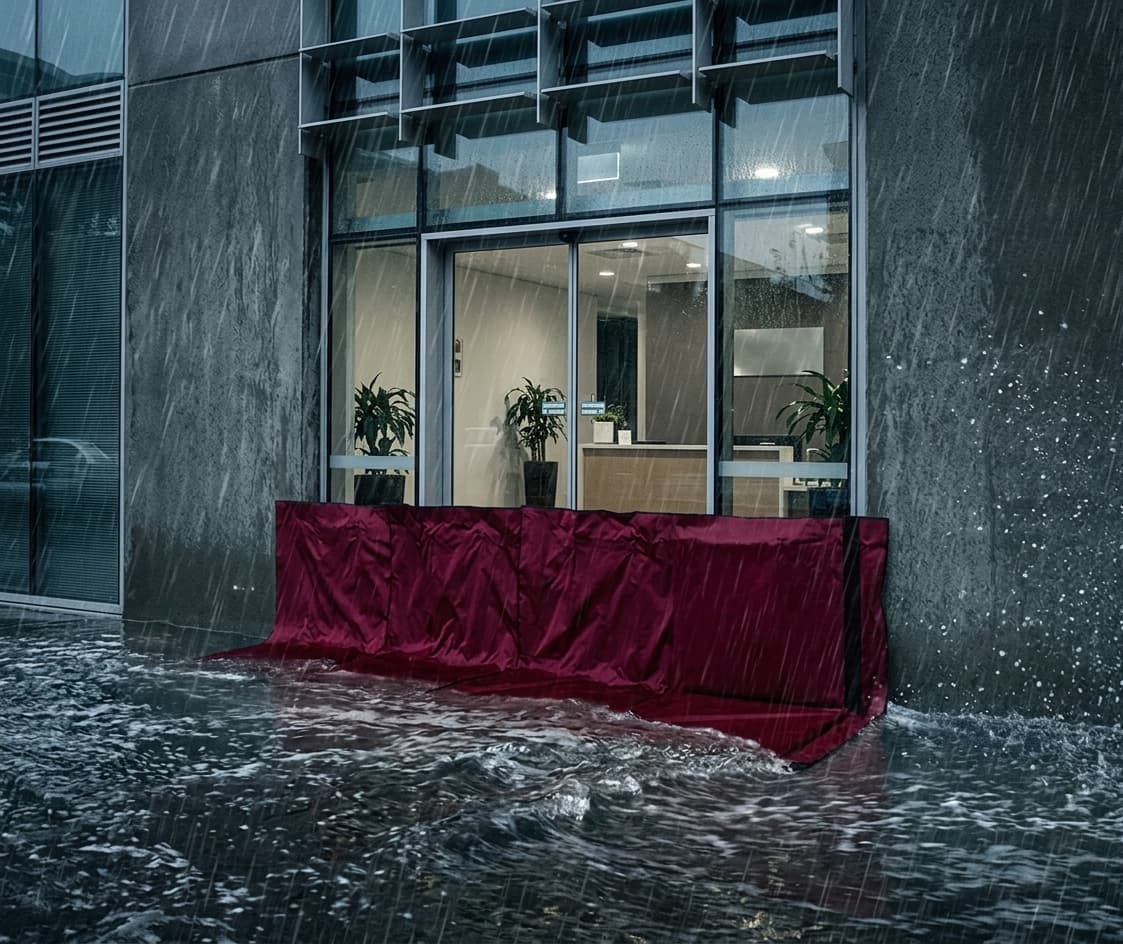
Water-activated sandbags seal narrow entries and secondary gaps well. For openings above 1,300 mm wide, a rigid barrier handles the main span, with sandbags sealing the perimeter.
For entries up to 1,300 mm wide: Oxford barriers pair naturally with water-activated sandbags. A 2-pack adjusts telescopically from 150 mm to 1,300 mm wide, provides up to 900 mm of flood protection height, and sets up in minutes without tools. At 5.3 kg, one person can position the frame while a second person places sandbags to fill any gaps around the base seal. Oxford barriers start from $449 per 2-pack with free Australia-wide shipping.
For garage roller doors and commercial entries: Use a modular barrier system or aluminium demountable panels to cover the main span, with sandbags filling seepage paths at the base, sides, and any cable or conduit penetrations the rigid panels cannot reach.
At secondary penetrations: Even when a main doorway is protected by a rigid barrier, water often enters through conduit penetrations, ventilation gaps, service entries, and drainage openings that can backflow. Sandbags stuffed against or over these points seal them at minimal additional cost.
How should you store and dispose of used water-activated sandbags?
Before use: Bags store flat in any dry location — a garage shelf, a storage box, a linen cupboard. The sodium polyacrylate core is stable when dry and does not degrade in storage. Keep bags away from moisture sources that could trigger partial activation, and avoid prolonged outdoor storage without cover if the packaging is opened. Sealed, they are suited to long-term shelf storage.
After use: Activated, contaminated bags must be treated as potentially contaminated material. Seal used bags inside heavy-duty garbage bags before handling, to contain absorbed floodwater. Contact your local council during the recovery phase for disposal guidance — many councils organise bulk collection of flood-affected waste. Do not drain the sodium polyacrylate gel into stormwater drains; gel particles can cause blockages in drains and treatment systems. Most councils accept double-bagged activated sandbags as general waste.
What to do before the next warning
The June 2026 South Australian flooding is a reminder that cold fronts and winter rain events develop quickly. When a warning arrives with hours rather than days of lead time, the only effective preparation is what you already have on-hand at the property.
A pack of 6 water-activated sandbags stores flat, ships free across Australia, and costs $59. Holding two or three packs at the property — one per vulnerable entry point — costs under $180 and means deployment takes three minutes when a warning arrives, not a scramble for supply. Order once, store them where they live, and the next warning becomes a matter of reaching the shelf rather than refreshing a checkout page.
Recommended next step
Match the guide to a flood barrier option.
These are the product pages and guides most relevant to this topic. Use them to compare flood barriers Australia-wide, then request a site-specific recommendation.