
Applications

Flood Protection for Shopping Centres

A shopping centre puts basement parking, public entries, loading docks and street-front tenancies on one site, each flooding in its own way. These are the barriers we propose for each kind of opening across it.

Request a Site AssessmentView Products
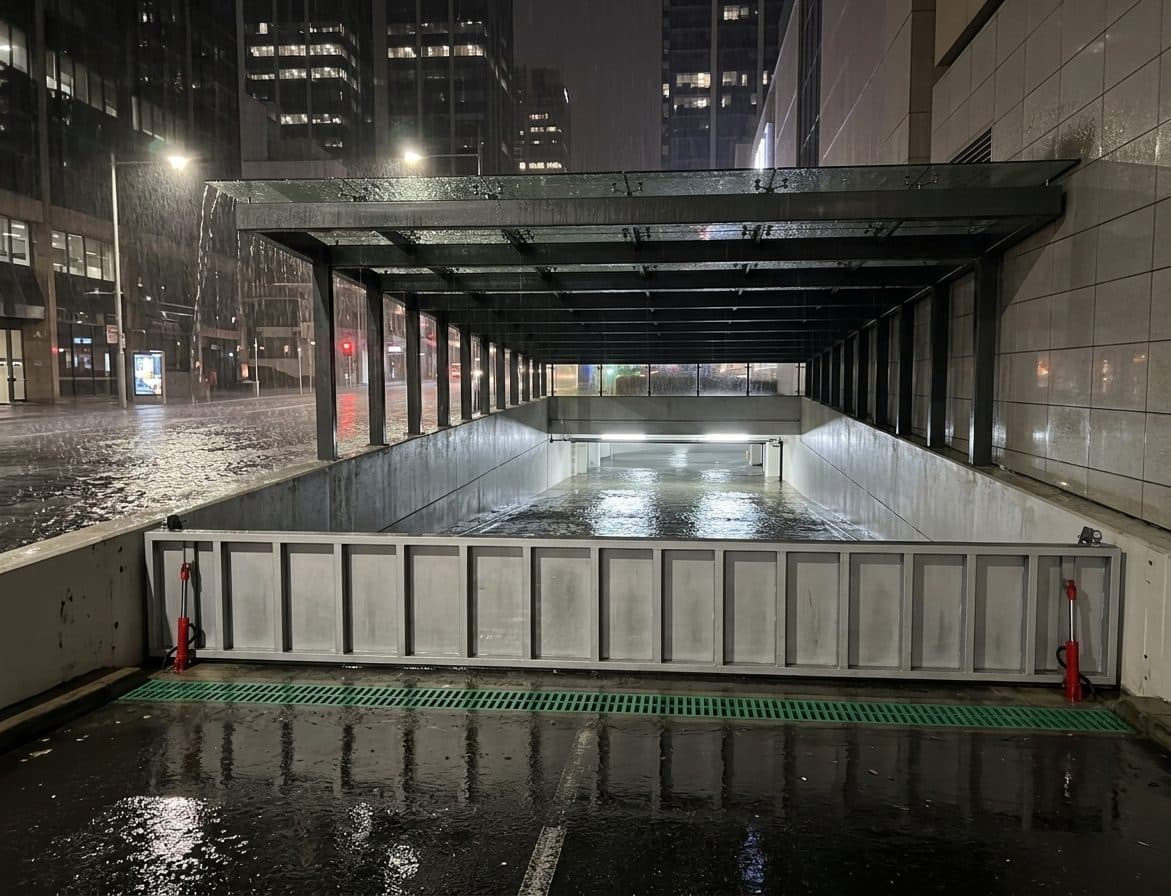
Automatic flood barrier raised across a covered car park ramp beside city towers at night in heavy rain

Where water gets in

The openings to plan for

  • Ramps down to basement and undercroft car parks
  • Public entries and mall doors at ground level
  • Loading docks and service corridors at the back of the centre
  • Street-front tenancies with their own doors

Barriers that suit this site

Products to consider

Automatic Flood Barrier System

Automatic Flood Barrier System

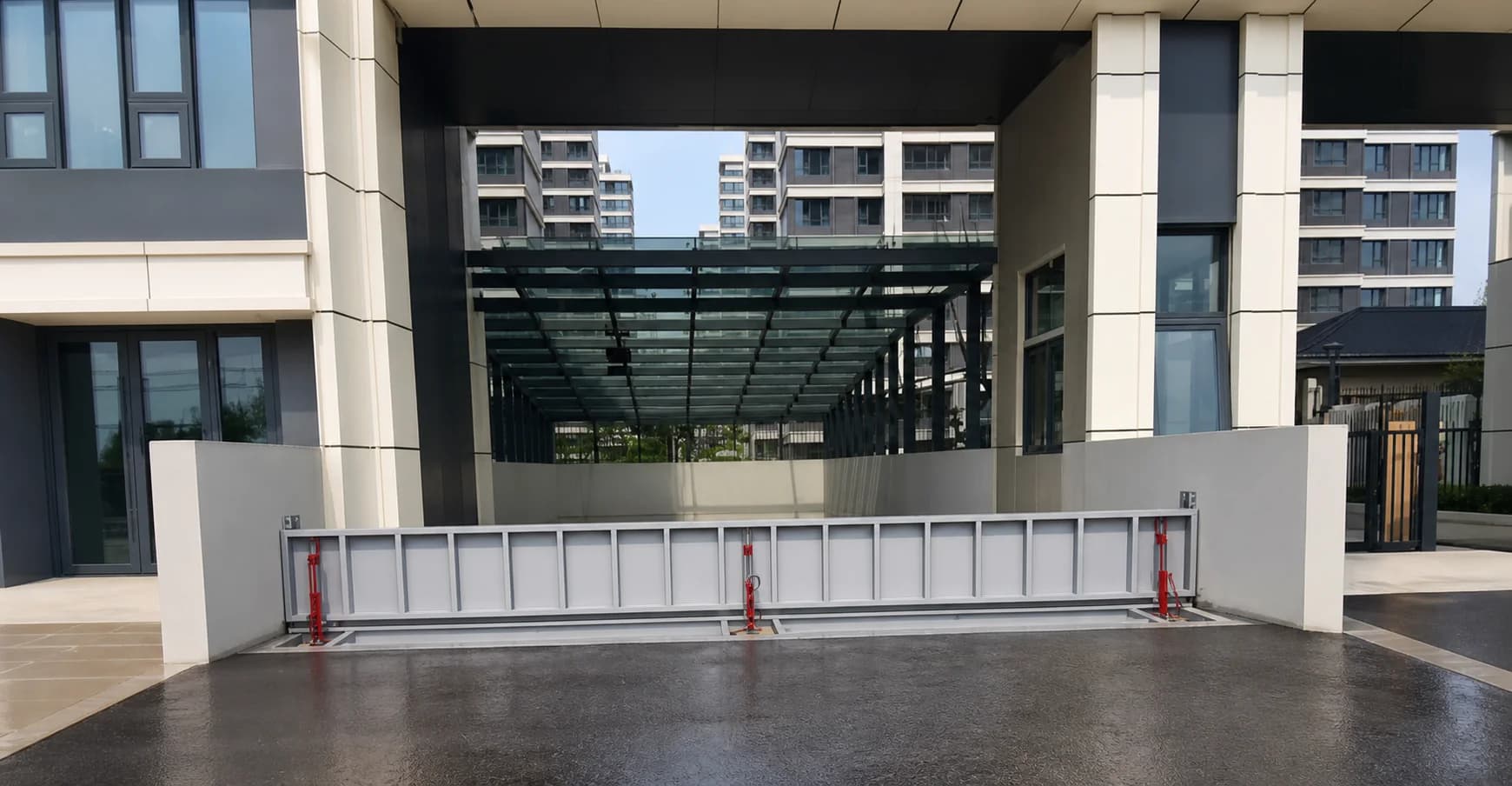
Water-level sensing starts an electrically powered hydraulic pump that raises the barrier across the ramp, and centre management lowers and resets it by remote control or a central control switch. The top can be paved, so the ramp looks unchanged day to day.

Best for: Car park ramps with power and central control

View Automatic Flood Barrier System →
Hydrodynamic Passive Flood Barrier

Hydrodynamic Passive Flood Barrier

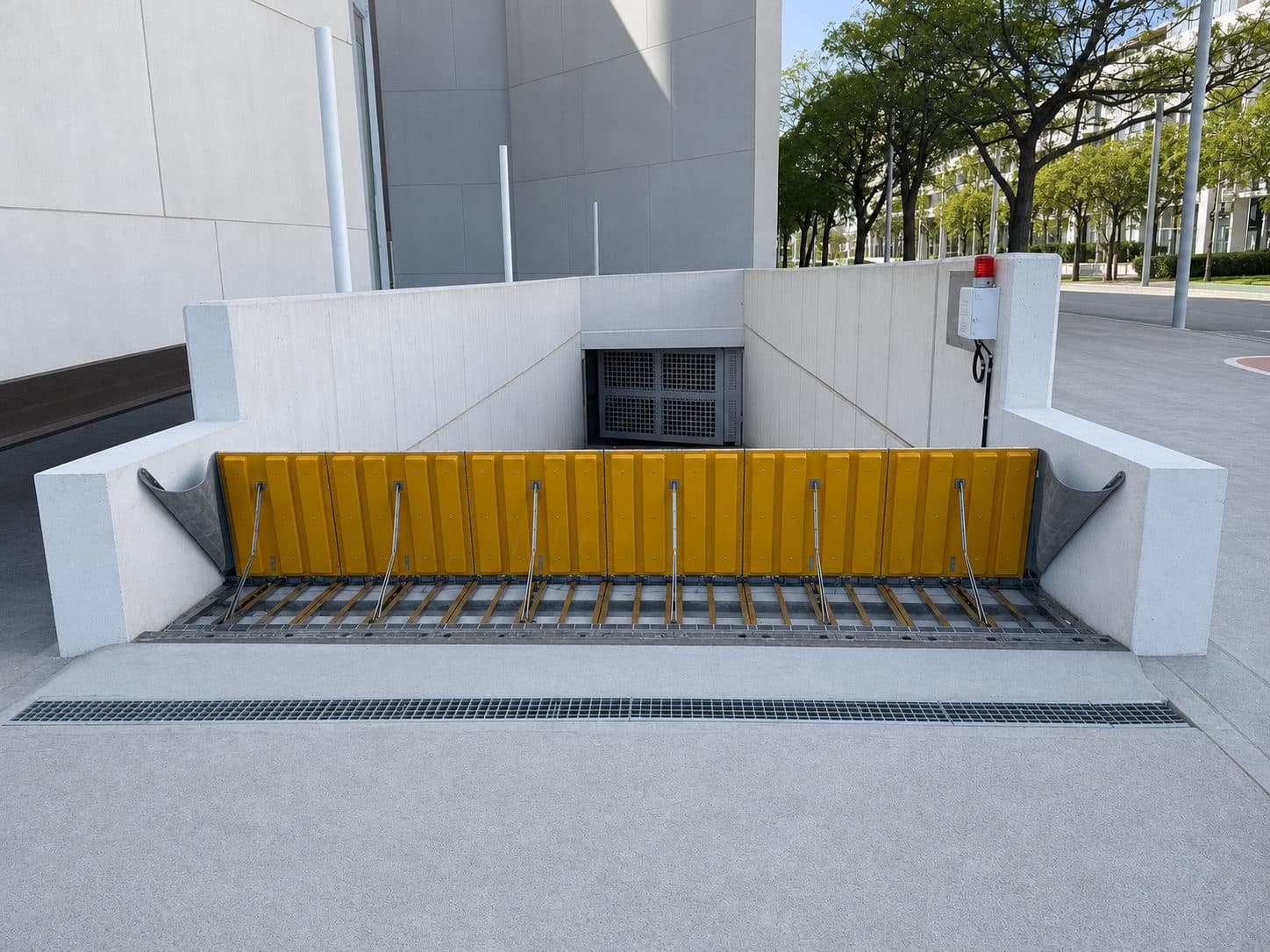
Floodwater flows in beneath the panel and lifts it upright, with no power or operator involved, and it lowers under its own weight as the water recedes. Lowered, it is trafficable to 20 tonnes GVM, and an optional alarm flashes and sounds when water reaches it.

Best for: Ramps and service entries after hours

View Hydrodynamic Passive Flood Barrier →
Aluminium Flood Barriers

Aluminium Flood Barriers

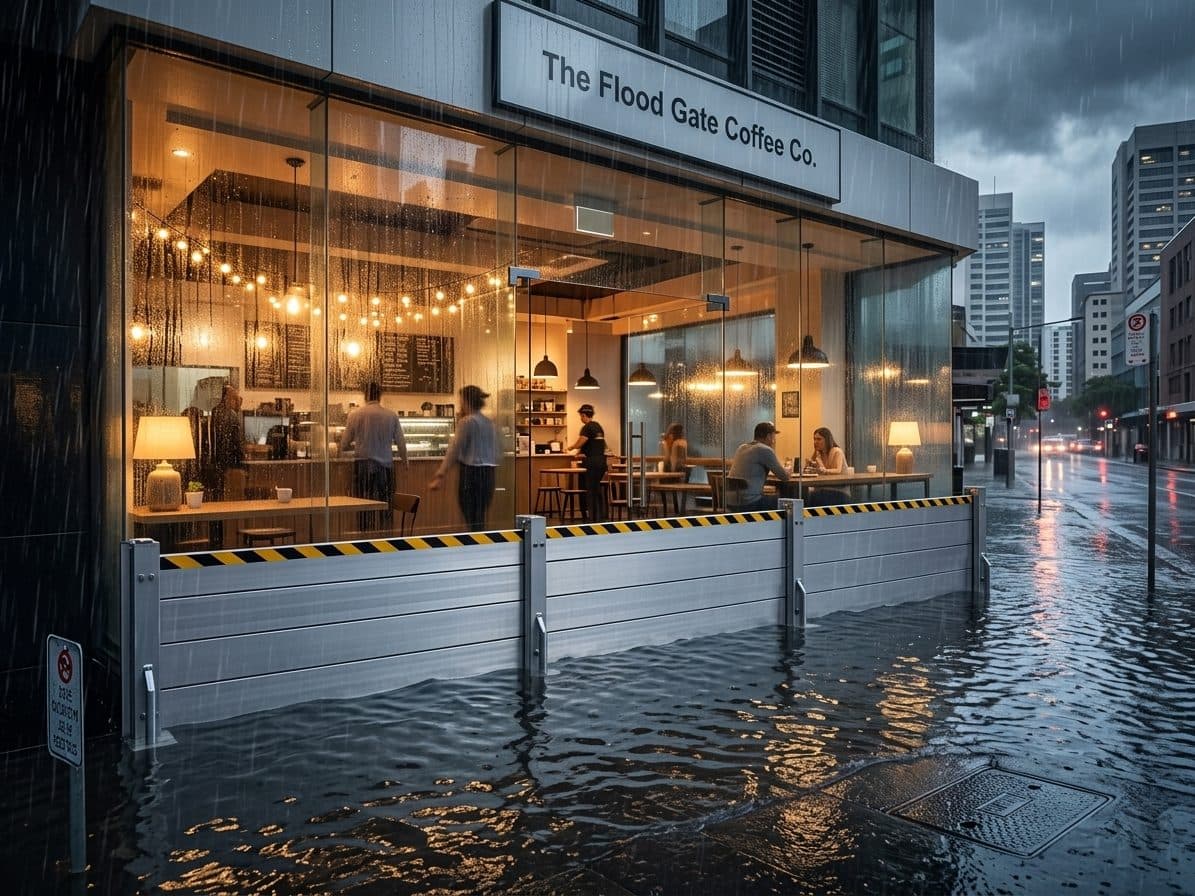
Made to measure for each entry and dock, up to 2 m high, with rubber seals clamped against the frame and floor. One person fits a set in under 10 minutes, and the panels lift out once the water has gone.

Best for: Mall entries and loading docks

View Aluminium Flood Barriers →

Choosing between them

Car park ramps carry traffic every day and lead to the lowest level of the site, so they usually get an automatic or passive barrier. The automatic barrier suits centres with a reliable power supply and a central control system for lowering and reset; the passive barrier needs no power at all, so it suits ramps where supply cannot be counted on during a storm.

Public entries and loading docks are usually closed with aluminium sets, made for each opening and stored nearby. Each set needs a person to fit it, so on a large centre it pays to write down who fits which set, and in what order, before the Bureau issues a Flood Watch.

Tenancies with their own street doors are treated like individual shops: aluminium where the landlord allows fixings, ABS or Oxford barriers where nothing can be fixed to the shopfront.

What we need to quote

  • Width and height of each opening
  • Photos of each opening and the ground on both sides
  • How high the water has reached before, or the flood level to plan for
  • Whether power is available at the opening, and what traffic crosses it
  • The suburb and state of the site
Request a Site Assessment →

FAQ

Questions we hear about shopping centres

Can the ramp barrier be monitored from the control room?
The automatic barrier is lowered and reset by remote control or a central control switch. The passive barrier has an optional alarm with a water-level detector that flashes and sounds when floodwater reaches it.
Does fitting a ramp barrier close the car park for long?
Both barriers sit in a shallow recess rather than a deep pit, which keeps excavation small, and on an existing slab the passive barrier can be surface-mounted with a ramp on each side instead. Timing depends on the site, so we work it out once we have seen the ramp.
Can you quote the whole centre at once?
Yes. Send a site plan or a list of openings with sizes and photos, and we will propose a barrier for each one, quoted per opening.

Send the opening sizes and a few photos.

We reply within 1 business day with a recommendation for each opening and a written quotation for the whole site.

Request a Site Assessment