
Applications

Flood Protection for Industrial Sites and Utilities

Industrial and utility sites are often unattended out of hours, and heavy vehicles cross their gates every day. These are the barriers we suggest for factory gates, substations, pumping stations and plant buildings.

Request a Site AssessmentView Products
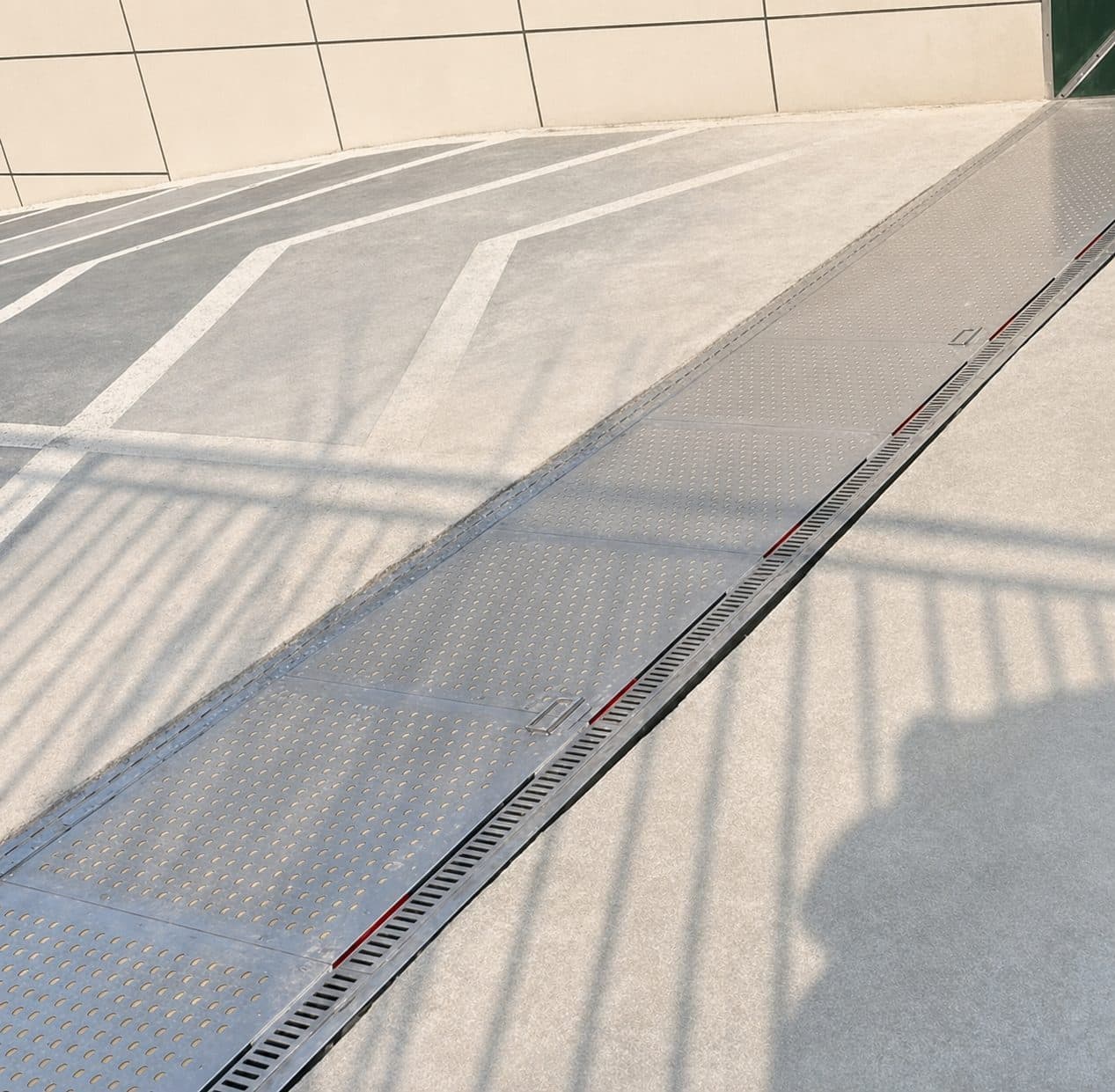
Passive flood barrier lying flush across a paved roadway, its patterned steel top plate level with the surface

Where water gets in

The openings to plan for

  • Vehicle gates and site roads, often the lowest point of the boundary
  • Roller doors to workshops, warehouses and switch rooms
  • Cable and pipe trenches that run into buildings
  • Personnel doors to control rooms and plant buildings

Barriers that suit this site

Products to consider

Hydrodynamic Passive Flood Barrier

Hydrodynamic Passive Flood Barrier

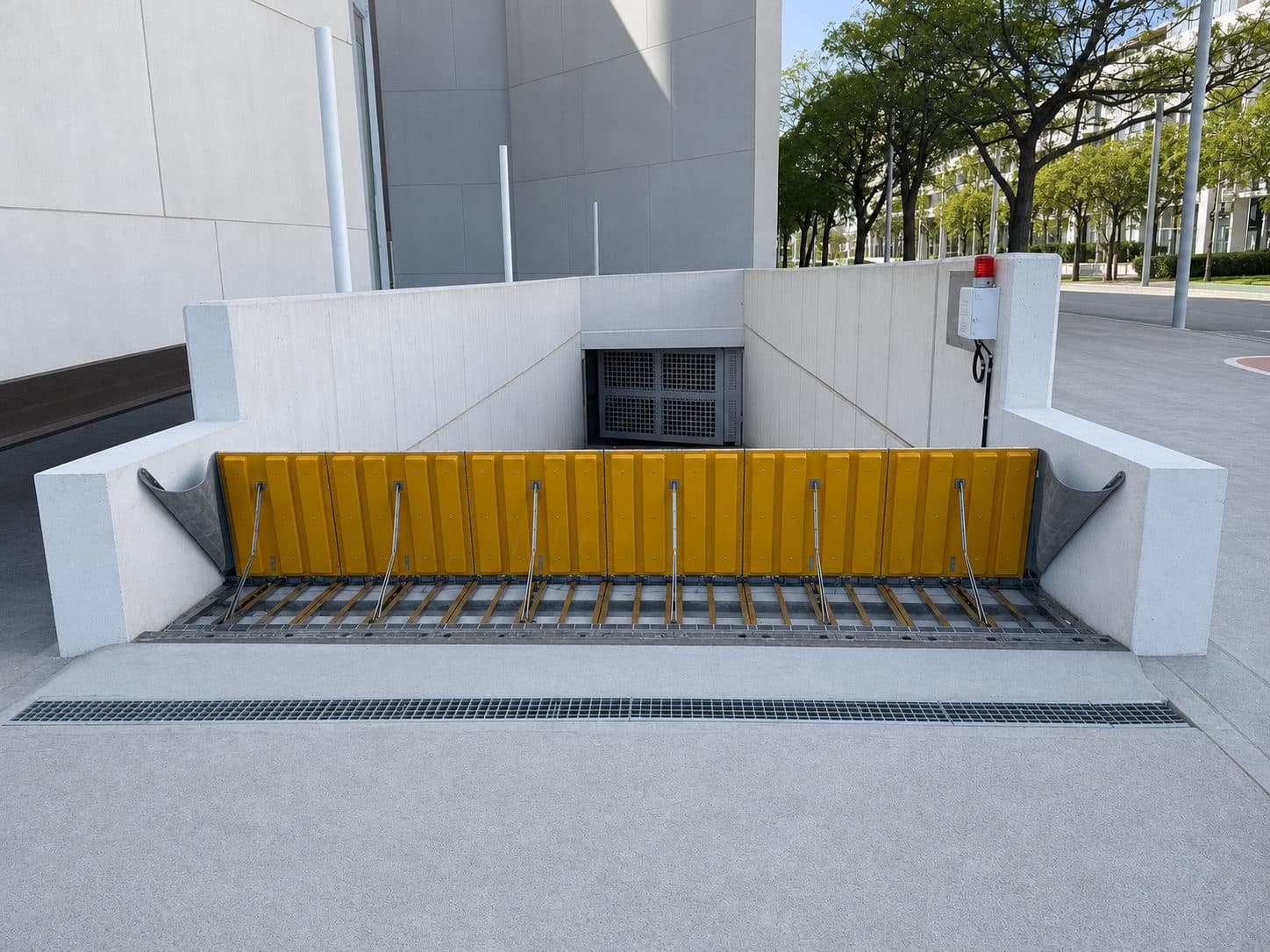
Floodwater flows in beneath the panel and buoyancy lifts it upright, with no power or operator needed. Lowered, it is trafficable to 20 tonnes GVM to AS 1170.1, and an optional alarm sounds when water reaches it.

Best for: Unattended vehicle gates

View Hydrodynamic Passive Flood Barrier →
Automatic Flood Barrier System

Automatic Flood Barrier System

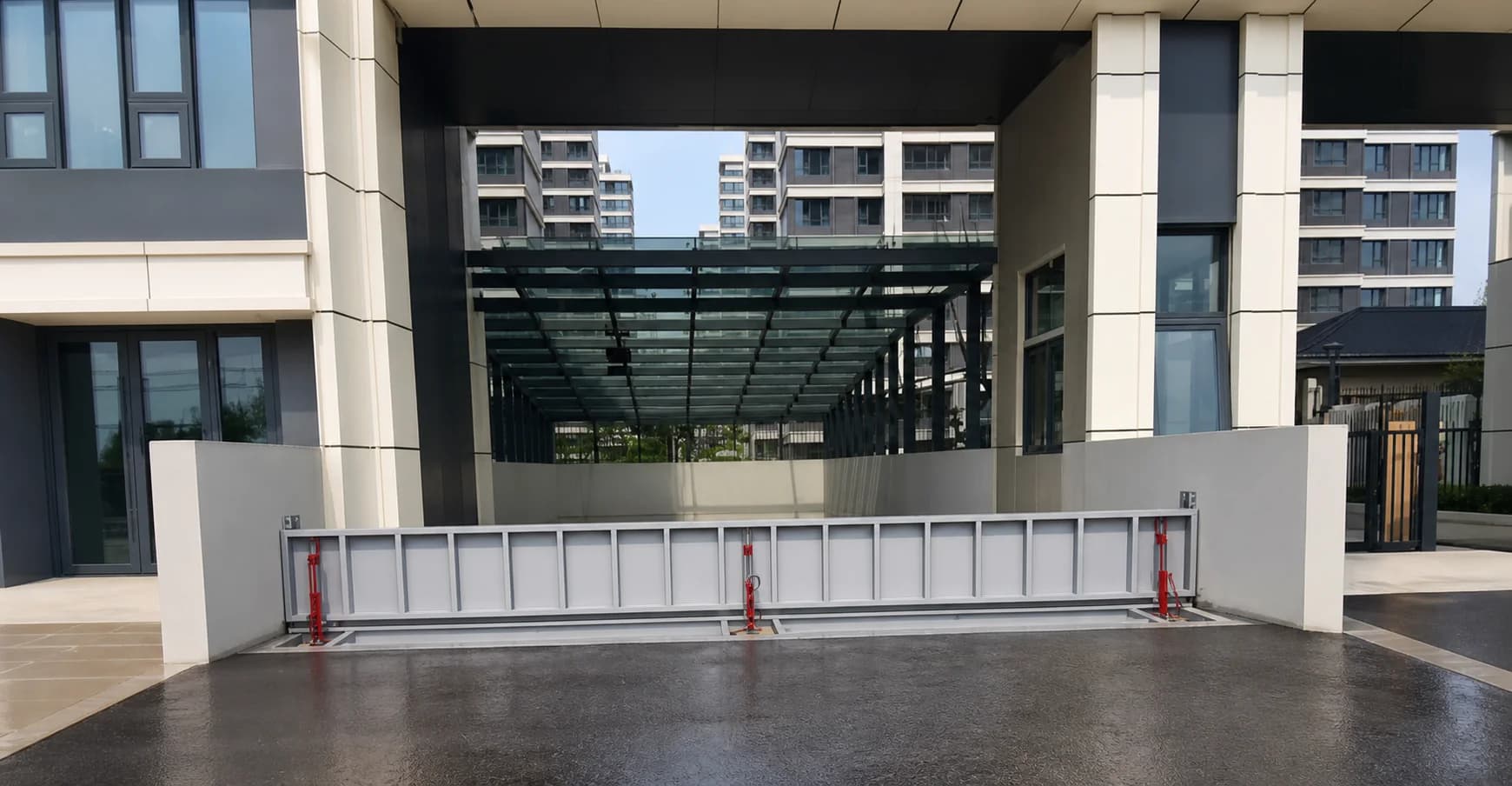
Water-level sensing triggers an electrically powered hydraulic lift, with remote or central control for lowering and reset. It is custom-engineered for unattended sites and critical infrastructure.

Best for: Sites with power and central control

View Automatic Flood Barrier System →
Aluminium Flood Barriers

Aluminium Flood Barriers

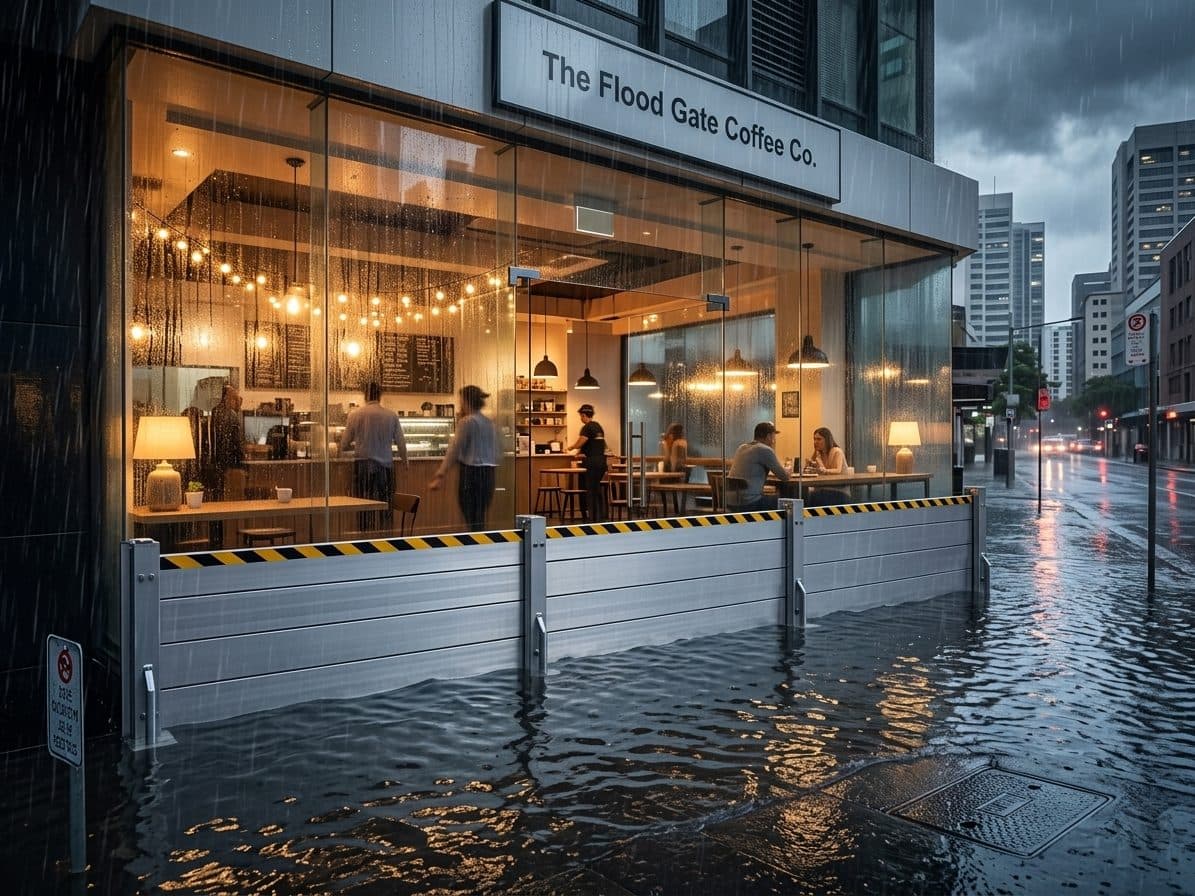
Made to measure for each opening in 200 mm panels, up to 2 m high. Panels drop into the side channels by hand and lift out afterwards.

Best for: Roller doors and switch rooms

View Aluminium Flood Barriers →

Choosing between them

On a site with nobody there at night, the passive barrier suits vehicle gates because it rises on the floodwater alone. On an existing slab it can be surface-mounted with a ramp each side, which avoids cutting a recess.

Where the site already has power and a control room, an automatic barrier gives remote control over lowering and reset. Aluminium sets suit doors that staff can close ahead of a Flood Watch.

For a quote, send gate and door widths, photos, the flood depth to hold back, and the heaviest vehicle that crosses each opening.

What we need to quote

  • Width and height of each opening
  • Photos of each opening and the ground on both sides
  • How high the water has reached before, or the flood level to plan for
  • Whether power is available at the opening, and what traffic crosses it
  • The suburb and state of the site
Request a Site Assessment →

FAQ

Questions we hear about industrial sites and utilities

Can trucks drive over a passive barrier?
Fully lowered, the passive barrier is trafficable to 20 tonnes GVM to AS 1170.1. Heavier vehicles need checking at design stage, so tell us what crosses each opening when you ask for a quote.
Do these barriers suit substations and pumping stations?
A barrier that needs no power and no operator suits sites that are usually unattended. Whether it fits depends on the opening, the flood depth and how water reaches the equipment, so we assess each site before recommending one.
What else should be checked besides the gates?
Water also reaches equipment through cable trenches, drains and wall penetrations, which a gate barrier does not close. Backflow valves and penetration seals cover those.

Send the opening sizes and a few photos.

We reply within 1 business day with a recommendation for each opening and a written quotation for the whole site.

Request a Site Assessment