
Applications

Flood Protection for Hotels, Pubs, Cafés and Restaurants

Hospitality venues keep their doors open to guests until the last moment, then need them closed quickly when the water comes. These are the barriers we suggest for lobbies, dining-room and kitchen doors, and guest parking.

Request a Site AssessmentView Products
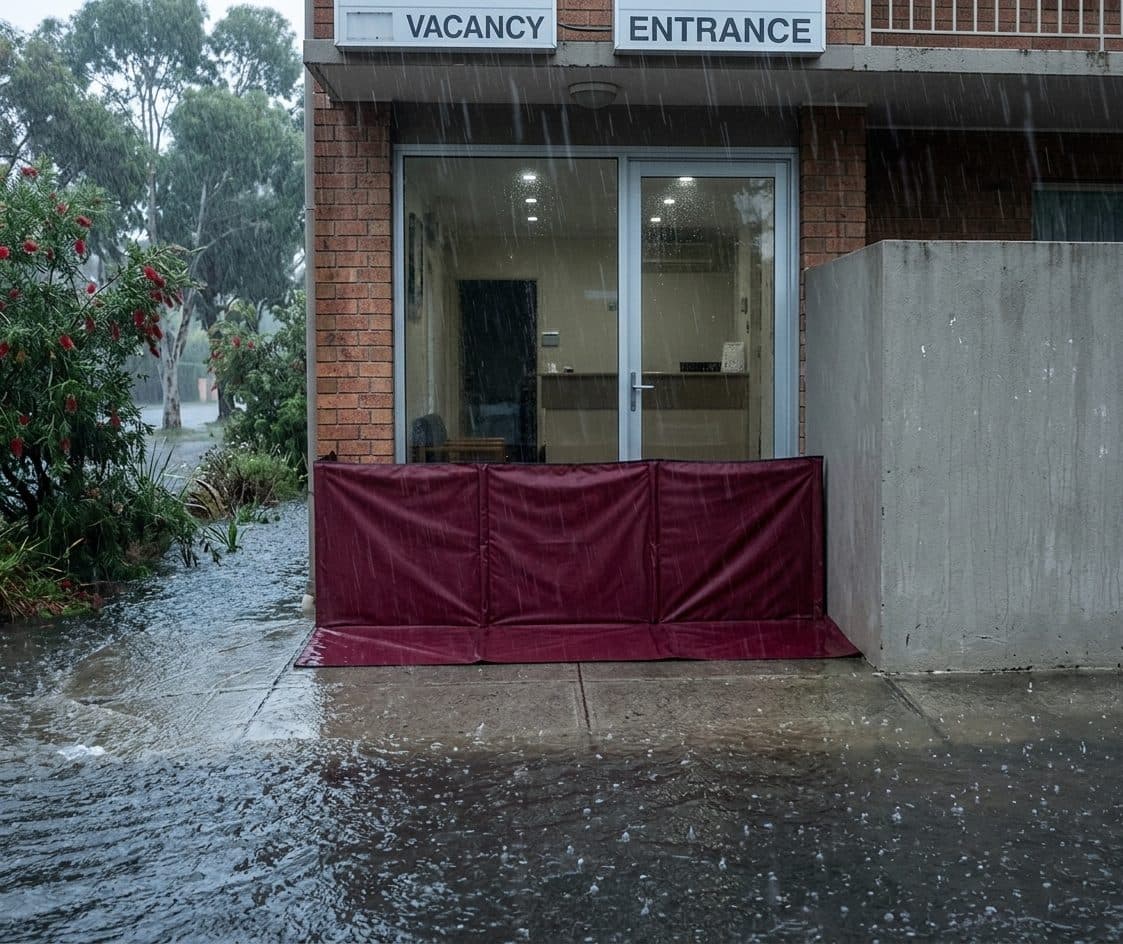
Red fabric flood barrier set across the glass entrance of a brick motel in heavy rain, with water running along the path

Where water gets in

The openings to plan for

  • Glazed lobby and street-front doors at footpath level
  • Kitchen and service doors at the rear, often beside drains
  • Ramps down to guest parking under the building
  • Courtyard, beer garden and terrace doors where runoff collects

Barriers that suit this site

Products to consider

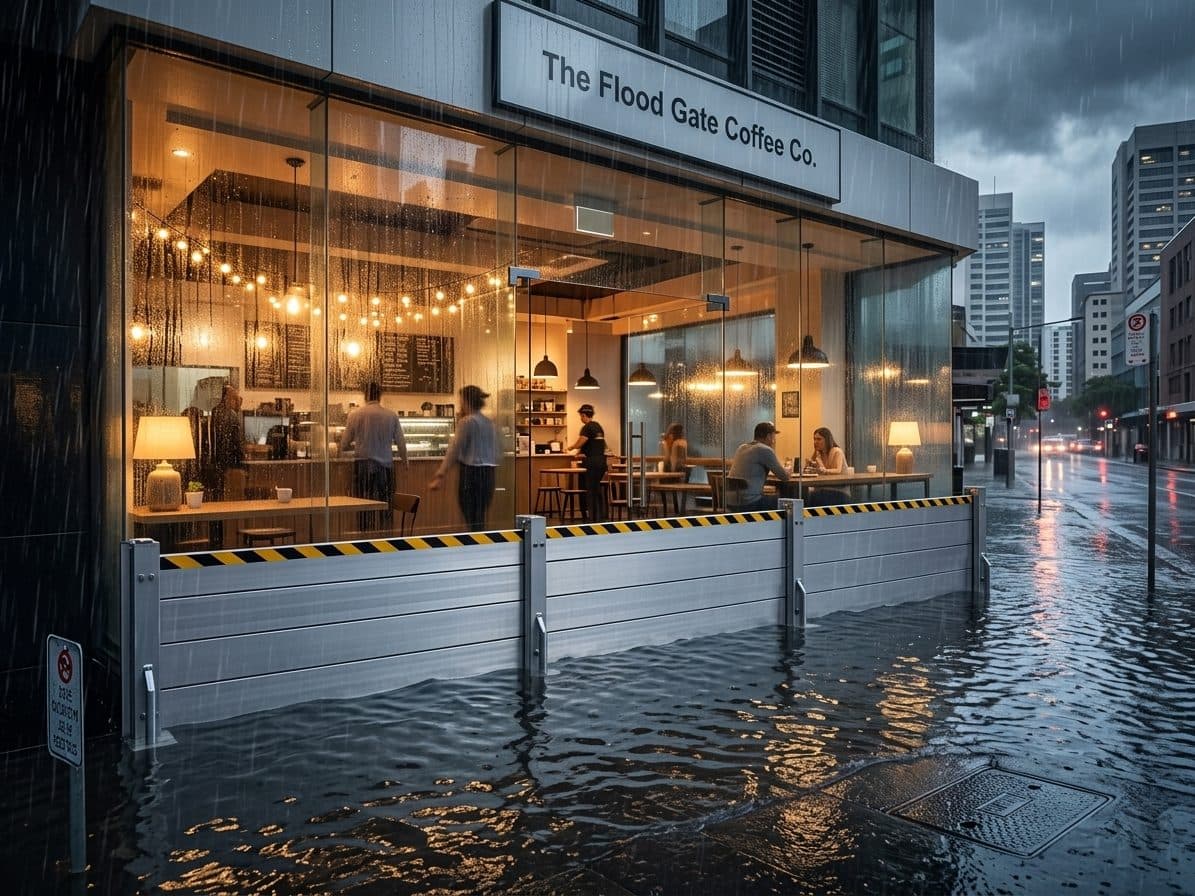
Aluminium Flood Barriers

Aluminium Flood Barriers

Made to the measured lobby opening in 200 mm panels, up to 2 m high. Rubber seals are clamped against the frame and floor, and the panels lift straight out when the water has gone.

Best for: Wide lobby entries

View Aluminium Flood Barriers →
Oxford Barriers

Oxford Barriers

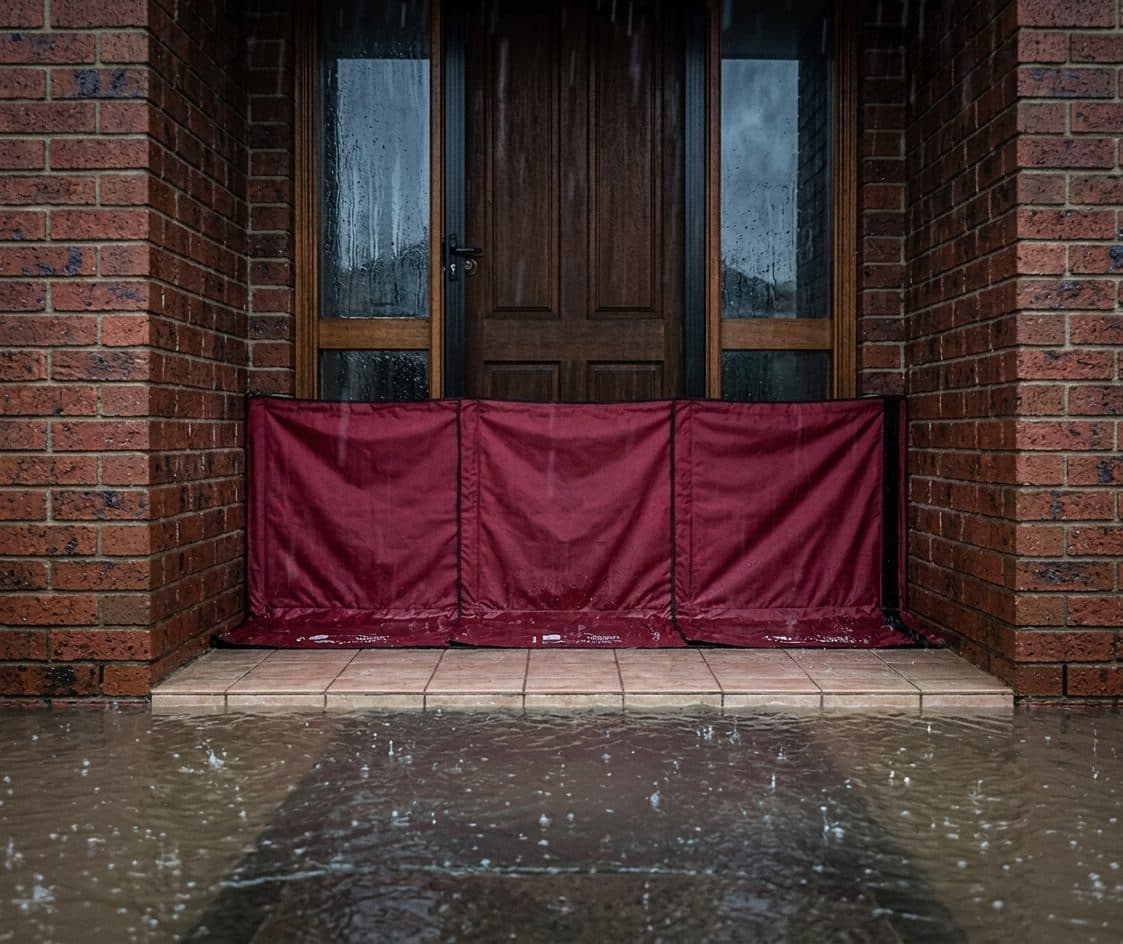
The telescopic frame adjusts from 150 mm to 1,300 mm wide and protects up to 900 mm. It sets up in minutes without tools and folds flat for storage; it seals best on flat, smooth floors and minor seepage can occur on uneven ones.

Best for: Café, bar and kitchen doors

View Oxford Barriers →
Automatic Flood Barrier System

Automatic Flood Barrier System

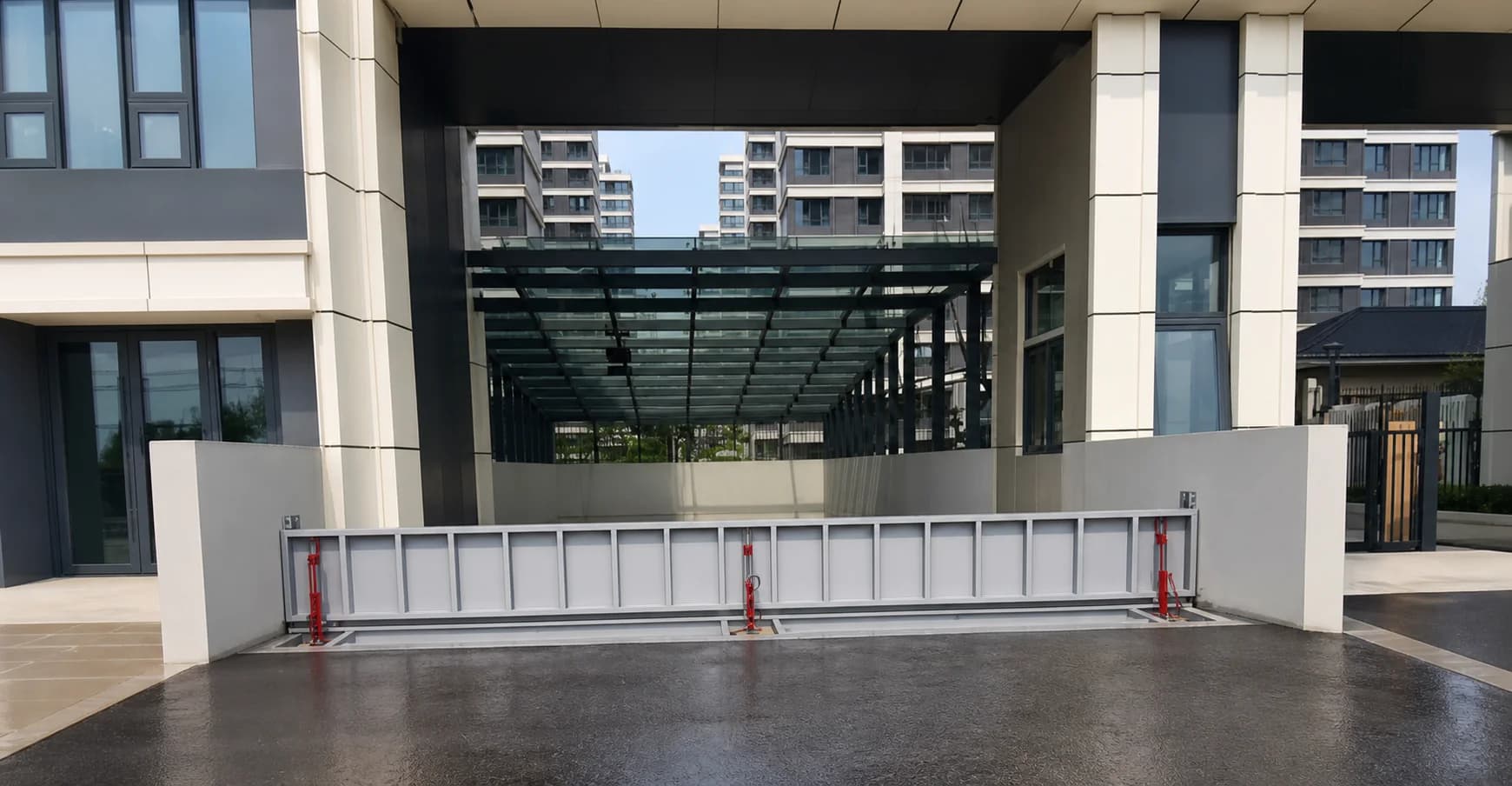
Water-level sensing raises an electrically powered hydraulic barrier when the water reaches its set level, overnight included. The top can be paved with pavers, stone or tiles to match the driveway.

Best for: Guest car park entries

View Automatic Flood Barrier System →

Choosing between them

A café or restaurant door is usually covered by Oxford barriers, which need no fixings and store behind the counter. Two or more units connect for wider doors.

Hotels with a wide glazed lobby often choose aluminium, because the set is made for that opening and the side channels sit neatly against the frame. A car park ramp that guests use through the night suits an automatic barrier, which does not depend on staff.

Send photos and the width of each door and ramp, and tell us how deep the water has reached before.

What we need to quote

  • Width and height of each opening
  • Photos of each opening and the ground on both sides
  • How high the water has reached before, or the flood level to plan for
  • Whether power is available at the opening, and what traffic crosses it
  • The suburb and state of the site
Request a Site Assessment →

FAQ

Questions we hear about hotels, pubs, cafés and restaurants

Can the barriers stay out of guests' sight?
Aluminium panels and Oxford barriers are stored away between events, and on aluminium sets the side channels are usually the only visible part. An automatic barrier lies flush under a paved top, so the lowered barrier is concealed.
How quickly can staff close a doorway?
An Oxford barrier sets up in minutes without tools, and one person can fit an aluminium set in under 10 minutes. A practice run before the wet season makes sure every shift knows the routine.
Do I need a barrier on every door?
Usually only on openings below the expected flood level. Photos of door thresholds, ramps and drains show which ones matter, and we suggest a mix from there.

Send the opening sizes and a few photos.

We reply within 1 business day with a recommendation for each opening and a written quotation for the whole site.

Request a Site Assessment