Article · 19 April 2026 · By Mike
How to Waterproof a Factory or Warehouse
Flood protection for Australian factories and warehouses: how to assess risk, select barriers for each opening, and build a layered defence plan.
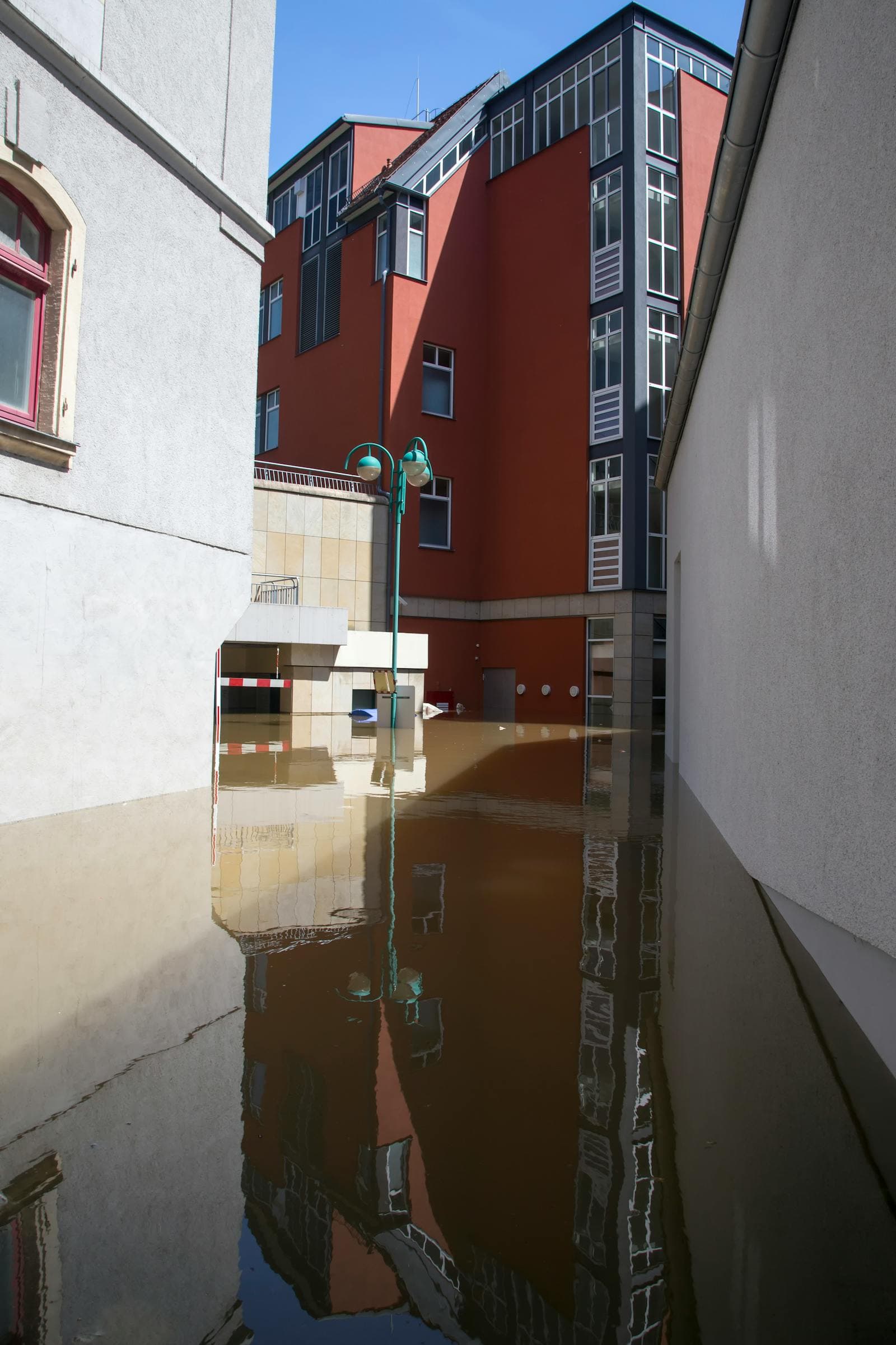
Factories and warehouses face a different flood risk profile than residential properties. The openings are wider, equipment is heavier, and a single event can run into hundreds of thousands of dollars in stock, machinery, and downtime. The best approach is layered, not single-product — first stop water at the site boundary, then protect the most exposed entrances, then address the pathways that perimeter barriers miss entirely.
What are the main flood entry points in a factory or warehouse?
A site walk with a tape measure is the starting point. Photograph every potential entry point with dimensions visible so you have working data for barrier selection. Critical vulnerability areas in industrial facilities include:
- Roller doors and personnel doors — primary water entry points, often overlooked because the door itself appears substantial
- Loading docks and dispatch bays — wide, low openings with threshold irregularities from dock levellers
- Low vents and service penetrations — easy to overlook on a site walk but consistent water entry paths
- Floor drains and backflow paths — water can rise from below through stormwater-connected drains during peak events
- Electrical switchboards, pumps, IT racks, and stock storage — not entry points, but the assets most damaged when water enters
Backflow through floor drains is the most commonly overlooked flood pathway in industrial facilities. Backflow prevention valves and drain plugs are inexpensive and available at plumbing suppliers — they address a gap that no barrier product covers.
How do you build layered flood protection for a warehouse?
Rather than one solution, run multiple defensive lines. A layered approach acknowledges that no single product addresses every pathway:
- Identify where water enters during intense rainfall or overland flow — map each entry point with dimensions
- Protect the most exposed opening first — usually a loading dock or roller door
- Add a secondary seal or barrier at the next weakest point — personnel doors, low vents, service entries
- Install backflow prevention valves on any floor drain connected to the stormwater network
- Raise critical equipment and stock above floor level if floor-level flooding is realistic
- Test the complete system before the wet season starts, with a timed dry-run deployment
The Bureau of Meteorology provides catchment flood histories and current severe weather warnings that help calibrate both barrier height selection and trigger criteria. Subscribe to BOM flood warnings for your postcode and define an internal trigger — "deploy when BOM issues a watch for this catchment" — so decision-making is automatic, not ad hoc.
Which barrier suits a factory loading dock door?
Loading dock doors are almost always the highest-priority opening on an industrial site. They are wide, low, and designed for vehicles rather than flood resistance. The dock leveller plate creates an uneven threshold that standard rubber seals cannot address.
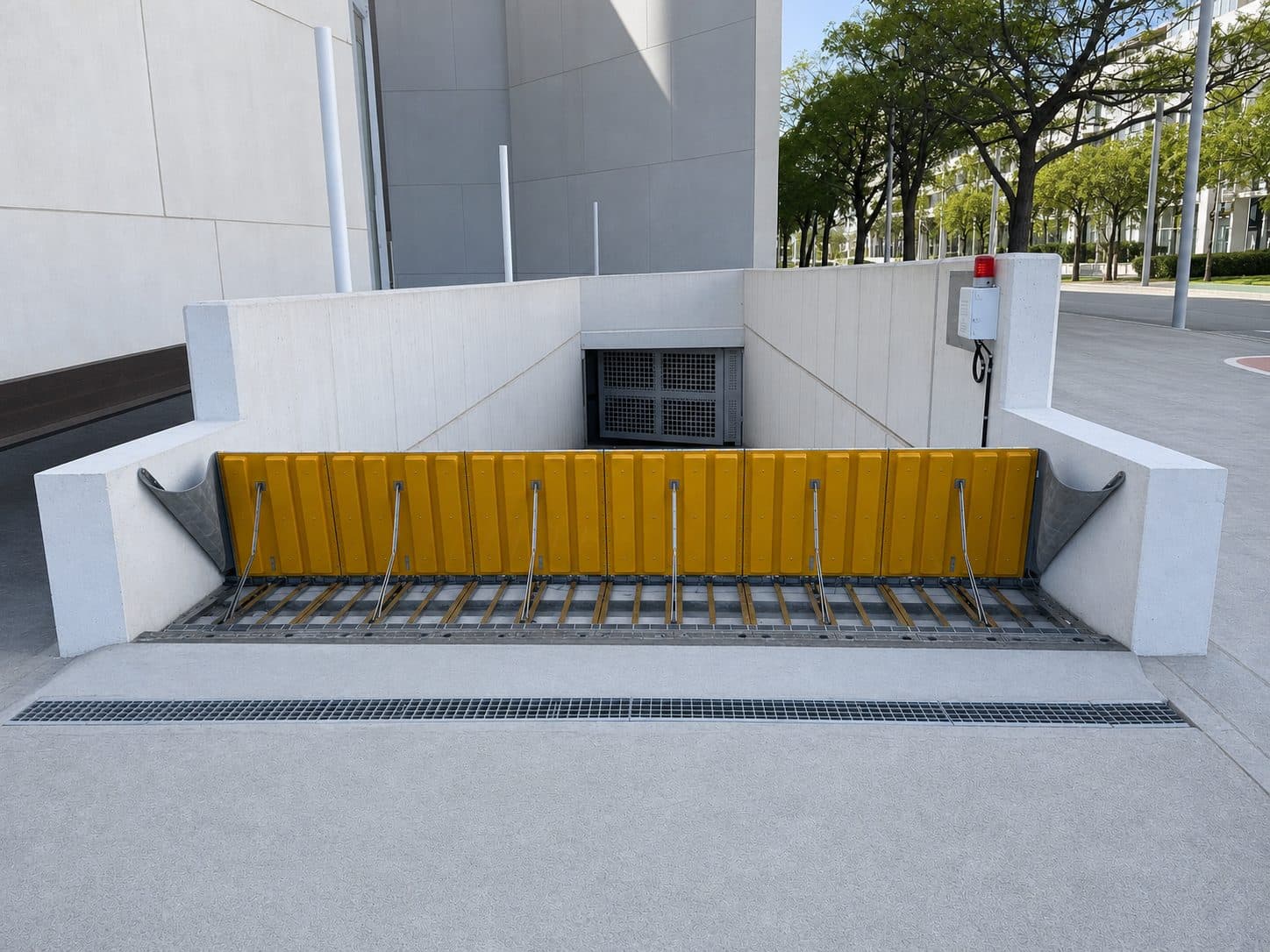
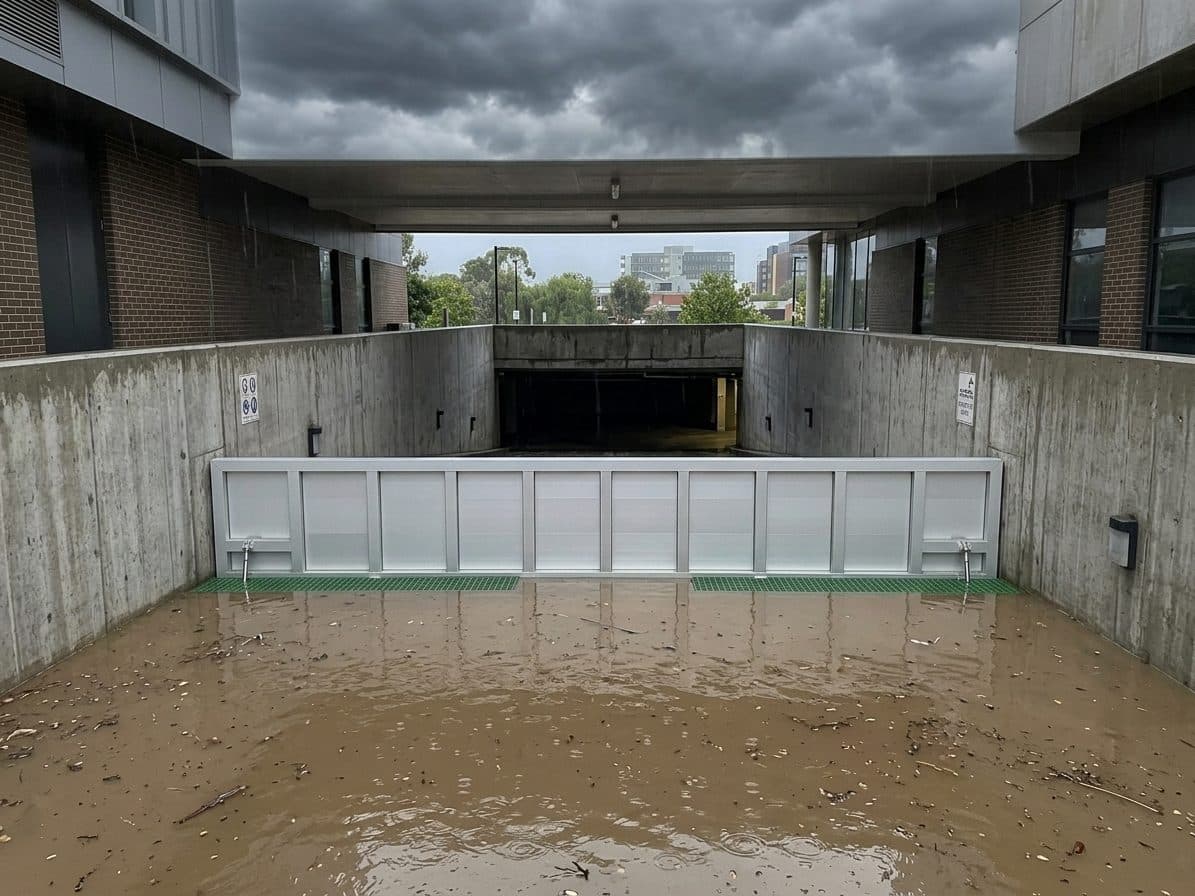
Aluminium demountable barriers are the primary choice for a fixed dock opening. Each set is built to the width you measure and deploys in under 10 minutes using permanent kerb sockets or a freestanding base plate. Made to measure and quoted per opening, they are marine-grade aluminium reused season after season — the cost amortises across many flood seasons. Very wide docks are covered with two adjacent sets side by side.
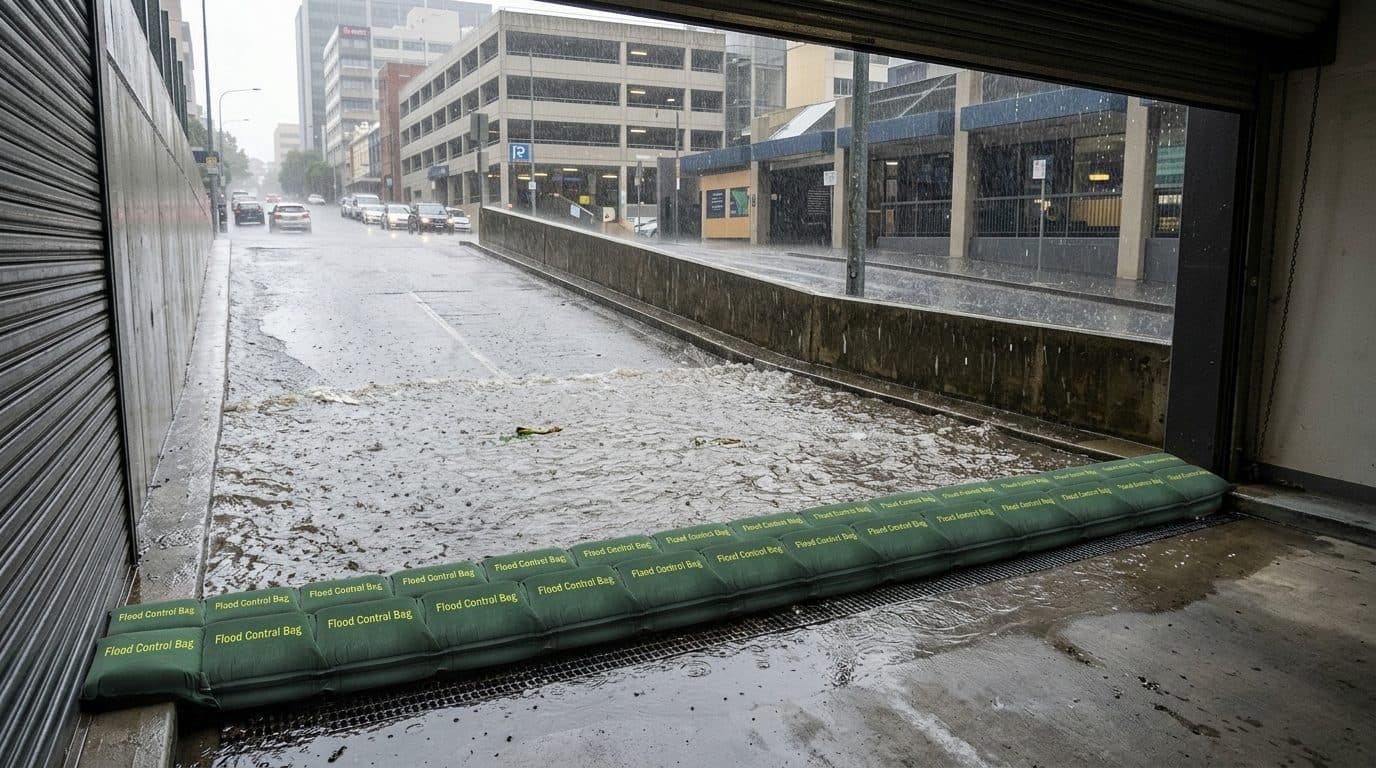
Dock leveller thresholds require a secondary seal. Water-activated sandbags — 270 g flat packs that swell to 18–22 kg in 2–3 minutes — conform to the irregular threshold profile that the rigid aluminium panel cannot fully close. A row of sandbags placed behind the aluminium panel completes the seal at the base of the leveller.
For sites with high-value stock or after-hours operations, automatic flood gates are worth evaluating for the primary dock entry. They use water-level sensing and an electrically powered hydraulic lift; remote or central controls lower and reset the barrier. A site assessment determines the configuration and quotation.
How do you protect roller doors and personnel entries from flooding?
Roller doors provide some resistance but the bottom seal is rarely waterproof, and the side channels are often the first water entry point. Personnel doors adjacent to the roller door are frequently missed in barrier planning.
Practical approach:
- Deploy a demountable aluminium barrier across the roller door opening — anchor into kerb sockets if installed, or use a freestanding base plate
- Run a row of water-activated sandbags behind the barrier along the base of the roller door to seal threshold gaps
- Protect adjacent personnel doors with a single-panel demountable set sized for standard 900 mm door widths
- Store each barrier set at the door it protects, labelled by location
For large facilities with multiple bays, label every barrier set by bay number and assign named deployment personnel for each location. The single most common failure in industrial flood response is time lost locating equipment and establishing responsibility for each opening.
What waterproofing approaches miss in industrial facilities
Several common oversights undermine otherwise sound flood plans:
Drain backflow: Perimeter barriers protect against external water. They do nothing for water rising through floor drains when the stormwater network is overwhelmed. Backflow prevention valves on stormwater-connected drains are a mandatory supplement to any barrier plan.
Cable and pipe penetrations: Conduits through walls and floors are consistent entry paths. Hydraulic foam sealants or mechanical pipe plugs are the correct fix — not the job of a flood barrier.
Internal splash damage: Even when major flooding is prevented, water driven through seal gaps at high pressure can damage stock, electrical systems, and machinery. A secondary row of water-activated sandbags behind the main barrier reduces this exposure.
Decision delay: The slowest part of most flood responses is not deployment — it is the time spent deciding who deploys what and when. Fix this with a written trigger, named roles, and a pre-season rehearsal. SafeWork NSW emergency planning guidance recommends written emergency response procedures for all commercial premises.
How do you select the right barrier depth for a factory site?
Every barrier has a rated depth — the maximum water height it will hold. Match this against your site's realistic flood scenario:
- Low risk (overland flow, light rain): 200–400 mm barrier depth is usually sufficient
- Moderate risk (creek or stormwater overflow): 500–800 mm is the appropriate design depth
- High risk (catchment or riverine flooding): Engineered solutions alongside off-the-shelf barriers; levee assessment may be required
For Queensland sites and northern New South Wales — where catchment rainfall events can be rapid and severe — BOM historical flood data and the Queensland Disaster Management flood mapping tools provide site-specific depth estimates. Over-specify by one risk level as standard practice: a barrier rated at 600 mm provides meaningfully more margin than one rated at 300 mm when the event reaches 350 mm.
Which solution suits a factory or warehouse by opening type?
| Opening | Recommended solution | Notes |
|---|---|---|
| Loading dock 3–6 m wide | Aluminium demountable barriers x 2, or automatic gate | Sandbags for leveller threshold gap |
| Roller door, standard | Aluminium set + sandbag secondary row | Kerb sockets speed deployment |
| Personnel door 0.9–1.2 m | Single-panel aluminium demountable set | Stores flat beside the door |
| Irregular openings, gaps | Water-activated sandbags | Fast deployment, conforms to irregular profiles |
| Floor drains | Backflow prevention valve or drain plug | Not addressed by surface barriers |
| Unattended site entry | Automatic flood gate | Site-specific water-level sensing and hydraulic control |
What equipment protection measures should a factory include?
Flood barriers stop water at the perimeter. Inside the facility, a second layer of equipment protection reduces loss when the perimeter is breached or when a slow-drain event causes shallow standing water:
- Elevate critical machinery on plinths if floor-level flooding is a realistic scenario at your site
- Store chemicals, lubricants, and flammables above the projected flood height — this is also a requirement under state dangerous goods regulations
- Document equipment serial numbers and purchase records for insurance — this speeds claims considerably
- Confirm that electrical switchboards and distribution panels are above projected flood height; if not, raise or relocate them
How should barriers be stored and maintained at a factory?
A barrier stored behind a pallet two bays away from its deployment point is effectively useless. Storage planning is as important as product selection:
- Assign a named storage location for each barrier set, close to the door it protects
- Label each set by location — "Dock 3 barrier", not a generic rack label
- Hang aluminium panels flat against a wall or in a purpose-built wall bracket; they store compactly and stay clean
- Keep sandbag supply at each deployment point, not in a central store
- Run a full timed deployment before each wet season — most problems appear during drills, not real events
Commercial flood plan checklist for factories
- Every vulnerable opening mapped and measured with dimensions on record
- Barrier type and rated depth confirmed for each opening against realistic flood scenario data
- Barriers stored at or near each deployment point, labelled by location
- Named primary and backup personnel for each barrier set
- Written trigger criteria defined and communicated to all deployment staff
- Floor drain backflow prevention installed and tested annually
- Equipment elevation plan in place for critical machinery
- Annual pre-season deployment drill with recorded times
- Post-event inspection checklist for seal condition and panel integrity
FAQ
What is the difference between waterproofing and flood protection for a factory?
Waterproofing reduces baseline water ingress through building fabric. Flood protection plans for an active flood event — selecting barriers rated to the expected depth, assigning deployment roles, and defining a trigger for action. Both are required for a complete industrial risk plan.
Which opening should be protected first?
The widest, lowest opening — typically a loading dock or main roller door. These admit the most water the fastest. Drain backflow prevention is a parallel action, not a secondary one.
Do automatic flood gates need power?
Automatic flood gates use water-level sensing, electrical controls and a hydraulic pump; they are not passive hydrostatic systems.
Can one person deploy aluminium barriers at a factory?
Yes. Aluminium demountable barrier sets are designed for single-person deployment in under 10 minutes per opening. Panels store flat and weigh under 25 kg per set.
Should a factory rely on sandbags alone?
Water-activated sandbags are an effective secondary seal and gap-fill product, but facilities facing recurring flood risk need engineered, reusable barriers as the primary protection. Sandbags are the right complement, not the right foundation.
Useful external references
- Bureau of Meteorology severe weather warnings
- SafeWork NSW emergency planning
- Queensland Disaster Management flood maps
For a site assessment and product recommendation, contact our team. We work with factories and warehouses across Australia.
For barrier selection across every opening on a commercial site — design depth bands, deployment roles, and lease and insurance responsibility — see commercial flood barriers.
Recommended next step
Match the guide to a flood barrier option.
These are the product pages and guides most relevant to this topic. Use them to compare flood barriers Australia-wide, then request a site-specific recommendation.